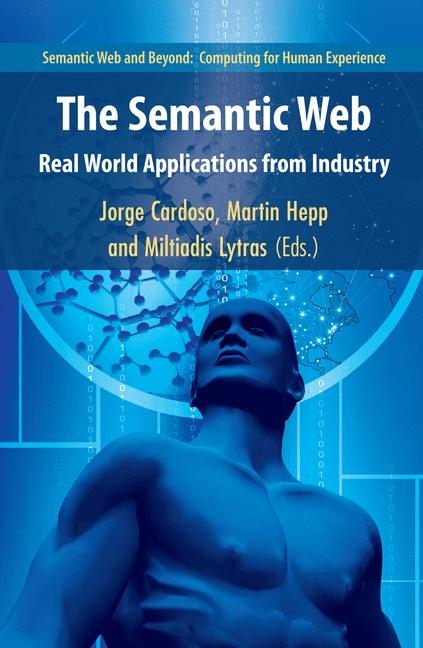
The Semantic Web (eBook)
308 Seiten
Springer US (Verlag)
9780387485317 (ISBN)

This professional book provides a series of case studies which give examples of real benefits to be derived from the adoption of semantic web based ontologies in real world situations, such as telecommunication, B2B integration, tourism, education and more. The book is designed to create platforms for bringing experts together (key government representatives, industry and academia) from different countries, and to compile the most recent use of semantics and ontologies.
Semantic Web: Real-World Applications from Industry offers a glimpse into the opening door of semantic technologies by means of concentrated examples of semantic applications in real business environments. For quite a while, there has been evidence from academic research and early industrial prototypes that semantic technology can help humans and machines substantially in accessing and using the unprecedented, and exponentially growing, amount of information that the World Wide Web provides. Now semantic technology is moving from academic and industrial research into real products and applications. This book provides a series of case studies which demonstrate how real benefits can be derived from the adoption of semantic technology in popular business domains, such as telecommunication, B2B integration, healthcare, education, and others.Semantic Web: Real-World Applications from Industry summarizes state-of-the art expertise and practical experiences from outstanding technology showcases. This volume was written as a joint effort of leading experts in the field of semantic technology from various backgrounds and countries, including industry, academia, and government agencies. It combines a detailed description of the challenges and technical solutions with a discussion of the actual results and a wealth of lessons learned, which will be invaluable for future investments into semantic technology.Semantic Web: Real-World Applications from Industry was designed for industry professionals and researchers interested in the current state and future of semantic technology. This book is also suitable as a secondary advanced-level text or reference for students in computer science.Foreword by Michael L. Brodie, Chief Scientist, Verizon Communications, Cambridge, USA
Dedication 6
Contents 7
Contributing Authors 9
Foreword 13
Preface 16
PART I – SEMANTIC ENTERPRISES 20
THE FUTURE OF THE SEMANTIC WEB FOR ENTERPRISES 21
1. THE EARLY SEMANTIC WEB 21
2. ONTOLOGIES: THE CORNERSTONE OF THE SEMANTIC WEB 23
3. CHALLENGES FOR A NEW SEMANTIC WORLD 24
3.1 Characteristics of a new world 24
3.2 Challenges for Semantic Web applications 25
4. THE IMPORTANCE OF SEMANTICS FOR ORGANIZATIONS 27
4.1 Ontology Management Systems 27
4.2 Challenge 28
5. THE CONTRIBUTION OF THIS EDITION 30
6. NEXT MILESTONES 31
7. QUESTIONS FOR DISCUSSION 31
8. SUGGESTED ADDITIONAL READING 32
9. ACKNOWLEDGMENTS 32
10. REFERENCES 32
THE ENTERPRISE SEMANTIC WEB 34
1. INTRODUCTION 34
2. BUSINESS AND TECHNOLOGY DRIVERS OF THE SEMANTIC WEB 35
3. THE ENTERPRISE SEMANTIC WEB 36
4. SOFTWARE FOR THE SEMANTIC WEB 38
5. USE CASES 40
5.1 Enhancing effectiveness of recruitment services 40
5.2 Enhancing agile manufacturing 43
5.3 Identification of patterns and insights in data 45
5.4 Integration of heterogeneous scientific data 46
5.5 Optimizing enterprise search and navigation 47
5.6 Additional applications of the Semantic Web 51
6. CONCLUSIONS 52
7. QUESTIONS FOR DISCUSSION 53
8. SUGGESTED ADDITIONAL READING 53
9. ACKNOWLEDGEMENTS 53
10. REFERENCES 54
PART II – FINANCE AND GOVERNMENT 55
SEMANTIC WEB TECHNOLOGIES FOR THE FINANCIAL DOMAIN 56
1. INTRODUCTION 56
2. SEMANTIC TECHNOLOGIES FOR ECONOMIC AND FINANCIAL INFORMATION MANAGEMENT 2.1 Description of the domain 57
2.2 An ontology for content management in the economic and financial domain 59
2.3 Semantic content description and exploitation 62
2.4 Experience and results 67
3. SEMANTIC TECHNOLOGIES FOR INVESTMENT FUNDS MARKET 3.1 Description of the domain 69
3.2 Creation of a domain model based on XBRL 72
3.3 Translating XBRL taxonomies into OWL ontologies 77
3.4 Comparison 82
4. CONCLUSIONS 84
5. QUESTIONS FOR DISCUSSION 86
6. SUGGESTED ADDITIONAL READING 87
7. REFERENCES 88
INTELLIGENT SEARCH ENGINE FOR ONLINE ACCESS TO MUNICIPAL SERVICES 90
1. INTRODUCTION 90
2. HOW DOES IT WORK? 94
3. THE CITY GOVERNMENT SERVICE ONTOLOGY 96
4. NATURAL LANGUAGE PROCESSING FOR ONLINE CITY SERVICES 98
5. SEMANTIC ANNOTATION OF CITY SERVICES 100
6. SEMANTICALLY-ENABLED SEARCH OF CITY SERVICES 102
7. SYSTEM ARCHITECTURE 104
8. CONCLUSIONS 106
9. QUESTIONS FOR DISCUSSION 106
10. SUGGESTED ADDITIONAL READING 107
11. ACKNOWLEDGEMENTS 107
12. REFERENCES 107
PART III – HEALTHCARE AND LIFE SCIENCES 109
ONTOLOGY-BASED DATA INTEGRATION FOR BIOMEDICAL RESEARCH 110
1. INTRODUCTION 110
2. USE CASE: PARKINSON’S DISEASE 113
2.1 Systems physiology perspective 113
2.2 Cellular and molecular biology perspective 114
2.3 Example query 115
3. ONTOLOGIES 116
3.1 Ontology design and construction 116
3.2 Ontology Design Choices 122
3.3 Summary 125
4. DATA SOURCES 125
4.1 Relevant data sources to the query 125
4.2 Implementing the data integration solution 127
4.3 Approaches for data integration 132
5. CONCLUSIONS AND FUTURE WORK 132
6. QUESTIONS FOR DISCUSSION 133
7. ADDITIONAL SUGGESTED READING 134
8. ACKNOWLEDGEMENTS 134
9. REFERENCES 135
ACTIVE SEMANTIC ELECTRONIC MEDICAL RECORDS 136
1. INTRODUCTION 136
2. MOTIVATING SCENARIO AND BENEFITS 138
3. KNOWLEDGE AND RULES REPRESENTAION 140
3.1 Rules 141
4. APPLICATION 142
4.1 Active Semantic Documents 142
4.2 Coding of impressions 144
5. IMPLEMENTATION DETAILS 145
6. DEPLOYMENT AND EVALUATION 146
7. RELATED WORK 149
8. CONCLUSION AND FUTURE WORK 150
9. QUESTIONS FOR DISCUSSION 151
10. SUGGESTED ADDITIONAL READING 151
11. ACKNOWLEDGEMENTS: 152
12. REFERENCES 152
PART IV – EDUCATION 154
TARGETING LEARNING RESOURCES IN COMPETENCY- BASED ORGANIZATIONS 155
1. MOTIVATION AND PROBLEM DESCRIPTION 155
2. COMPETENCY DRIVEN TRAINING SELECTION IN THE AERONAUTICAL FIELD 157
2.1 Actors and roles 158
2.2 Training related information objects 159
2.3 Training requests 160
2.4 Competency index and profiles 161
2.5 Viability and benefits 161
3. THE OVERALL PROCESS VIEW: A COMPETENCY GAP APPROACH 163
3.1 The Astrakan™ process modelling technique 163
3.2 Different types of competency gaps 165
3.3 Competencies as connectors of learning process modules 166
3.4 Modeling with a general competency ontology 167
3.5 Addressing flexibility in the definition of the competency concept 168
3.6 Competency components 169
3.7 Work situations 170
3.8 Relationships between competency specifications 171
3.9 Defining competency measurement scales 173
4. ARCHITECTURAL SOLUTION 174
4.1 The LUISA architecture 174
5. CONCLUSIONS 175
6. QUESTIONS FOR DISCUSSION 176
7. SUGGESTED READINGS 178
8. ACKNOWLEDGEMENTS 178
9. REFERENCES 179
DEVELOPING COURSE MANAGEMENT SYSTEMS USING THE SEMANTIC WEB 180
1. INTRODUCTION 180
2. S-CMS ARCHITECTURE 181
2.1 Source layer 183
2.2 Connection layer 184
2.3 Instance layer 184
2.4 Query layer 189
2.5 Inference layer 190
2.6 Application layer 191
3. EVALUATION 194
4. RELATED WORK 195
5. CONCLUSION 196
6. QUESTIONS FOR DISCUSSION 196
7. SUGGESTED ADDITIONAL READING 197
8. REFERENCES 197
9. REFERENCES 197
PART V – BUSINESS AND CUSTOMER MANAGEMENT 200
INTEGRATION OF CUSTOMER INFORMATION USING THE SEMANTIC WEB 201
1. INTRODUCTION 201
2. CONCEPTUAL LAYERING 202
3. TOOL SUPPORT/ARCHITECTURE 204
4. USE CASE: CUSTOMER INFORMATION GATEWAY 208
4.1 Data source import 209
4.2 Object and property mapping 210
4.3 Property value mapping 211
4.4 Object references and more metadata 212
4.5 Queries 213
4.6 Performance 213
5. LESSONS LEARNT AND KEY COMMENTS 214
6. SUMMARY 216
7. QUESTIONS FOR DISCUSSION 217
8. SUGGESTED ADDITIONAL READINGS 217
9. REFERENCES 218
BUSINESS PROCESS MANAGEMENT AND SEMANTIC TECHNOLOGIES 219
1. INTRODUCTION 219
2. DESIGN OF COLLABORATIVE BUSINESS PROCESSES 220
2.1 Semantic Web service composition 221
2.2 Lifting 223
2.3 Lowering 230
3. EXECUTION OF THE COLLABORATIVE BUSINESS PROCESS 230
3.1 Mapping extraction 232
3.2 Deployment and execution of the partner processes 235
3.3 Mediation 236
4. IMPLEMENTATION 237
4.1 Design 237
4.2 Execution 238
5. DEMO SCENARIO 240
5.1 Carrier-shipper process 240
5.2 Benefits of our approach 243
6. RELATED WORK 245
6.1 Design 245
6.2 Execution 245
7. CONCLUSION 246
8. QUESTIONS FOR DISCUSSION 246
9. SUGGESTED ADDITIONAL READING 247
10. REFERENCES 247
PART VI – ENTERPRISE MANAGEMENT AND SECURITY 250
ONTOLOGY-BASED KNOWLEDGE MANAGEMENT IN THE STEEL INDUSTRY 251
1. INTRODUCTION 251
2. MOTIVATIONS AND USE CASES 252
2.1 Knowledge capitalization tools 253
2.2 Unified data description layer 257
2.3 Supply chain management 259
2.4 Use cases summary 264
3. PRACTICAL EXPERIENCES 264
3.1 Expert Knowledge and Industry Processes Modeling 265
3.2 Visonto: a tool for ontology visualization 270
3.3 ARIADNE: enrichment of syntactic search 274
4. CONCLUSIONS 275
4.1 Open issues 275
4.2 Future lines of work 277
5. QUESTIONS FOR DISCUSSION 278
6. SUGGESTED ADDITIONAL READING 279
7. REFERENCES 279
BRINGING SEMANTIC SECURITY TO SEMANTIC WEB SERVICES 281
1. INTRODUCTION 281
1.1 Semantic Web Services 282
1.2 Semantically annotated Web Services: WSDL-S 283
2. WEB SERVICES SECURITY BACKGROUND 285
2.1 Message privacy 286
2.2 Message level protection 288
2.3 Message validity 289
2.4 Authentication 291
3. AUTHORIZATION 292
3.1 ACL 293
3.2 RBAC 293
3.3 XACML 296
3.4 WS-Authorization 298
4. ADDING SEMANTICS FOR AUTHORIZATION 4.1 Why use semantics 299
4.2 Ontology 300
4.3 Expressing constraints – extension elements 303
4.4 Constraint comparison 306
5. OTHER APPROACHES 309
6. QUESTIONS FOR DISCUSSION 310
7. SUGGESTED ADDITIONAL READING 311
8. ACKNOWLEDGMENTS 311
9. REFERENCES 311
Index 315
| Erscheint lt. Verlag | 28.9.2007 |
|---|---|
| Reihe/Serie | Semantic Web and Beyond | Semantic Web and Beyond |
| Zusatzinfo | XX, 308 p. 60 illus. |
| Verlagsort | New York |
| Sprache | englisch |
| Themenwelt | Mathematik / Informatik ► Informatik ► Datenbanken |
| Mathematik / Informatik ► Informatik ► Grafik / Design | |
| Mathematik / Informatik ► Informatik ► Netzwerke | |
| Informatik ► Theorie / Studium ► Künstliche Intelligenz / Robotik | |
| Mathematik / Informatik ► Informatik ► Web / Internet | |
| Schlagworte | Applications • B2B Integration • Bridge • Education • Experiences • Healthcare • knowledge management • learning • Ontologies • Ontology • search engine marketing (SEM) • security • Semantics • semantic web • semantic web services • Telecommunication • Use Cases |
| ISBN-13 | 9780387485317 / 9780387485317 |
| Informationen gemäß Produktsicherheitsverordnung (GPSR) | |
| Haben Sie eine Frage zum Produkt? |
 PDF (Wasserzeichen)
Größe: 8,3 MB
DRM: Digitales Wasserzeichen
Dieses eBook enthält ein digitales Wasserzeichen und ist damit für Sie personalisiert. Bei einer missbräuchlichen Weitergabe des eBooks an Dritte ist eine Rückverfolgung an die Quelle möglich.
Dateiformat: PDF (Portable Document Format)
Mit einem festen Seitenlayout eignet sich die PDF besonders für Fachbücher mit Spalten, Tabellen und Abbildungen. Eine PDF kann auf fast allen Geräten angezeigt werden, ist aber für kleine Displays (Smartphone, eReader) nur eingeschränkt geeignet.
Systemvoraussetzungen:
PC/Mac: Mit einem PC oder Mac können Sie dieses eBook lesen. Sie benötigen dafür einen PDF-Viewer - z.B. den Adobe Reader oder Adobe Digital Editions.
eReader: Dieses eBook kann mit (fast) allen eBook-Readern gelesen werden. Mit dem amazon-Kindle ist es aber nicht kompatibel.
Smartphone/Tablet: Egal ob Apple oder Android, dieses eBook können Sie lesen. Sie benötigen dafür einen PDF-Viewer - z.B. die kostenlose Adobe Digital Editions-App.
Buying eBooks from abroad
For tax law reasons we can sell eBooks just within Germany and Switzerland. Regrettably we cannot fulfill eBook-orders from other countries.
aus dem Bereich