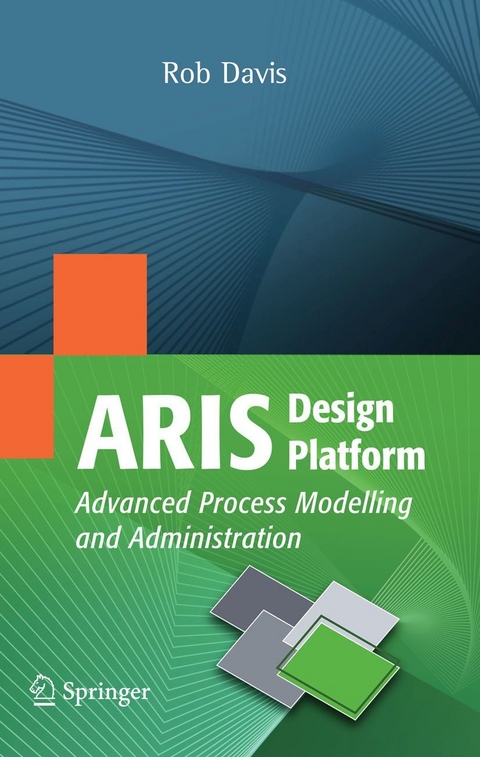
ARIS Design Platform (eBook)
XVIII, 408 Seiten
Springer London (Verlag)
978-1-84800-111-4 (ISBN)
Following on from Rob Davis' successful introductory book, ARIS Design Platform: Getting Started with BPM, Rob now covers in detail some of the more advanced concepts of using ARIS Business Architect.
This is a practical 'how-to' guide and contains tips, techniques and short cuts gained from practical experience and explains clearly how to use ARIS and why ARIS is a powerful tool for process modeling. Advanced concepts such as the following are presented in this reader-friendly and concise guide: - Matrix editor, - Find and query, - Model generation, - Method filters and method changes, - Templates and fonts, - Reports and semantic checks, - Macros, - Transformations, - Database administration, - User management.
This easy-to-follow advanced text is a must have guide and reference for all users who want to increase their ARIS skills, and for those who need to undertake advanced model and database management.
Following on from Rob Davis' successful introductory book, ARIS Design Platform: Getting Started with BPM, Rob now covers in detail some of the more advanced concepts of using ARIS Business Architect.This is a practical how-to guide and contains tips, techniques and short cuts gained from practical experience and explains clearly how to use ARIS and why ARIS is a powerful tool for process modeling. Advanced concepts such as the following are presented in this reader-friendly and concise guide: - Matrix editor, - Find and query, - Model generation, - Method filters and method changes, - Templates and fonts, - Reports and semantic checks, - Macros, - Transformations, - Database administration, - User management.This easy-to-follow advanced text is a must have guide and reference for all users who want to increase their ARIS skills, and for those who need to undertake advanced model and database management.
Acknowledgements 7
Contents 9
Chapter 1 Introduction 19
1.1 Introduction to the ARIS Platform 19
1.2 What’s in this Book 21
1.3 How to Use this Book 23
1.4 References 24
1.5 Icons Used in This Book 24
1.6 Conventions Used in this Book 25
Chapter 2 Before You Start Modelling 27
2.1 Objectives for Modelling 27
2.2 Modelling Requirements 32
2.3 Key Principles 34
References 34
Chapter 3 Process Capture and Modelling 35
3.1 Introduction 35
3.2 Modelling in Teams 35
3.3 Modelling Standards 36
3.4 Process Modelling 37
3.5 Process Capture 40
3.6 Verification and Validation 44
3.7 Roles and Responsibilities 45
References 53
Chapter 4 The Matrix Editor 55
4.1 The Matrix Editor 55
4.2 Creating a Matrix 56
4.3 Saving a Matrix 57
4.4 Deleting a Matrix 58
4.5 Matrix Window 58
4.6 Selecting Object Types 60
4.7 Inserting Objects into a Matrix 62
4.8 Selecting Connection Types 66
4.9 Selecting Connection Settings 68
4.10 Viewing Connections 70
4.11 Editing Connections 76
4.12 Exporting to Excel 80
4.13 Printing a Matrix 81
4.14 Matrix Editor 7.1 81
Chapter 5 Find and Query 83
5.1 Introduction to Find and Queries 83
5.2 Standard Find 83
5.3 Find Objects with Identical Names 89
5.4 Creating Queries 91
5.5 Nesting Queries 108
5.6 Distributing Queries 112
Chapter 6 Model Generation 113
6.1 Introducing Model Generation 113
6.2 Using Model Generation 114
6.3 Generating Vertical Views of the Hierarchy 125
6.4 Horizontal Views of the Hierarchy 130
6.5 Linking EPCs for Model Generation 132
6.6 Generating Models Spanning Levels of the Hierarchy 136
Chapter 7 Modelling in Rows and Columns 139
7.1 Row and Column Models 139
7.2 The Row and Column EPC 141
7.3 Specialised Row/Column Models 153
Chapter 8 Modelling Process Variants 159
8.1 Avoiding Stovepipes 159
8.2 Modelling Variety 159
8.3 Creating Multiple EPC Assignments 161
8.4 A Model Hierarchy with Variant Sub-Processes 162
8.5 Generating a Product-Specific End-to-End Process 169
8.6 Benefits of Modelling with a Variant Hierarchy 171
Chapter 9 ARIS Evaluations 173
9.1 Evaluations 173
9.2 Creating and Managing Evaluation Scripts 177
9.3 Reports 180
9.4 Semantic Checks 186
9.5 Macros 195
9.6 Transformations 200
Chapter 10 Database Administration 205
10.1 The Need for Administration 205
10.2 Administrative Accounts and Privileges 205
10.3 Server Administration 211
10.4 Database Management 213
10.5 Database Configuration 220
10.6 Database Administration 232
10.7 Merging Databases 244
10.8 Administration Reports 252
10.9 The ARIS Admintool 252
Chapter 11 User Administration 255
11.1 Introduction to User Administration 255
11.2 Create New User Account 258
11.3 Create New User Group 268
11.4 Merging Users 270
11.5 Database Access Control 271
11.6 User Administration Reports 277
11.7 Lightweight Directory Access Protocol (LDAP) 277
Chapter 12 Configuring the ARIS Method 279
12.1 ARIS Configuration 279
12.2 The Principles of Configuring ARIS 282
12.3 Configuring the Method 291
References 304
Chapter 13 The Symbol Editor 305
13.1 Introduction 305
13.2 The Drawing Window 306
13.3 The Graphic Symbols Bar 308
13.4 Creating a Symbol 310
13.5 Symbol Appearance Properties 315
13.6 Using the New Symbol 320
Chapter 14 Method Filters and Evaluation Filters 321
14.1 The Importance of Method Filters 321
14.2 Creating and Editing Filters 322
14.3 Creating a Filter from a Database 336
14.4 Merging Filters 343
14.5 Applying Filters 344
14.6 Exporting and Importing Filters 345
Chapter 15 Defining and Using Templates 349
15.1 Introduction to Templates 349
15.2 Fonts and Languages 350
15.3 Creating a New Template 351
15.4 Editing Templates 364
15.5 Exporting and Importing Templates 365
15.6 Applying Templates 365
Chapter 16 Administration Reports 373
16.1 Introduction 373
16.2 Copying Users and User Groups Report 374
16.3 Database Information Report 375
16.4 Replace Font Formats Report 377
16.5 Replace Object Types Report 377
16.6 Replace Symbol Types Report 382
16.7 Consolidate Objects Report 384
16.8 Output Group Information Report 386
16.9 Replace Text Attributes Report 387
16.10 Transfer Groups and Users Report 390
16.11 Format Models Report 391
Chapter 17 Model Verification 393
17.1 Why Verify? 393
17.2 What Should be Verified? 393
17.3 Tools for Verification 395
17.4 Verification Checks 401
Appendix A ARIS Admintool Commands 411
Glossary 415
Subject Index 417
| Erscheint lt. Verlag | 15.9.2008 |
|---|---|
| Zusatzinfo | XVIII, 408 p. 219 illus. |
| Verlagsort | London |
| Sprache | englisch |
| Themenwelt | Mathematik / Informatik ► Informatik ► Web / Internet |
| Mathematik / Informatik ► Mathematik ► Finanz- / Wirtschaftsmathematik | |
| Wirtschaft ► Allgemeines / Lexika | |
| Wirtschaft ► Betriebswirtschaft / Management ► Wirtschaftsinformatik | |
| Schlagworte | ARIS • ARIS Business Architect • ARIS Design Platform • ARIS Platform • BPM • Business Process • business process management • Business Process Modelling • Enterprise Architecture • Event-driven Process Chain • Modeling • Optimization • Process design • Process Modelling • Service-Oriented Architecture • verification |
| ISBN-10 | 1-84800-111-8 / 1848001118 |
| ISBN-13 | 978-1-84800-111-4 / 9781848001114 |
| Informationen gemäß Produktsicherheitsverordnung (GPSR) | |
| Haben Sie eine Frage zum Produkt? |
 PDF (Wasserzeichen)
DRM: Digitales Wasserzeichen
Dieses eBook enthält ein digitales Wasserzeichen und ist damit für Sie personalisiert. Bei einer missbräuchlichen Weitergabe des eBooks an Dritte ist eine Rückverfolgung an die Quelle möglich.
Dateiformat: PDF (Portable Document Format)
Mit einem festen Seitenlayout eignet sich die PDF besonders für Fachbücher mit Spalten, Tabellen und Abbildungen. Eine PDF kann auf fast allen Geräten angezeigt werden, ist aber für kleine Displays (Smartphone, eReader) nur eingeschränkt geeignet.
Systemvoraussetzungen:
PC/Mac: Mit einem PC oder Mac können Sie dieses eBook lesen. Sie benötigen dafür einen PDF-Viewer - z.B. den Adobe Reader oder Adobe Digital Editions.
eReader: Dieses eBook kann mit (fast) allen eBook-Readern gelesen werden. Mit dem amazon-Kindle ist es aber nicht kompatibel.
Smartphone/Tablet: Egal ob Apple oder Android, dieses eBook können Sie lesen. Sie benötigen dafür einen PDF-Viewer - z.B. die kostenlose Adobe Digital Editions-App.
Buying eBooks from abroad
For tax law reasons we can sell eBooks just within Germany and Switzerland. Regrettably we cannot fulfill eBook-orders from other countries.
aus dem Bereich