


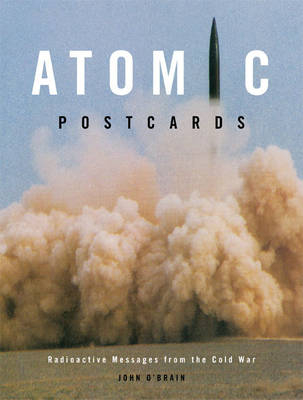
Atomic Postcards
Radioactive Messages from the Cold War
Seiten
2011
Intellect Books (Verlag)
978-1-84150-431-5 (ISBN)
Intellect Books (Verlag)
978-1-84150-431-5 (ISBN)
Includes the facsimile postcards and handwritten messages that date from the bombing of Hiroshima and Nagasaki to the end of the Cold War. This book investigates the part played by atomic postcards in creating and disseminating a public image of the bomb and nuclear power between 1945 and 1989.
Atomic postcards played an important role in creating and disseminating a public image of nuclear power. Presenting small-scale images of test explosions, power plants, fallout shelters, and long-range missiles, the cards were produced for mass audiences in China, the United States, the Soviet Union, and Japan, and they link the multilayered geographies of Atomic Age nationalism and tourism. From the unfailingly cheery slogans—“Greetings from Los Alamos”—to blithe, handwritten notes and no-irony-intended “Pray for Peace” postmarks, these postcards mailed from the edge of danger nonetheless maintain the upbeat language of their medium.
With 150 reproductions of cards and handwritten messages dating from the 1945 bombing of Hiroshima and Nagasaki to the end of the Cold War, Atomic Postcards offers a fascinating glimpse of a time when the end of the world seemed close at hand.
Atomic postcards played an important role in creating and disseminating a public image of nuclear power. Presenting small-scale images of test explosions, power plants, fallout shelters, and long-range missiles, the cards were produced for mass audiences in China, the United States, the Soviet Union, and Japan, and they link the multilayered geographies of Atomic Age nationalism and tourism. From the unfailingly cheery slogans—“Greetings from Los Alamos”—to blithe, handwritten notes and no-irony-intended “Pray for Peace” postmarks, these postcards mailed from the edge of danger nonetheless maintain the upbeat language of their medium.
With 150 reproductions of cards and handwritten messages dating from the 1945 bombing of Hiroshima and Nagasaki to the end of the Cold War, Atomic Postcards offers a fascinating glimpse of a time when the end of the world seemed close at hand.
John O’Brian is professor of art history at the University of British Columbia. Jeremy Borsos is a visual artist whose exhibitions have been reviewed in Art in America and Canadian Art.
RECTO | VERSO – JOHN O’BRIAN
THE POSTCARDS
CATALOGUE
ACKNOWLEDGEMENTS
| Erscheint lt. Verlag | 12.7.2013 |
|---|---|
| Sprache | englisch |
| Maße | 229 x 229 mm |
| Themenwelt | Kunst / Musik / Theater ► Design / Innenarchitektur / Mode |
| Kunst / Musik / Theater ► Kunstgeschichte / Kunststile | |
| Mathematik / Informatik ► Informatik ► Grafik / Design | |
| ISBN-10 | 1-84150-431-9 / 1841504319 |
| ISBN-13 | 978-1-84150-431-5 / 9781841504315 |
| Zustand | Neuware |
| Informationen gemäß Produktsicherheitsverordnung (GPSR) | |
| Haben Sie eine Frage zum Produkt? |
Mehr entdecken
aus dem Bereich


aus dem Bereich
Die Kreativmaschine. Next Edition
Buch | Softcover (2024)
Verlag Hermann Schmidt
CHF 55,95
Schritt für Schritt zu Vektorkunst, Illustration und Screendesign
Buch | Hardcover (2023)
Rheinwerk (Verlag)
CHF 55,85


