


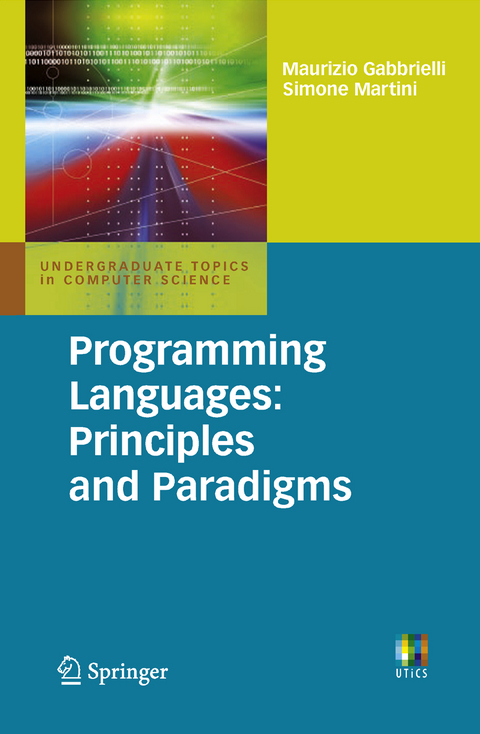
Programming Languages: Principles and Paradigms
Seiten
2010
Springer London Ltd (Verlag)
978-1-84882-913-8 (ISBN)
Springer London Ltd (Verlag)
978-1-84882-913-8 (ISBN)
- Titel erscheint in neuer Auflage
- Artikel merken
Zu diesem Artikel existiert eine Nachauflage
Programming Languages is a self-contained approach to the topic, and differentiates between the design, implementation and pragmatic aspects of programming languages overall. The main programming paradigms are presented, in a straightforward way.
This excellent addition to the UTiCS series of undergraduate textbooks provides a detailed and up to date description of the main principles behind the design and implementation of modern programming languages.
Rather than focusing on a specific language, the book identifies the most important principles shared by large classes of languages. To complete this general approach, detailed descriptions of the main programming paradigms, namely imperative, object-oriented, functional and logic are given, analysed in depth and compared. This provides the basis for a critical understanding of most of the programming languages.
An historical viewpoint is also included, discussing the evolution of programming languages, and to provide a context for most of the constructs in use today. The book concludes with two chapters which introduce basic notions of syntax, semantics and computability, to provide a completely rounded picture of what constitutes a programming language.
This excellent addition to the UTiCS series of undergraduate textbooks provides a detailed and up to date description of the main principles behind the design and implementation of modern programming languages.
Rather than focusing on a specific language, the book identifies the most important principles shared by large classes of languages. To complete this general approach, detailed descriptions of the main programming paradigms, namely imperative, object-oriented, functional and logic are given, analysed in depth and compared. This provides the basis for a critical understanding of most of the programming languages.
An historical viewpoint is also included, discussing the evolution of programming languages, and to provide a context for most of the constructs in use today. The book concludes with two chapters which introduce basic notions of syntax, semantics and computability, to provide a completely rounded picture of what constitutes a programming language.
Abstract Machines.- How to Describe a Programming Language.- Foundations.- Names and The Environment.- Memory Management.- Control Structure.- Control Abstraction.- Structuring Data.- Data Abstraction.- The Object-Oriented Paradigm.- The Functional Paradigm.- The Logic Programming Paradigm.- A Short Historical Perspective.
| Reihe/Serie | Undergraduate Topics in Computer Science |
|---|---|
| Zusatzinfo | XX, 440 p. |
| Verlagsort | England |
| Sprache | englisch |
| Maße | 155 x 235 mm |
| Themenwelt | Mathematik / Informatik ► Informatik ► Software Entwicklung |
| Informatik ► Theorie / Studium ► Compilerbau | |
| ISBN-10 | 1-84882-913-2 / 1848829132 |
| ISBN-13 | 978-1-84882-913-8 / 9781848829138 |
| Zustand | Neuware |
| Informationen gemäß Produktsicherheitsverordnung (GPSR) | |
| Haben Sie eine Frage zum Produkt? |
Mehr entdecken
aus dem Bereich
aus dem Bereich
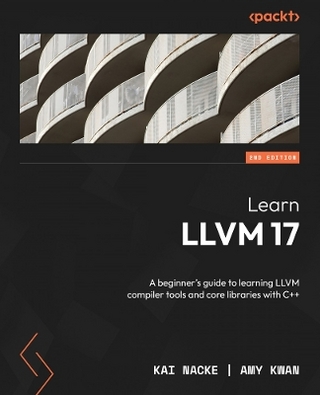
a beginner's guide to learning llvm compiler tools and core …
Buch | Softcover (2024)
Packt Publishing Limited (Verlag)
CHF 66,30


