


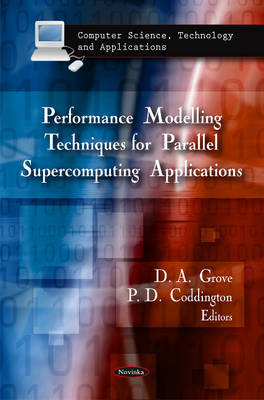
Performance Modelling Techniques for Parallel Supercomputing Applications
Seiten
2010
Nova Science Publishers Inc (Verlag)
9781606922699 (ISBN)
Nova Science Publishers Inc (Verlag)
9781606922699 (ISBN)
Ever since the invention of the computer, users have demanded more computational power to tackle complex problems. A common means of increasing the computational power for solving a problem is to use parallel computing. This book covers research into techniques for modelling the performance of computer programs running on parallel computers.
Ever since the invention of the computer, users have demanded more and more computational power to tackle increasingly complex problems. A common means of increasing the amount of computational power available for solving a problem is to use parallel computing. Unfortunately, however, creating efficient parallel programs is notoriously difficult. In addition to all of the well-known problems that are associated with constructing a good serial algorithm, there are a number of problems specifically associated with constructing a good parallel algorithm. These mainly revolve around ensuring that all processors are kept busy and that they have timely access to the data that they require. Unfortunately, however, controlling a number of processors operating in parallel can be exponentially more complicated than controlling one processor. Furthermore, unlike data placement in serial programs, where sophisticated compilation techniques that optimise cache behaviour and memory interleaving are common, optimising data placement throughout the vastly more complex memory hierarchy present in parallel computers is often left to the parallel application programmer. All of these problems are compounded by the large number of parallel computing architectures that exist, because they often exhibit vastly different performance characteristics, which makes writing well-optimised, portable code especially difficult. The primary weapon against these problems in a parallel programmer's or parallel computer architect's arsenal is -- or at least should be -- the art of performance prediction. This book provides a historical exposition of over four decades of research into techniques for modelling the performance of computer programs running on parallel computers.
Ever since the invention of the computer, users have demanded more and more computational power to tackle increasingly complex problems. A common means of increasing the amount of computational power available for solving a problem is to use parallel computing. Unfortunately, however, creating efficient parallel programs is notoriously difficult. In addition to all of the well-known problems that are associated with constructing a good serial algorithm, there are a number of problems specifically associated with constructing a good parallel algorithm. These mainly revolve around ensuring that all processors are kept busy and that they have timely access to the data that they require. Unfortunately, however, controlling a number of processors operating in parallel can be exponentially more complicated than controlling one processor. Furthermore, unlike data placement in serial programs, where sophisticated compilation techniques that optimise cache behaviour and memory interleaving are common, optimising data placement throughout the vastly more complex memory hierarchy present in parallel computers is often left to the parallel application programmer. All of these problems are compounded by the large number of parallel computing architectures that exist, because they often exhibit vastly different performance characteristics, which makes writing well-optimised, portable code especially difficult. The primary weapon against these problems in a parallel programmer's or parallel computer architect's arsenal is -- or at least should be -- the art of performance prediction. This book provides a historical exposition of over four decades of research into techniques for modelling the performance of computer programs running on parallel computers.
Preface; Introduction; Amdahl; Fortune and Wylie; Hoare, Milner, Alur and Dill; Valiant; Hockney; Saavedra and Smith; Culler; Grama; Adve; Singh; Mehra; Parashar and Hariri; Skillicorn; Crovella and LeBlanc; Mraz, Tabe; Clement, Quinn and Steed; Islam; Jonkers; Van Gemund; Labarta and Girona; Dunlop and Hey; Becker; Gautama; Tam and Wang; Kranzlm uller and Schaubschlager; Grove and Coddington; SciDAC PERC and PERI; Conclusion; Index.
| Erscheint lt. Verlag | 2.11.2010 |
|---|---|
| Verlagsort | New York |
| Sprache | englisch |
| Gewicht | 206 g |
| Themenwelt | Mathematik / Informatik ► Informatik ► Theorie / Studium |
| ISBN-13 | 9781606922699 / 9781606922699 |
| Zustand | Neuware |
| Informationen gemäß Produktsicherheitsverordnung (GPSR) | |
| Haben Sie eine Frage zum Produkt? |
Mehr entdecken
aus dem Bereich


aus dem Bereich
was jeder über Informatik wissen sollte
Buch | Softcover (2024)
Springer Vieweg (Verlag)
CHF 53,15
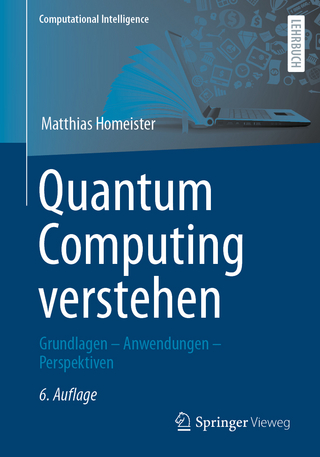
Grundlagen – Anwendungen – Perspektiven
Buch | Softcover (2022)
Springer Vieweg (Verlag)
CHF 53,15
Teil 2 der gestreckten Abschlussprüfung Fachinformatiker/-in …
Buch | Softcover (2025)
Europa-Lehrmittel (Verlag)
CHF 37,90


