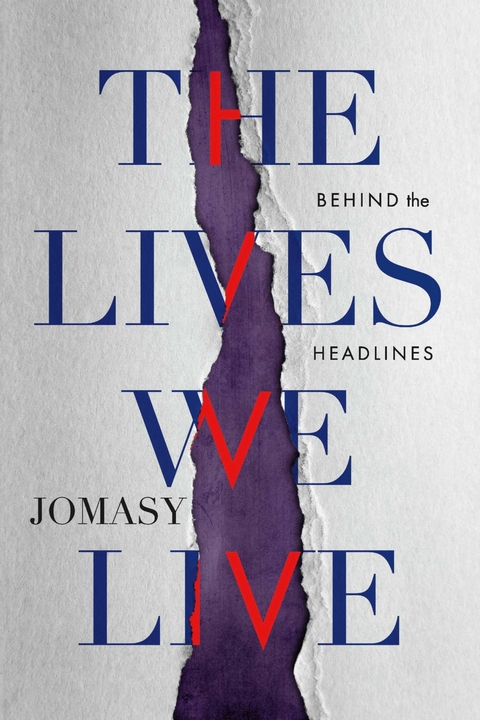
Lives We Live (eBook)
204 Seiten
Bookbaby (Verlag)
979-8-3178-2183-8 (ISBN)
Jomasy is an author and former teacher. When she's not spending time with her family, she enjoys reading, writing, politics, and praising. Her debut work aims to bring attention to the power regular people hold during times of political chaos.
Have you ever wondered about the people behind the headlines? The crowds and groups of regular people who band together, reacting to events around them, and sparking new developments?Follow a group of these regular people as they live through political turmoil and trauma. A group who share the same faith, yet find themselves deeply divided politically. Most of all, discover the power and consequences that these regular people behind the headlines can bring. A timely political thriller, perfect for fans of the genre or anyone who's found themselves watching recent political events with bated breath.
The Jacksons
The Jacksons were well known in town. The younger son, Chris, attended the University of Texas and played on the football team, the Texas Longhorns. He was five-foot-ten with blue eyes and light brown hair, and he played the running back position. He was popular, easy-going, with a quick smile and a good sense of humor. His older brother, Clayton, worked at the commercial bank where his dad was on the board of directors and his grandfather is a former chairman. Chris lived on campus and did not go home much. He had grown weary of feeling like an outsider in his own home. He loved his family, but every time he went home, he could not wait to leave again.
He was now a junior and knew the NFL would not be an option for him, but he was ok with that. What was taking up most of his time and interest was his activism on campus. He was pretty sure that guilt about his family’s beliefs and actions was the impetus that pushed him, and he felt more and more committed to the work he was doing.
Chris was well aware of his family’s history with the Ku Klux Klan. His maternal grandfather’s father had been a major leader in the movement and the beginning of the family legacy, all the way down to his brother, Clayton. They have no minorities in any management positions at the bank, and they have been sued for mortgage lending discrimination. Meanwhile, his mother is a deacon in the Baptist church where they are all members, and his dad is a leader of the men’s group. Chris had had discussions with Clayton about his beliefs on race and religion many times before, but he just gave up trying to get through to him.
Chris joined Chinaka, Zihan, Pablo, Alisha, and the other members of the Student Body Association at the student union hall meeting he had called. They needed to finalize their plans to keep the momentum going after marking the second anniversary of the Marjory Stoneman Douglas High School Shooting (Parkland Shooting), with the calling of the names of the seventeen students murdered on 2/14/2018, followed by a minute of silence. They had previously formed different committees to plan out a range of activities around gun control, social justice, a more diverse faculty, and a safer campus for women.
“We have a scheduled call with our local congresswoman later this week. We will get her response to the list of student signatures showing their support for increasing background checks,” Zihan informed the students.
“And then what?” asked one of the students.
“We will keep the pressure on. We will remind her of that article we have ready to go where we quote her saying that ‘they want to take your guns! They want illegal aliens to have more rights than you do!’ You know she does not want her fear-mongering out in the public!” Zihan responded.
“Also, we have listed, in detail, all the school shootings that have taken place since Parkland. We are still waiting for more information on the guns themselves. Were they licensed? Where were they purchased? Were any background checks performed?”
“Good work,” Chris said, with Chinaka and Pablo giving a thumbs-up.
Alisha was busy reading on her phone and was shaking her head. “Another young Black man shot by the police in Chicago!” she said. “He was unarmed and was walking away when he was shot!”
“How is someone a threat to you if they are walking away from you?” Pablo asked, gesticulating with his hands.
“This has got to stop!” Zihan said, with her hands on her head.
Alisha was still on her phone getting more information, shaking her head, and saying, “Help us, Jesus.”
Chinaka got up from his chair and started pacing the floor in front of the platform. He was talking at a lower-than-normal volume, but everyone was listening. You could hear a pin drop. “It is all about what they see when they see us. What the police see when they see us. Not someone’s child, not someone’s dad, or brother, or sister, or nephew. No, they see the black skin, and that translates to something that is not human. Something that has no value and is a threat to them.” Chinaka balled his hands into fists and was still pacing.
“What do we do?” One of the students asked.
“Black Lives Matter!” someone else shouted.
It became a chant from the student union body, and then the panelists joined in. After a few minutes, Chris asked for suggestions for next steps, and the discussion went on for a while. Chinaka adjourned the meeting, promising to have an updated agenda on social justice.
Chinaka and Alisha had class in the same building and were walking in that direction. Chinaka said, “I texted a BLM contact concerning the shooting. I will keep the group updated.”
“Ok,” Alisha responded. “We need to get this campus activated and more involved,” she said.
“You ok?” Alisha asked. “You have this look on your face.”
“I’m ok,” Chinaka said. “Talk later.”
Chinaka was deep in thought. He was having a moment. He recognized the feeling. The last time he had this kind of reaction, it led to the beginning of the alliances he had formed in different states and with Ewe in England, which led to the successful Benin Bronzes project. He started reflecting on that time and on the successful voter registration in high school. He knew this was another opportunity to do more.
Back in his room, Chris was thinking about what Chinaka said at the meeting. He kept hearing Chinaka’s words and asked himself the question, “What do some police see when they see black and brown people?” As a young white man who grew up in Austin, Chris had never felt threatened by the police. He remembered once driving home with some friends from a party after having had a few drinks. He had dropped off his friends and was speeding, trying to get home as quickly as possible. A cop pulled him over.
“Do you know how fast you were going?” the cop asked.
Chris shook his head, “No, sir.”
“License and registration, please.” The cop looked it over and said, “I don’t think your parents would be happy to know that you are intoxicated and speeding, Chris.”
“I am not drunk, officer,” Chris said. “I just had a couple beers.”
The officer replied, “I am going to give you a warning. Do not let this happen again. Get a designated driver next time. I will follow you home to make sure you get home safely.”
If I were black, would I have been treated like that? Or could that incident have resulted in my death? Chris was distracted throughout the day and even at football practice.
“Get your head in the game!” his coach yelled at him. At the end of practice, his coach called him over to talk to him.
“What’s going on, Chris?”
“I am sorry, Coach. I have a lot on my mind right now. It is personal. Something I need to deal with.” Chris then made a decision that he had been pondering for a while now. “I think I should take some time off.”
Coach looked at him with some concern, “Ok. Take some time and let me know.”
“Thanks, coach,” Chris responded.
The following week, there was a campus incident that shifted the student body’s focus. A freshman student reported that she was sexually assaulted on campus. It was a date rape situation, and the student union was divided almost 50–50. It was very interesting because there were just as many women who were for the alleged victim as there were for the alleged assailant. With the men, it was about 70%–30% for the guy, the alleged assailant, and with the women, it was 65%–35% for the girl, the alleged victim. Alisha, who headed the Safe Campus for Women committee, addressed the student body, trying not to take sides.
“It was a he said, she said situation,” she began. “He said it was consensual, and she insists that she never gave consent because she was drunk. Our focus should be and is that she got to speak and give her side, and the administration is taking her seriously. That is what previous student union protesters had demanded, along with physical security, of course. As far as who is telling the truth and what should be done, well, that is not up to us. We have asked for transparency, and we will insist on that.”
“I don’t know the guy, but I did hear that he had a reputation for being a bully with the ladies,” one of the guys said.
“I heard that he was asking his buddies, why she was complaining now when she enjoyed it,” one of the girls said. “But it’s true though, how can she give consent when she is drunk?”
“So, what’s her responsibility?” asked another girl, “Did he force her to drink too?”
“Please!” Things started getting really loud as people started giving their take on the incident. After a while, Alisha interrupted.
“As I said, we will insist on getting all the information that we are entitled to. If she ends up pressing charges against him, I really do not believe we will get much information.”
Meanwhile, the student agenda on other matters was also in full swing; Chinaka informed the body that BLM protests were going on in Chicago after the latest killing by police, and they were keeping eyes and ears on the situation.
The main discussion point, though, was the request by the football team to ban the university alma mater song “The Eyes on Texas,” which they sang before and after sporting events. This has been an ongoing issue at the university since the...
| Erscheint lt. Verlag | 26.12.2025 |
|---|---|
| Sprache | englisch |
| Themenwelt | Literatur ► Krimi / Thriller / Horror |
| ISBN-13 | 979-8-3178-2183-8 / 9798317821838 |
| Informationen gemäß Produktsicherheitsverordnung (GPSR) | |
| Haben Sie eine Frage zum Produkt? |
 EPUB (Ohne DRM)
Größe: 708 KB
Digital Rights Management: ohne DRM
Dieses eBook enthält kein DRM oder Kopierschutz. Eine Weitergabe an Dritte ist jedoch rechtlich nicht zulässig, weil Sie beim Kauf nur die Rechte an der persönlichen Nutzung erwerben.
Dateiformat: EPUB (Electronic Publication)
EPUB ist ein offener Standard für eBooks und eignet sich besonders zur Darstellung von Belletristik und Sachbüchern. Der Fließtext wird dynamisch an die Display- und Schriftgröße angepasst. Auch für mobile Lesegeräte ist EPUB daher gut geeignet.
Systemvoraussetzungen:
PC/Mac: Mit einem PC oder Mac können Sie dieses eBook lesen. Sie benötigen dafür die kostenlose Software Adobe Digital Editions.
eReader: Dieses eBook kann mit (fast) allen eBook-Readern gelesen werden. Mit dem amazon-Kindle ist es aber nicht kompatibel.
Smartphone/Tablet: Egal ob Apple oder Android, dieses eBook können Sie lesen. Sie benötigen dafür eine kostenlose App.
Geräteliste und zusätzliche Hinweise
Buying eBooks from abroad
For tax law reasons we can sell eBooks just within Germany and Switzerland. Regrettably we cannot fulfill eBook-orders from other countries.
aus dem Bereich