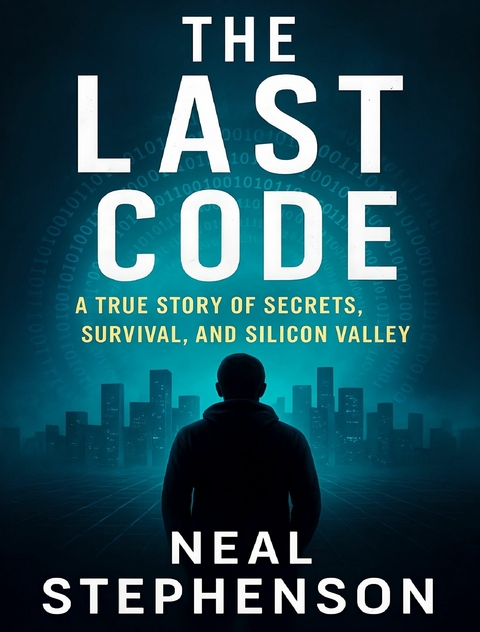
The Last Code (eBook)
244 Seiten
Publishdrive (Verlag)
978-0-00-112599-5 (ISBN)
A gripping journey into the heart of Silicon Valley, The Last Code unveils the secret world where ambition, technology, and morality collide. Follow Alex, a brilliant coder thrust into a labyrinth of encrypted networks, corporate espionage, and AI-driven power struggles. As he navigates treacherous digital landscapes and uncovers shocking truths about the tech elite, Alex must confront impossible choices-between personal gain and ethical responsibility, between survival and revealing the truth.
From clandestine algorithms capable of reshaping humanity to deadly corporate conspiracies, every chapter immerses you in high-stakes tension, unexpected twists, and the relentless pace of a world driven by code. This is more than a story about technology; it is a story about trust, sacrifice, and the human cost of power in an age where data controls everything.
The Last Code is a must-read for fans of techno-thrillers, cyber-adventures, and anyone intrigued by the hidden forces that shape our digital world.
Prologue: The Night the Servers Went Dark
Alex Mercer leaned back in his chair, the glow of multiple monitors illuminating his tired face. Outside the San Francisco skyline was a blur of neon lights, the city that never truly slept. But inside the glass-and-steel fortress of Ardent Technologies, something was very wrong. The hum of the servers had always been a comfort to him, a rhythm that signaled that the machine world was running smoothly. Tonight, that hum had changed. It was irregular, almost hesitant, as if the machines themselves were wary of what was coming.
He clicked through logs, scanning lines of code that scrolled faster than his eyes could track. There were anomalies, patterns that made no sense, traces of data packets vanishing into the void. His fingers hovered over the keyboard, frozen for a moment, as a cold realization sank in: this wasn’t a glitch, this was deliberate. Someone was inside.
Alex’s mind raced back to the morning’s briefing. The board had spoken of expansion, of launching the new AI-driven predictive analytics platform ahead of schedule. Everyone had been excited, boasting about the billions of dollars at stake, the prestige of being first. But no one had mentioned the risk. The risk that some unknown actor, somewhere in the world, could see their progress, manipulate it, destroy it. Now, that fear was real.
A warning message flickered across one of the screens. It was subtle at first, barely noticeable, a single line buried deep in the firewall logs: Unauthorized access detected. Alex froze, his pulse quickening. The intruder had bypassed multiple layers of security, leaving behind almost no trace. But the one thing they hadn’t anticipated was him.
He opened a secure channel and reached out to Lena, the head of cybersecurity. Her voice was calm, almost too calm, as if she didn’t want to alarm anyone else in the office. “Alex, what’s happening?” she asked, her tone betraying a hint of concern. He detailed what he had seen, every anomaly, every missing packet, every subtle sign that screamed intrusion. Lena responded with technical precision, outlining defensive maneuvers, tracing IP routes, initiating lockdown protocols. But even as they worked, Alex felt the edges of panic creeping in.
There was a sound from the server room, distant but unmistakable—a metallic clank, the echo of someone moving where they shouldn’t be. Security cameras showed nothing, every feed looping smoothly, unbroken. Yet the sound persisted, growing closer, a reminder that the cyber-attack might not be entirely digital. Someone could be physically inside the building, exploiting vulnerabilities in the network while remaining unseen.
Alex ran through possible scenarios. Could this be corporate espionage? A competitor? Or worse, a state-sponsored attack designed to destabilize the technology sector? He knew the stakes were high, but the magnitude was beyond what he had ever imagined. Billions of dollars, decades of research, and countless careers were at risk. And at that moment, in the dim glow of the monitors, Alex felt the weight of responsibility pressing down on him.
Outside, the city lights shimmered like distant stars. Inside, the servers whirred, uncertain, almost alive with the pulse of information coursing through fiber optics and circuit boards. Alex typed a command, tracing the last known access point. He followed the trail through encrypted layers, past decoy systems, and into the heart of the network. And there it was: a pattern, faint but undeniable, a digital signature left by someone who wanted him to know they were there.
His stomach tightened as the realization hit. This wasn’t just theft, or sabotage. This was a message. The intruder was smart, meticulous, almost personal. They knew the system inside and out, but more importantly, they knew him. Every keystroke, every routine check, every minor adjustment he had made in the past months—they had watched him, studied him, and now they were challenging him.
Alex felt a shiver run down his spine. He knew the consequences of failure. Entire projects could collapse. Data could be destroyed or manipulated, investors could pull out, and the reputations of everyone at Ardent Technologies could be ruined. And all of it hinged on his next move, every decision weighted with precision, speed, and intellect. One mistake could mean total disaster.
He leaned forward, eyes scanning the monitors, heart pounding. The night was long, the city outside oblivious to the silent war unfolding inside the building. The servers continued to hum, a rhythm of tension and possibility, of chaos and control. And Alex Mercer, alone in the dim glow of his office, realized that this night would change everything. The servers had gone dark, but his fight to bring them back to life, and to uncover the mind behind the attack, was only beginning.
Alex Mercer sat in silence, the pale light of the monitors reflecting off his glasses. Every alert that pinged across the system felt like a drumbeat of impending doom. He leaned closer, scrolling through the security logs, tracing the intruder’s digital footprints. Each movement, each hack, was deliberate, almost taunting. Whoever was behind this wasn’t just trying to steal data—they were orchestrating a symphony of chaos.
Lena’s voice crackled through the secure line. “Alex, we’ve isolated several compromised nodes. But there’s a problem—the intrusion seems to adapt in real time. Every measure we put in place is being bypassed as if it anticipates our actions.” Her calmness belied the gravity of the situation. Alex knew that calm was a luxury they couldn’t afford.
He opened a secondary terminal, running multiple programs simultaneously. Firewalls were being disabled, encrypted files quietly siphoned off to unknown servers. His mind raced, trying to predict the next move. Whoever they were, they had inside knowledge—credentials, system architecture, even his personal coding habits. Someone had meticulously studied the company for months, maybe years.
A sudden alert blinked on the monitor: unauthorized access from an internal IP. Alex froze. Internal? That meant the attacker had either compromised an employee’s account or—worse—was physically inside the building. He quickly cross-referenced the logs, tracing the signal, but it kept bouncing through different points, making detection almost impossible.
The lights flickered briefly, and Alex’s heart jumped. Power fluctuations weren’t uncommon, but the timing was uncanny. The intrusion had reached a new stage—something that would make a digital breach a full-scale crisis. He tried to maintain control, to methodically counter the attack, but the pace of events was accelerating.
He remembered a phrase from cybersecurity training: attackers are patient, defenders are reactive. And it had never felt more real. Every defensive measure he initiated was instantly neutralized. It was as if the intruder was a ghost in the network, visible only through subtle traces, teasing him, testing him.
Suddenly, Lena’s voice was urgent. “Alex, the central AI node—the predictive analytics core—is being targeted directly. If they gain control, they can manipulate forecasts, financial projections, even internal decisions. This isn’t just data theft anymore—it’s strategic sabotage.”
Alex’s stomach tightened. The AI core wasn’t just a collection of algorithms. It was the crown jewel of Ardent Technologies, months of work, billions of dollars of intellectual property, and the future of the company. Losing it would be catastrophic.
He initiated a counter-protocol, isolating the AI node from external access, rerouting data, attempting to quarantine the intruder. But each action seemed anticipated. Code he hadn’t written was running, executing commands he didn’t authorize. It was a war being fought not with soldiers, but with electrons and logic gates, and Alex felt the weight of each decision pressing down like a physical force.
The door to the server room clicked. Alex spun around, his chair creaking under him. The room was dark, save for the glow of the monitors. Shadows danced along the walls, but no one was there. He forced himself to breathe, reminding himself that paranoia was part of the game. But a niggling thought lingered: what if this was more than digital warfare? What if the intruder was real, present, watching?
He returned to his monitors, scanning through lines of code, searching for anomalies. And there it was—a pattern that didn’t belong. Hidden, subtle, almost elegant in its design. The attacker had left a signature, almost like a calling card. Someone wanted Alex to see it, to know they were there, to provoke him.
Outside, the city continued to hum with oblivious life. Inside the fortified walls of Ardent Technologies, Alex felt the thin veil of security crumble. Every firewall, every encrypted protocol, every defensive measure was being dismantled with precision. And with each passing second, the intruder moved closer to their ultimate goal: control over the most powerful AI the company had ever built.
Alex knew one thing with certainty: the night was far from over. And by dawn, either he or the intruder would emerge victorious.
Alex Mercer’s fingers moved across the keyboard with a practiced rhythm, a delicate dance between defense and counterattack. Every line of code he entered was calculated, yet the intruder responded almost instantaneously, as though reading his mind. Sweat beaded on his forehead, and the hum of the servers now sounded more like a warning than a comfort.
He pulled up the live security feeds, scanning every hallway and entry point. Security personnel...
| Erscheint lt. Verlag | 6.12.2025 |
|---|---|
| Sprache | englisch |
| Themenwelt | Literatur ► Krimi / Thriller / Horror |
| ISBN-10 | 0-00-112599-0 / 0001125990 |
| ISBN-13 | 978-0-00-112599-5 / 9780001125995 |
| Informationen gemäß Produktsicherheitsverordnung (GPSR) | |
| Haben Sie eine Frage zum Produkt? |
 EPUB (Adobe DRM)
Größe: 1,5 MB
Kopierschutz: Adobe-DRM
Adobe-DRM ist ein Kopierschutz, der das eBook vor Mißbrauch schützen soll. Dabei wird das eBook bereits beim Download auf Ihre persönliche Adobe-ID autorisiert. Lesen können Sie das eBook dann nur auf den Geräten, welche ebenfalls auf Ihre Adobe-ID registriert sind.
Details zum Adobe-DRM
Dateiformat: EPUB (Electronic Publication)
EPUB ist ein offener Standard für eBooks und eignet sich besonders zur Darstellung von Belletristik und Sachbüchern. Der Fließtext wird dynamisch an die Display- und Schriftgröße angepasst. Auch für mobile Lesegeräte ist EPUB daher gut geeignet.
Systemvoraussetzungen:
PC/Mac: Mit einem PC oder Mac können Sie dieses eBook lesen. Sie benötigen eine
eReader: Dieses eBook kann mit (fast) allen eBook-Readern gelesen werden. Mit dem amazon-Kindle ist es aber nicht kompatibel.
Smartphone/Tablet: Egal ob Apple oder Android, dieses eBook können Sie lesen. Sie benötigen eine
Geräteliste und zusätzliche Hinweise
Buying eBooks from abroad
For tax law reasons we can sell eBooks just within Germany and Switzerland. Regrettably we cannot fulfill eBook-orders from other countries.
aus dem Bereich