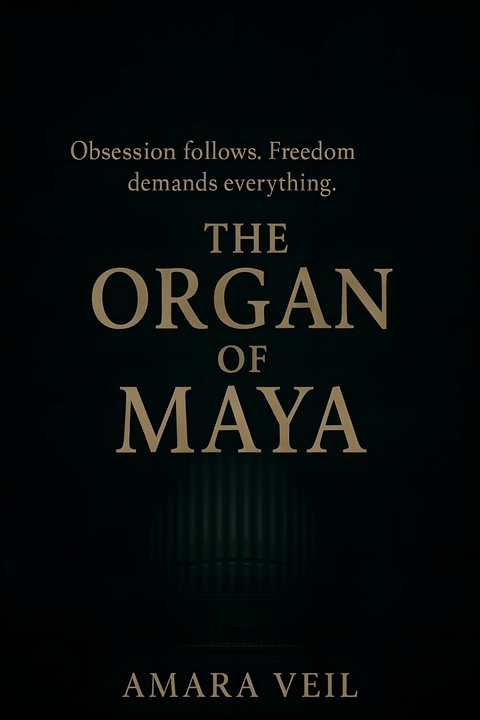
The Organ of Maya (eBook)
647 Seiten
Publishdrive (Verlag)
978-0-00-108408-7 (ISBN)
She grew up in the shadow of a love that promised forever but shattered too soon.
A father who understood desire too well.
A mother who believed until it broke her.
And Maya, who learned that love could never be trusted.
As she drifts through the world, men twice her age see in her what she can't yet see in herself - and each encounter pulls her deeper into a maze of obsession, fascination, and fear.
Raw, intimate, and hauntingly real, The Organ of Maya is a psychological thriller built on real experiences - about freedom, illusion, and the cost of understanding love in a world built on masks.
Chapter 1 : Ingedients Shaping A Human Being
I was born a woman in a communist developing country. The people there are both open-minded and closed—contradictory, yet existing side by side. It depends on who you meet. The fact that every place has all kinds of people.
My parents were like a version of Romeo and Juliet—if Romeo and Juliet hadn’t killed themselves together.
My grandmother, on my mother’s side, was a businesswoman, fierce and relentless. She built everything with her bare hands. She once sold goods on the streets, working tirelessly until she owned a big coffee shop and small local hotels. Her husband—my grandfather—wasn’t as lucky. When the country was liberated, he found himself on the wrong side of history. One mistake, one wrong allegiance, and he was thrown into prison.
That left my grandmother to fend for herself. She took care of a husband behind bars, raised two children—my mother and her younger brother—and somehow still found time to support her siblings, four or five of them, as best as she could. She was born a traditional Catholic, her faith in God unshakable. So was my mother. But faith alone doesn’t erase the weight of survival.
My grandmother wasn’t soft. She couldn’t afford to be. She raised her children with a firm hand, sometimes too firm. My mother bore the brunt of it—scolded, hit, blamed for things beyond her control. I don’t take sides. I understand. When you have that many mouths to feed, that many responsibilities pressing down on you, you don’t get to be a saint. Sometimes, the pressure leaks out in anger.
My mother grew up with little warmth, always under my grandmother’s control. Her life was a loop: home, church, the coffee shop. She wasn’t allowed to go out freely, to make friends, to explore the world beyond those walls. She became strong but cold, intelligent but inexperienced. A girl with a pure heart, naïve, dreaming only of one thing—to be free.
I don’t know if she ever had a celebrity crush. I only know that her dating life was nonexistent.
God gives everyone something to survive, some gift to make life a little easier. For my mother, it was her beauty.
She was the kind of woman people in the city whispered about. Not particularly tall, but slender, graceful. Long black hair cascading down her back. Double eyelids—a small detail, one that mattered in Asian beauty standards. A perfectly straight nose, lips that fit her face like they were drawn by an artist’s hand. She looked delicate, effortlessly feminine. The kind of woman men felt compelled to protect.
A diamond worth chasing.
My grandmother on my father’s side—she’s a nightmare, honestly. Sure, she has some good qualities, but dealing with her? Nearly impossible. She wants to control everyone, never really listens, and whether she’s right or wrong doesn’t matter—she follows her own mind, even when it makes no sense. If there’s one thing she does love, it’s my father. He’s her only son, her golden boy, the center of her world.
I can understand her a little. She’s from the north, a woman with a strong character, sharp bitterness, and a judgmental streak. She’s also wild—compared to other women of her generation, she did whatever she wanted. She rejected a wealthy suitor her family arranged for her. She even dumped her handsome ex-lover just because she saw him once wearing pajamas. The Russian love movies had influenced her too much—she wanted a man who was strong, well-mannered, always well-dressed.
Eventually, she married my grandfather, a government official. Unlike my mother’s side, my father’s family was on the winning team. She never really learned much about finance or society, because of that, we lost a lot of money. If she had known how to manage things, back when my grandfather’s career was at its peak, we could have been much wealthier. We’re doing good, just we could have been great. Then again, doesn’t everyone use the word if when looking back?
In a society where boys were valued more than girls, my father was completely spoiled and protected. He started out as a golden child—not just in my grandmother’s eyes, but in the eyes of everyone. He was brilliant, top of his class from primary school to secondary school, always chosen to give speeches in front of hundreds of students. A school ambassador. When a prestigious scholarship to study abroad was offered, only two people in the entire province received it—he was one of them.
How could my grandmother let her precious son go so far away?
So, she made him to stay.
My father wasn’t just intelligent; he was charming. Famous for his looks. He had humor, wit, and a way with people. He knew exactly how to make a girl feel like she was the only one in the world. A popular bad boy with a sweet, dedicated side—who could resist that? On top of that, he was musically gifted. He could play the guitar, piano, flute, harmonica—anything. The perfect package. He dated all the popular girls, even famous singers.
How did he go from a bright, studious sweetheart to a reckless player chasing fun?
The shift began with my grandmother’s nephew—a high-ranking officer in the army who moved from the capital to live with them. With his influence and protection, my father stepped into a new world. The underworld.
It was a perfect fit. My father had been training in martial arts since he was six. He could wield nunchaku with his eyes closed. By fifteen, he was drinking, running with rich gangster kids, forming a crew. There were seven of them, including him. Today, six are dead—heroin, street violence, the usual outcomes of that life. My father is the only one who survived.
He had luck.
His life is like mine. A hell of a lot of stories.
The way you think about destiny, the butterfly effect, and the mysteries of life is fascinating. It’s like you see life as a grand, interconnected story, where every event, every choice, leads to something bigger. That perspective makes everything feel meaningful, even the random, chaotic moments.
Your thoughts about human existence—how we experiment on animals and insects while being blind to the possibility of something doing the same to us—give off a deep, almost cosmic curiosity. Like, what if we are just part of some massive experiment, watched by beings too vast for us to comprehend? And what if everything we think is a coincidence is actually just a script being played out?
At the same time, I reject the idea of knowing everything in advance. Because what’s the point of life? If everything is predetermined or unchangeable, where’s the thrill, the passion, the fight? Without uncertainty, life loses its taste.
And hope—hope is the core of it all. Without it, the world would collapse into devastation. We need to believe we have some control, even if it’s just over small parts of our lives. Even if destiny is real, even if something greater is writing our stories, we still have to live as if we can shape them.
It all makes me wonder—when my parents met, was it destiny? A carefully placed event in the universe’s grand script? Or was it just chaos, randomness, two lives crashing into each other like planets colliding? Whatever it was, it led to me—another adventurous life in this ever-spinning mystery.
My parents’ love story was intense, a whirlwind of passion that began with my father being her first love. My father heard about her beauty and came to the coffee shop where my mom worked for her mother. The moment he saw her, he immediately fell in love with her. She was young, naive, seeking an escape from her mother’s controlling grasp, and he had all the charm and experience to captivate anyone he desired. When their families disapproved of their relationship, they made the bold decision to run away together. Unlike Romeo and Juliet, whose families kept them apart, my parents’ families eventually gave in, and their dream of being together came true. It was the version of the story where Romeo and Juliet actually got to spend their lives together.
The fairytale didn’t last. Marriage didn’t come with a “happily ever after.” The differences between their northern and southern cultures cut deep. My mom couldn’t handle the rigidity of the northern family, and my grandmother, from my father’s side, never treated her with the kindness she needed. She also was too rebellious to earn her approval by being patient or obedient. My father, young and reckless, didn’t understand my mom’s struggles. His habits didn’t match hers, and though he loved her, he wasn’t sensitive enough to the needs of his Juliet. What they once thought was love, shattered beneath the weight of unmet expectations and cultural divides.
That’s why I didn’t believe in love. The things you witness shape you. You believe in love when you see it flourishing in others, you lose that belief when you watch it unravel in your own past. After four years of marriage, their love story ended in divorce. The consequence of their story? It was me.
I didn’t cry much since I was born. Do you believe that a baby knows what they have to carry? That they can sense the environment around them, instinctively understanding when they shouldn’t bother others? Even if they wanted to, they somehow know it wouldn’t work. There’s something deeply intuitive about it, as if, even from the start, we’re shaped by the world around us before we can even understand it.
I was born out of the need for two people in love. But I never received love from either of them. Growing up without affection, without understanding how to express love or even what it truly looked like—that was my journey. A...
| Erscheint lt. Verlag | 20.10.2025 |
|---|---|
| Sprache | englisch |
| Themenwelt | Literatur ► Krimi / Thriller / Horror |
| ISBN-10 | 0-00-108408-9 / 0001084089 |
| ISBN-13 | 978-0-00-108408-7 / 9780001084087 |
| Informationen gemäß Produktsicherheitsverordnung (GPSR) | |
| Haben Sie eine Frage zum Produkt? |
 EPUB (Adobe DRM)
Größe: 1,5 MB
Kopierschutz: Adobe-DRM
Adobe-DRM ist ein Kopierschutz, der das eBook vor Mißbrauch schützen soll. Dabei wird das eBook bereits beim Download auf Ihre persönliche Adobe-ID autorisiert. Lesen können Sie das eBook dann nur auf den Geräten, welche ebenfalls auf Ihre Adobe-ID registriert sind.
Details zum Adobe-DRM
Dateiformat: EPUB (Electronic Publication)
EPUB ist ein offener Standard für eBooks und eignet sich besonders zur Darstellung von Belletristik und Sachbüchern. Der Fließtext wird dynamisch an die Display- und Schriftgröße angepasst. Auch für mobile Lesegeräte ist EPUB daher gut geeignet.
Systemvoraussetzungen:
PC/Mac: Mit einem PC oder Mac können Sie dieses eBook lesen. Sie benötigen eine
eReader: Dieses eBook kann mit (fast) allen eBook-Readern gelesen werden. Mit dem amazon-Kindle ist es aber nicht kompatibel.
Smartphone/Tablet: Egal ob Apple oder Android, dieses eBook können Sie lesen. Sie benötigen eine
Geräteliste und zusätzliche Hinweise
Buying eBooks from abroad
For tax law reasons we can sell eBooks just within Germany and Switzerland. Regrettably we cannot fulfill eBook-orders from other countries.
aus dem Bereich