Red Army (eBook)
301 Seiten
Publishdrive (Verlag)
978-0-00-107002-8 (ISBN)
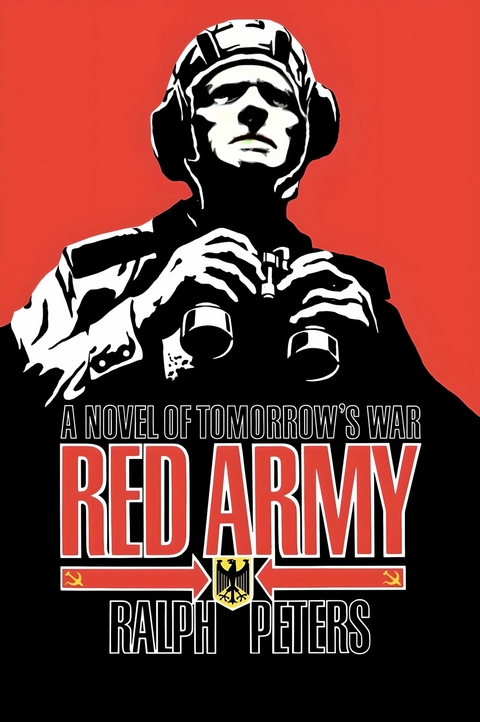
Told from the perspective of Russian soldiers during an imagined Soviet invasion of Western Europe, Ralph Peter, a retired Army lieutenant colonel, intelligence world veteran, and bestselling novelist, delivers an unsettling, gripping, Cold War-era story based on real events.
Set in a fictionalized World War III, Soviet soldiers prepare to invade West Germany in three different locations while western leaders are distracted by the debate of nuclear weapons.
In a number of days, roads are clogged and cities are falling as the Soviets fight a gruesome battle against the West, revealing just how severely unprepared the NATO armies' were for such a deadly attack.
Focused on the perspectives of Soviet soldiers, from a young private dreaming of music and home to a four-star general tirelessly honoring militaristic family traditions, this unique historical novel tells a riveting story of the shocking rivalries and crumbling loyalties that emerge during world-altering international combat.
Prologue
Night came to Germany. In among the pines, the low, sharp-prowed hulls of the infantry fighting vehicles turned black, and the soldiers gathered closer into their squad groups, huddling against the weak rain. Whenever possible, the vehicle commanders had tried to back off the trails in such a way that the nearby trees formed a protective barrier, allowing a safe sleeping space. Those who failed to pay attention to such details risked being crushed during a night alert.
The bivouac site was not virgin territory. When the unit had pulled in under the last afternoon grayness, which was more an ambience than a true light, it was evident that other troops had recently vacated the area. Huge ruts and waves of churned mud, the signatures of tracked vehicles, had ruptured the trails and broken the forest floor. Tins and scraps of paper littered the remaining islands of moss and pine needles, and the smell of human waste was almost as strong as the odor of vehicle exhaust. It was all instantly familiar to Leonid, who had just over a year’s experience of training areas in East Germany, and he recognized his unit’s good fortune in occupying the site while there was still a bit of visibility. The vehicles were much too cramped to sleep in, even had it been permitted, and when you arrived at a new location at night you had no idea where you might decently lie down.
For the first few days after the unit hurried out of garrison, they had moved about only during the hours of darkness. But now the roads were constantly filled, and this last move had been conducted entirely during daylight, covered only by the overcast sky. Everyone craved news. It was evident that this was not a routine exercise, but little information reached the soldiers. Leonid had already heard enough rumors to cause him to worry. All of his life, his teachers and youth activities leaders had drummed into him that the United States and the other Western powers were anxious to unleash a nuclear war against the Soviet Union, and the descriptions of the horrors of such a conflict had been sufficiently graphic to stay with him. Now he wondered what in the world was happening.
Seryosha, the big man and unofficial leader of the squad’s privates, sat under the awning of the vehicle’s camouflage net, assuming its limited bit of protection against the elements as his due. He had opened an issue of combat rations. He picked at the food, telling more stories about his experiences with women. Seryosha was muscular and handsome, and he was from Leningrad. He loved to parade his sophistication.
Seryosha’s audience, to which Leonid belonged, sat in a rough circle. All lights were forbidden, but the officers had disappeared to wherever officers went, and several of the squad members smoked now. Along with the last feeble twilight, the welling glow of drawn cigarettes lent an eeriness to faces and objects that did nothing to improve Leonid’s mood. Off behind the trees, metal clanged against metal, and a voice fired a loud volley of what could only be curses in some Asian language. Then the local silence returned, coddled in the distant humming of the roads.
Sergeant Kassabian, their squad leader, came back from a trip into the woods. Leonid knew he was upset to find that Seryosha had broken open the reserve rations, but Kassabian paused before saying anything.
Seryosha ignored the sergeant’s return. “And city girls,” he went on, “know their way around. No nonsense, lads. They like it, too, and they know you know it.” He noisily fed himself another bite of dried biscuit.
“We’re not supposed to be eating those rations,” Sergeant Kassabian said suddenly, finding his courage.
Leonid could feel Seryosha grinning. Seryosha had a wide, ready grin that seemed to overcome all troubles. Leonid pictured that grin loaded with the chewed mush of the biscuit now. He resented Seryosha’s power but could do nothing about it.
Seryosha moved over to make room under the camouflage for another body. “Come and sit down,” he told Kassabian. “You can’t eat promises. If we wait for the battalion kitchens to feed us, it’ll be the same story as last night. Come on, sit down. If there’s a problem, I’ll handle it.”
Kassabian obediently took a seat beside Seryosha, as if the bigger boy’s natural authority might expand to include him. The rumble of another unit moving nearby seemed to bring a tangible weight to the darkness. The shadowy form of the sergeant seemed very small, almost childlike, beside the broad-shouldered outline of Seryosha. Kassabian was really just a conscript like the rest of them, except that he had been chosen for a few months of extra training, after which he had received the rank of junior sergeant. Perhaps in another squad, he might have gained more authority, but here Seryosha was impossibly powerful. When the officers were around, Kassabian passed on military orders and seemed to rule. But in the barracks, Seryosha was incontestably in charge.
“Seryosha,” Leonid asked tentatively, desperately wanting to be included in the intimate circle of the group, “you think it’s the real thing?”
The question was unexpected, and the seriousness in Leonid’s voice spoiled the atmosphere of imagined women and the freedom to touch them. Leonid realized that he had used poor judgment, but it was too late. When Seryosha answered him, irritation undercut the practiced nonchalance of his voice.
“Think they’d trust us to lug around live rounds if it wasn’t?” Seryosha laughed spitefully. “You think maybe we’re going to the range and we’ve just been lost for the last several days? You think you’re just out for a target shoot and snooze, boy?” Yet it was evident that Seryosha himself did not want to believe that they might truly go to battle.
Leonid tried to back out of his dilemma. “Lieutenant Korchuk didn’t actually say there was going to be a war.”
“Korchuk?” Seryosha said. “That sissy boy never says anything worth listening to. The Party loves you. The Party says, don’t play with yourself in your bunk at night. The Party says, don’t take a crap without a signed certificate giving you permission.”
It was always odd to hear Seryosha ridiculing Korchuk, the unit’s political officer, since Seryosha nevertheless went out of his way to cultivate Korchuk’s favor, and the political officer was so impressed by Seryosha that he frequently designated him to lead group discussions and badgered him to sign up for the whole Party program. Korchuk seemed to be struggling to win over Seryosha’s soul. But behind his back, Seryosha’s commentary on the downy-faced lieutenant was merciless.
Everyone laughed at Seryosha’s attack on Korchuk -- except for Leonid. When the lieutenant had come by earlier to cheer them up, he had only managed to frighten Leonid badly. Leonid had counted himself lucky to be assigned to the Group of Soviet Forces in Germany. He had hoped that in the German Democratic Republic, so close to the West, he might be able to collect a few unusual rock music records or tapes from special groups whose recordings were unavailable or very expensive back home. Instead, he had spent his first year restricted to barracks like a prisoner or on sodden training ranges, except for one escorted tour to a war memorial and a museum in Magdeburg. Then the routine had suddenly collapsed. The unit responded to an alert, hastening to its local deployment area. That much had been normal enough. But the accustomed return to garrison at the end of the test had been delayed. Instead, the unit had remained out all day, and at night they had marched their vehicles to a forest in the East German countryside. After that, the unit had shuttled about in a seemingly random manner for days. And then Lieutenant Korchuk had come by to ask them if they had any problems, and to encourage them to keep their spirits up. But the political officer had clearly been nervous about something, and he had talked a little too much and too earnestly about sacrifices for the Motherland and Internationalist Duty for Leonid’s peace of mind.
Leonid just wanted his two years of conscripted service -- easily the most miserable period of his life -- to end so that he could go home to the state farm outside of Chelyabinsk, to his mother and his guitar.
“And this girl, Yelena, she’s got a sister who wants to know what’s going on, see?” Seryosha went on with his tales. “Her father’s this big wheel in the Party, though, and everybody else is afraid to lay a finger on her. So I’m up in this fancy apartment, waiting for Yelena to come home ...”
Everything seemed to come so easily to Seryosha. Leonid tried to master the prescribed military skills, but his uniform was never quite neat enough, and he bungled the physical execution even of tasks he clearly understood in his mind. But Seryosha seemed to be able to do everything perfectly the first time. And he made fun of Leonid, who was included in the squad group, but only as a member of the outer circle. Now, however, Leonid felt compelled to reach out to the others, to get through to Seryosha that matters were serious, indeed, and that something had to be done, although he had no idea what that something might be.
Seryosha finished his startlingly vulgar story, in which he was, as usual, a hero of dramatic capabilities. As the admiring laughter subsided Leonid tried again to reach the others, despite the risk.
“I think,” Leonid began, searching nervously for the right words, “I think that things are . . . things must be bad.”
He could feel Seryosha turning in the darkness. “Things are,” Seryosha said imperiously, “the way they always are. In the...
| Erscheint lt. Verlag | 30.9.2025 |
|---|---|
| Sprache | englisch |
| Themenwelt | Literatur ► Romane / Erzählungen |
| ISBN-10 | 0-00-107002-9 / 0001070029 |
| ISBN-13 | 978-0-00-107002-8 / 9780001070028 |
| Informationen gemäß Produktsicherheitsverordnung (GPSR) | |
| Haben Sie eine Frage zum Produkt? |
 EPUB (Adobe DRM)
Größe: 755 KB
Kopierschutz: Adobe-DRM
Adobe-DRM ist ein Kopierschutz, der das eBook vor Mißbrauch schützen soll. Dabei wird das eBook bereits beim Download auf Ihre persönliche Adobe-ID autorisiert. Lesen können Sie das eBook dann nur auf den Geräten, welche ebenfalls auf Ihre Adobe-ID registriert sind.
Details zum Adobe-DRM
Dateiformat: EPUB (Electronic Publication)
EPUB ist ein offener Standard für eBooks und eignet sich besonders zur Darstellung von Belletristik und Sachbüchern. Der Fließtext wird dynamisch an die Display- und Schriftgröße angepasst. Auch für mobile Lesegeräte ist EPUB daher gut geeignet.
Systemvoraussetzungen:
PC/Mac: Mit einem PC oder Mac können Sie dieses eBook lesen. Sie benötigen eine
eReader: Dieses eBook kann mit (fast) allen eBook-Readern gelesen werden. Mit dem amazon-Kindle ist es aber nicht kompatibel.
Smartphone/Tablet: Egal ob Apple oder Android, dieses eBook können Sie lesen. Sie benötigen eine
Geräteliste und zusätzliche Hinweise
Buying eBooks from abroad
For tax law reasons we can sell eBooks just within Germany and Switzerland. Regrettably we cannot fulfill eBook-orders from other countries.
aus dem Bereich