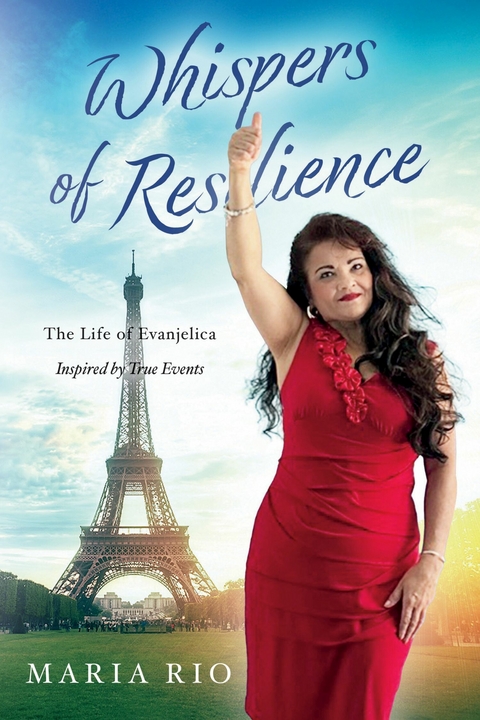
Whispers of Resilience (eBook)
220 Seiten
Bookbaby (Verlag)
979-8-9896734-9-0 (ISBN)
Maria Rio is a weaver of words and witness to strength-A cosmetologist turned memoirist whose life has been shaped by quiet courage and radiant grace. In Whispers of Resilience, she opens the door to her truth, inviting readers into a world where healing blooms, traditions endure, and every scar tells a story worth sharing. Her voice is tender, her spirit unbreakable, and her pages are a sanctuary for anyone seeking light after the storm.
Whispers of Resilience tells the life story of Evanjelica and follows her from her childhood through to current day, when she is now an older woman, grandmother, and ready to share her story. Throughout her life, Evanjelica has faced numerous hardships, challenges, struggles, as well as love, friendships, happiness, and personal fulfillment. Throughout it all, Evanjelica has been determined to remain faithful to God, to herself, and to approach her life with the best of intensions so that she can always be proud of herself and her actions. She has repeatedly refused to let roadblocks (personal or professional) cause her to waver in her beliefs. Evanjelica endured a childhood marked by war and abuse, a tumultuous marriage, and the upheaval of divorce. Yet through every trial, she rose stronger, fueled by an unshakable sense of purpose. She became a warrior for herself and her children, embodying resilience and leadership. She stands as a daughter of God, her faith an anchor through the fiercest storm. This is a story not just of survival, but of triumph, a testament that we all have the power to rise above, no matter the obstacles. Life threw many stones at her. She stumbled, bruised, and battered on the bumpy roads. Yet, each time she fell, she rose unshaken, her spirit is unbroken. From a turbulent childhood, and fractured marriage to life after the divorce, Evanjelica faced endless battles yet emerged undeterred. With courage, perseverance, and purpose, Evanjelica's story reminds us that life obstacles are not the end, but the beginning of our rise This novel is a story where love has an equal strength as the waves on ocean yet is so dismissed like a desert.
Chapter One
Life With Mom and Dad, 1960 to 1968
Evanjelica’s father, Ernesto, was of Portuguese descent, while her mother, Maria da Luz, the daughter of a Black African woman and a white German man. The name “da Luz meaning “light” in Portuguese, reflected the resilience and strength that defined her life. Ernesto left Portugal after completing his military service, embarking on a month-long journey by boat to Angola. He found work in the mines of Dondo, a bustling town where Maria da Luz also lived. Maria, a single mother of two young children—Mauricio and Carmo Lencastro— relied on her mother, Victoria Sofia, for support after the death of her children’s father. In 1959, fate brought Ernesto and Maria da Luz together. Ernesto, a young and ambitious man, was captivated by Maria’s striking beauty and strong spirit. They fell in love and decided to build a life together. In May 1960, while living in Dondo, they welcomed their first child, Agostinho Lencastro Alexander.
Two years later, Ernesto’s hard work in the mines allowed him to invest in a large property near N’dalatando, also known at the time as Salazar. The land, covered with coffee bushes, became their future home. Ernesto cleared part of the property to build a house, creating a foundation for their growing family. When Maria da Luz became pregnant with their second child, the small apartment in Dondo could no longer accommodate their needs. They moved to Luanda, Angola’s capital, and rented a larger house while their new home in N’dalatando was under construction. Luanda, a city with a rich colonial history, became a temporary haven for the young family as they prepared for the next chapter of their lives. In early spring of March 1962, in Luanda, Evanjelica Lencastro Alexander entered the world prematurely, so small and fragile that her parents rushed to have her baptized. The godparents included Luz’s godmother’s daughter and Ernesto’s friend, Tomas Rodrigues. Tomas, a decent and honorable man, harbored a quiet admiration for Luz. But he respected her loyalty to Ernesto, despite Ernesto’s possessive and jealous nature. Unable to bear witnessing Ernesto’s mistreatment of Luz, Tomas eventually distanced himself, returning to Portugal. Years later, fate reunited Tomas and Evanjelica when she traveled to Portugal for her wedding. Seeing her, he was struck by how much she resembled her mother. Though invited to the wedding, Tomas chose not to attend to avoid confronting Ernesto, whose actions he deeply disapproved of. As Ernesto’s career progressed, he invested in properties and moved his family frequently. By 1964, their brick home in N’dalatando was completed. With land for vegetables and a flower garden, it seemed like a fresh start. That March, Luz gave birth to their third child, Gabriel Lencastro Alexander. While Luz devoted herself to caring for the children, sewing garments for extra income, and creating a stable home, Ernesto’s frequent travels brought trouble. His infidelities and growing jealousy turned their home into a space of tension and conflict. By the time Evanjelica started kindergarten in 1967, she was a bright but exceedingly small child. Bullying at school became another challenge she faced, even as she excelled academically. At home, life was far from peaceful. Ernesto’s jealousy and insecurity often turned into verbal and physical abuse, casting a shadow over the family. Yet Luz remained steadfast, devoted to her children and committed to preserving their home amid the turmoil. Despite the challenges, Evanjelica’s early years laid the foundation for the resilience and strength that would define her life. Her journey was only beginning, shaped by both the struggles she endured and the love she carried within her family.
The Other Woman
In the spring of 1967, Luz, injured and desperate, asked her godmother to send her older daughter, Carmo, to live with her. She needed Carmo’s help to care for her younger children— Agostinho, Evanjelica, and Gabriel. When the school year ended, Luz took all the children to Camoma, just fifteen kilometers away, to confront Demonesa, the woman she suspected of having an affair with her husband. Demonesa, a mother of three small children—Alessandro, Maya, and Zelda—was unprepared for Luz’s fury. Luz attacked her, then returned home with her children. Later that day, Ernesto came home earlier than usual. Enraged by the confrontation, he unleashed his fury on Luz, beating her mercilessly in front of their children. He punched and kicked her, throwing her to the ground and breaking her ribs. The children, too young to understand the complexities of adult relationships, were left terrified and confused by the violence they witnessed. Ernesto tied Luz’s hands and feet with rope, threatening to throw her into the Rio Kwanza to be devoured by alligators. The closest neighbors, a married couple, were not home to witness the incident. Carmo, the eldest, gathered the younger children into a room and tried to comfort them. “We will wait for him to come back,” she said. “If he doesn’t bring Mom back, we’ll jump out of the window and run to the police.”
Around midnight, Ernesto returned. The children watched from the window as he pulled their mother out of the trunk of his truck and dragged her to the back of the house. He forbade the children from feeding her or giving her water, declaring, “She must die out there slowly.” The children were left traumatized, unable to comprehend why their father treated their mother with such cruelty. Later, they learned the reason. Ernesto had visited Demonesa house, and she had complained about Luz’s attack. Demonesa would later become Evanjelica’s stepmother, a figure whose presence would cast a long shadow over their lives.
Mom and Dad’s Separation, 1968 to 1969
That night, the children didn’t sleep. Evanjelica clung to her older sister, Carmo, whispering her fears. “What if a snake or wild animal eats Mom?” The darkness felt endless, their home shrouded in silence and dread. The next morning, Ernesto left for work in town, staying close to home for the week. Despite the danger, Carmo fed Luz and gave her water in secret, ensuring her mother wouldn’t become dehydrated. Bound and helpless, Luz endured the tropics’ relentless heat, her injuries sapping her strength. When Ernesto returned home that evening, his fury boiled over. Grabbing a piece of wood studded with nails, he attacked Carmo, beating her as she screamed and bled. The younger children’s frantic cries filled the house, but this time, help arrived. The neighbors, a compassionate couple, heard the commotion and rushed over. The husband, a tall and imposing man, pinned Ernesto down and held him until the police arrived. His wife worked quickly to untie Luz and then tended to both Luz and Carmo’s wounds, offering a glimmer of hope amidst the chaos. With Ernesto in custody, Luz made a life-altering decision. Gathering what little she could, including her sewing machine, she took the children and boarded a bus, leaving behind the house she had helped build. She did not yet know she was a few weeks pregnant with their fourth child.
On the bus, passengers were struck by the sight of Luz and Carmo, bandaged and bleeding. Concerned strangers offered help, a reminder that kindness could still be found even in the darkest of times. They arrived in Dondo, where Luz found solace among friends. Despite their injuries, Luz and Carmo both secured jobs at a local factory, determined to rebuild their lives. Though Ernesto’s time in jail was brief—his wealth and influence ensured his release— Luz’s decision to leave marked a turning point. For her and her children, it was a step toward freedom and resilience, even as the scars of their past lingered in their hearts.
Life with Mom in Dondo City, 1969
At six years old, Evanjelica found a rare sense of peace in Dondo. Though her mother, Maria da Luz, struggled financially, their home was filled with kindness from neighbors and a quiet happiness that had been missing for so long. But peace is fragile, and it wasn’t long before Ernesto found them. His frequent travels made it easy for him to track them down. When he saw Maria da Luz’s growing belly, he immediately accused her of infidelity. His anger erupted into violence, and he began beating her. The neighbors, hearing the commotion, rushed to her aid and chased Ernesto away. Despite the danger, Ernesto continued to visit occasionally, taking the children out to eat and maintaining a looming presence in their lives. By the end of the school year, he returned with a plan that would shatter their fragile stability. Maria da Luz had just given birth to a baby boy, Armando. Though the child bore a striking resemblance to Ernesto and the older boys, Ernesto refused to accept him as his own. He took the other children—Agostinho, Evanjelica, and Gabriel—away from their mother. The children, heartbroken and terrified, cried as they were forced to leave her behind. Maria da Luz, unable to fight against Ernesto’s strength and violence, could only watch as her children were taken from her. The journey with their father was long and grueling, lasting a week in the cramped confines of his car. When they finally arrived at his new house, Evanjelica immediately recognized the Black woman her mother had fought with—Demonesa. Her sharp memory for faces left no doubt in her mind. Ernesto’s older brother, Jeronimo Alexander, also lived in Angola with his wife and four children. Jeronimo disapproved of his brother’s abusive behavior and infidelity. The two brothers often clashed, their relationship strained by...
| Erscheint lt. Verlag | 18.9.2025 |
|---|---|
| Sprache | englisch |
| Themenwelt | Literatur ► Romane / Erzählungen |
| ISBN-13 | 979-8-9896734-9-0 / 9798989673490 |
| Informationen gemäß Produktsicherheitsverordnung (GPSR) | |
| Haben Sie eine Frage zum Produkt? |
 EPUB (Ohne DRM)
Größe: 2,9 MB
Digital Rights Management: ohne DRM
Dieses eBook enthält kein DRM oder Kopierschutz. Eine Weitergabe an Dritte ist jedoch rechtlich nicht zulässig, weil Sie beim Kauf nur die Rechte an der persönlichen Nutzung erwerben.
Dateiformat: EPUB (Electronic Publication)
EPUB ist ein offener Standard für eBooks und eignet sich besonders zur Darstellung von Belletristik und Sachbüchern. Der Fließtext wird dynamisch an die Display- und Schriftgröße angepasst. Auch für mobile Lesegeräte ist EPUB daher gut geeignet.
Systemvoraussetzungen:
PC/Mac: Mit einem PC oder Mac können Sie dieses eBook lesen. Sie benötigen dafür die kostenlose Software Adobe Digital Editions.
eReader: Dieses eBook kann mit (fast) allen eBook-Readern gelesen werden. Mit dem amazon-Kindle ist es aber nicht kompatibel.
Smartphone/Tablet: Egal ob Apple oder Android, dieses eBook können Sie lesen. Sie benötigen dafür eine kostenlose App.
Geräteliste und zusätzliche Hinweise
Buying eBooks from abroad
For tax law reasons we can sell eBooks just within Germany and Switzerland. Regrettably we cannot fulfill eBook-orders from other countries.
aus dem Bereich