


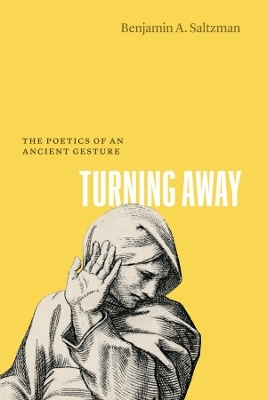
Turning Away
The Poetics of an Ancient Gesture
Seiten
2026
University of Chicago Press (Verlag)
978-0-226-84722-1 (ISBN)
University of Chicago Press (Verlag)
978-0-226-84722-1 (ISBN)
- Noch nicht erschienen (ca. April 2026)
- Versandkostenfrei
- Auch auf Rechnung
- Artikel merken
A sweeping account of how we are at our most human when we turn away from the pains of the world.
Why do we look away from the suffering of others? Why do we cover our faces in shame? Why do we lower our heads in grief? Few gestures are as universal as the averted gaze. Fewer still are as ambivalent and inscrutable. In this incisive study, Benjamin A. Saltzman reveals how the kaleidoscopic appearance of these gestures in art, poetry, and philosophy has turned them into an essential language for our uncomfortable engagements with the world, challenging us to reflect on the ways we fundamentally relate to others.
Into the horizon of contemporary discourse, Turning Away sets out from five influential scenes in which figures avert their gaze: Timanthes’s Sacrifice of Iphigenia, Plato’s Republic, Augustine’s Confessions, Christ’s Crucifixion, and the Fall and Expulsion of Adam and Eve. The gestures of aversion in these scenes refract across visual media, through philosophy and politics, into modernity and the present day, having been reimagined along the way by thinkers like Hannah Arendt, artists like Marc Chagall and Salvador Dalí, poets like Langston Hughes, and many others. Saltzman offers a timely critique of the privilege of turning away and of the too-easy condemnation of our tendencies to do so.
Why do we look away from the suffering of others? Why do we cover our faces in shame? Why do we lower our heads in grief? Few gestures are as universal as the averted gaze. Fewer still are as ambivalent and inscrutable. In this incisive study, Benjamin A. Saltzman reveals how the kaleidoscopic appearance of these gestures in art, poetry, and philosophy has turned them into an essential language for our uncomfortable engagements with the world, challenging us to reflect on the ways we fundamentally relate to others.
Into the horizon of contemporary discourse, Turning Away sets out from five influential scenes in which figures avert their gaze: Timanthes’s Sacrifice of Iphigenia, Plato’s Republic, Augustine’s Confessions, Christ’s Crucifixion, and the Fall and Expulsion of Adam and Eve. The gestures of aversion in these scenes refract across visual media, through philosophy and politics, into modernity and the present day, having been reimagined along the way by thinkers like Hannah Arendt, artists like Marc Chagall and Salvador Dalí, poets like Langston Hughes, and many others. Saltzman offers a timely critique of the privilege of turning away and of the too-easy condemnation of our tendencies to do so.
Benjamin A. Saltzman is associate professor of English at the University of Chicago, where he coedits the journal Modern Philology. Saltzman is the author of Bonds of Secrecy: Law, Spirituality, and the Literature of Concealment in Early Medieval England and the coeditor of Thinking of the Medieval: Midcentury Intellectuals and the Middle Ages.
Prologue
Chapter 1: Parodos
Chapter 2: Ambivalence
Chapter 3: Sensation
Chapter 4: Darkness
Chapter 5: Retroversion
Exodos
Gratitude
Notes
Bibliography
List of Illustrations
Index
| Erscheint lt. Verlag | 6.4.2026 |
|---|---|
| Reihe/Serie | Thinking Literature |
| Zusatzinfo | 17 color plates, 73 halftones |
| Sprache | englisch |
| Maße | 152 x 229 mm |
| Gewicht | 454 g |
| Themenwelt | Literatur ► Klassiker / Moderne Klassiker |
| Geisteswissenschaften ► Philosophie | |
| Geisteswissenschaften ► Sprach- / Literaturwissenschaft ► Anglistik / Amerikanistik | |
| Geisteswissenschaften ► Sprach- / Literaturwissenschaft ► Literaturwissenschaft | |
| ISBN-10 | 0-226-84722-5 / 0226847225 |
| ISBN-13 | 978-0-226-84722-1 / 9780226847221 |
| Zustand | Neuware |
| Informationen gemäß Produktsicherheitsverordnung (GPSR) | |
| Haben Sie eine Frage zum Produkt? |
Mehr entdecken
aus dem Bereich



aus dem Bereich
Poetik eines sozialen Urteils
Buch | Hardcover (2023)
De Gruyter (Verlag)
CHF 83,90


