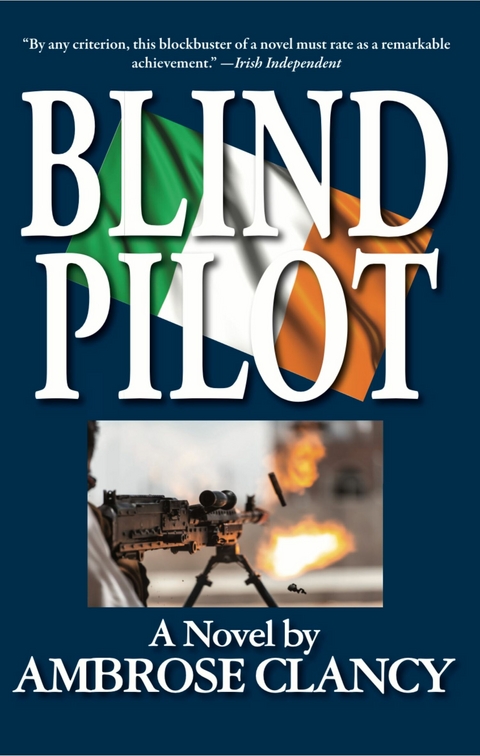
CHAPTER 1
The Raid at Kildare
Phil Coughlin, chief mechanic for Mountjoy Jail, Dublin, was in the long shed teaching James, the new apprentice, the proper method of replacing brake shoes on a lorry. He noticed the boy looking over his shoulder. “A visitor, Mr. Coughlin.” Phil turned to see young Raymond Murray walking toward him. “Now, get along with it,” Phil said to James and, wiping his hands, went to meet his visitor. “Dull day for a drive, Mr. Murray.”
Murray put out his hand in greeting, a trait he had picked up last summer in the States. “Do you have the Fords ready?”
“I do,” Phil said.
“Tuned?”
“They are, sir.”
“Petrol?”
“And the tires checked and the boy gave ’em a good washing this morning when he came in. They’re just outside, will you have a look?”
“No, that’s fine.”
“You can tell your man he’ll have a nice safe ride,” the mechanic smiled.
Murray nodded. Cheeky little brat, Phil thought.
“I won’t need them until three-thirty, Phil.”
“Right you are, Mr. Murray. Half-three it is. I’ll make the change on the order.”
Murray adjusted his tie at the throat. “You’ll bring them round yourself?”
“I will.”
Murray turned and walked out of the shed. After telling James he was taking an early lunch, Phil went out into the gray November morning, through the security checks, on his way to a public house in Munster Street where he had his regular lunch, a ham sandwich and a bottle of lemonade, at his regular spot near the fire.
When he finished half his sandwich, Phil went to the rear of the pub where he dialed a telephone number. A man answered, Phil pressed the “A” button and said, “They’re movin’ him at half-three.”
“Half-three.”
“Not one, now.”
“Right. Half-three.”
Phil hung up the phone and went back to his lunch.
At 7 a.m. that morning they were all awake and dressed in the bright, modern kitchen of the house just outside Kinsale, County Cork. It was still night outside with dawn another hour away. Deirdre and Gudrun were well rested but O’Connor had slept only an hour or two. Gudrun prepared a huge meal of thick steaks and fried eggs, brown bread, jam and pots of coffee. The two women ate eagerly, but O’Connor could only manage a few bites of steak and half a piece of toast. Gudrun said, in her gently accented English, “Eat, Terrence. You’ll miss it later.”
The American lit a cigarette. “I’m not hungry.”
“You need it.”
Deirdre mopped up egg and juice with a piece of bread. “Let him be. Better not to eat than have it all over yourself.” She stuck the bread in her mouth and winked at him. “That right, Terry?”
“I’m jumpy as hell.”
“You’ll be fine,” Gudrun said. “But you should try some food.”
“I’ll be all right,” he said, and left the table. The two women continued to eat in silence.
They set out at nine o’clock. O’Connor drove the Volkswagen van with Deirdre sitting beside him. In the back of the VW was the BSA, and, under a dark green blanket, an M-6o, broken down, a belt of cartridges, and three Ingram M-10 machine pistols. Gudrun followed in the Volvo fifteen minutes later.
They drove north to Cork City. The road glistened in the pale light. It had rained all night and now a monotonous wind off the sea blew strong, driving the rain in sheets across the murky green fields. After crawling through the impossible traffic of Cork City, they turned east and drove to Youghal where they met the sea, and headed north again. O’Connor began to feel better. He asked Deirdre to go back and check the BSA. He had changed spark plugs last night and couldn’t remember if he’d replaced the old one. She came forward and said, “It’s fine. Stop worrying, for Jesus’ sake. There’s nothing more to think about or do. It’s going to work silky smooth.”
“Sorry. I’m really okay.”
“Sure you are. By evening you’ll be a fookin’ hero of the Republic.” He looked at her and she was smiling when she added, “Or a dead man lying in a dirty street.”
“That’s something to look forward to.”
Deirdre laughed. “The former rather than the latter.” They were coming into the colorless town of Dungarvan. The Irish Sea on their right was calm and phosphorescent in the rain. She looked at him as he lit a cigarette. Handsome man. All that pepper and salt hair. And only thirty-one. He drove effortlessly. Last night she’d asked him if he could handle the van. “I can drive anything,” he’d said. American. So American. Liam had said Americans were the best drivers in the world because they paid homage to their most recent myth that the car was freedom, love and power. Deirdre wasn’t a social scientist. She thought they were good at the wheel because their outlook was pure confidence, and that’s all it took to drive a car well. One of her secrets was that she genuinely liked Americans. In the Republican movement this was heresy. Americans were racist imperialists, money-crazed, soulless, hypocritical and emotional children. But she liked them. There was that eternal confidence they all had, and an openness. They didn’t seem afraid to look like fools, which was anathema to Europeans.
They were making perfect time on the slick highway. The farms of Kilkenny were green blurs in the gray morning. “Bally-hale,” Deirdre said as they approached the town.
“We take a fork north here,” O’Connor said.
“Two miles up the road. You can’t miss it.”
She knew her own country as well as any itinerant. She had been Liam Cleary’s aide for four years and most of that time was spent on the road. Liam had loved to travel, and was always off to the backwater towns of Roscommon to speak to a Republican Club, or was setting out from Dublin for a long night ride to Tralee to straighten out a renegade. He even preferred meeting people in cars. It was safer, mobile, and the close quarters, with Deirdre in the back with a shotgun, allowed the meeting a better opportunity for truth to emerge. No more sawed-off, she thought. No longer. The M-10 was a lovely piece of gun. No more blunder-busses that blew up in your hands, no more Jesse James pistols that jammed when you needed them. They now had weapons on par with any army in the world. And all Ireland would know it before the day was out.
“I’ll have a cup of coffee,” O’Connor said.
“Will you, sir?” Deirdre said, unscrewing the cap of the thermos. “Rashers and fried egg alongside?”
“I’m still not hungry.”
“Don’t be defensive, now.”
He grinned, and sipped coffee. “I’m beginning to like this country.”
She said nothing. It was a good idea for her to ride with him. They had decided it would be safer if anyone questioned them to have a brogue in the front seat with an arsenal in the rear. But Deirdre could also see O’Connor winding down, and she was sure he wouldn’t have done that with the German. Before she had killed for the first time, an old man who had passed the weapon to her the afternoon of the operation had told her some ancient music hall two-liner, and it had worked. The laughter made her see the world again as a bad joke and not as drama. This was in a house outside of Newry, County Down, the summer of 1972. That evening she called to a major in the Royal Green Jackets who was coming out of a pub in a dark street. She called for a light from across the road, and the major tipped his cap, stepped a bit unsteadily into the street, and came toward her. When he was ten feet away she took a Colt .38 pistol from her coat, let him walk another pace, and shot him twice through the lungs. His face was still smiling when the bullets hit him.
“Carlow Town,” Deirdre said. “Bear to your right here, Terry.”
The day had softened away from the sea. It was still raining but there was no wind. Traffic was light and most of that was commercial. They drove for another hour and arrived in the village of Ballitoe, County Kildare, without incident. In front of a butcher shop, O’Connor wheeled the van behind a gray Morris Minor and shut the engine. A young man of his age, dressed in work clothes and flat cap, got out of the Morris and walked back. He approached the right side of the van, the driver’s side. O’Connor rolled the window down but the man looked past him and spoke to Deirdre. “You’re to telephone Cosgrave in Dublin,” he said.
“When?”
“Now. Johnny’s just after gettin’ the call from him.”
“Bloody,” Deirdre said, looking out the windshield at the empty main road of Ballitoe, lead colored, spare, and light rain drifting. “There’s no phone at the cottage?” she asked.
The man shook his head and tugged his cap lower. “There’s a box round the corner of the next street,” he said, and walked away, crossed the road and went into a pub. When he was inside, Deirdre took her blue waterproof jacket from the floor next to her and got out of the van. She pulled the hood over her head and walked quickly up the road and around the corner. O’Connor could see the man in the front window of the pub, holding a half-pint glass. A lorry tore past and the street was empty again. A few minutes later in the passenger side window he caught sight of the Volvo entering the town. Gudrun drove past without looking at the van, and took the left fork on the north edge of Ballitoe.
Deirdre returned and said,...


 EPUB (Adobe DRM)