


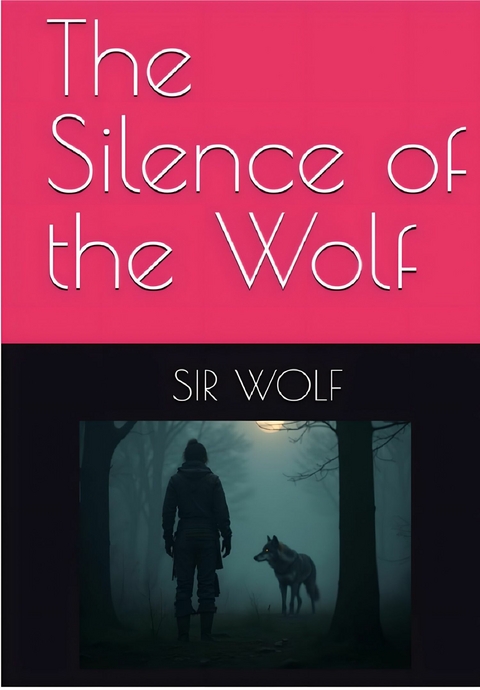
The Silence of the Wolf (eBook)
262 Seiten
Publishdrive (Verlag)
979-8-2867-2545-8 (ISBN)
'I lived three lives-Catholic son, devoted Master, and cancer survivor. This is how I stopped hiding and became whole.'
From the ashes of a childhood steeped in shame, obedience, and silence, Property of Sir Wolf rises as a raw, erotic, and soul-shaking memoir of survival, transformation, and truth.
Born into a strict Catholic family, the author was taught to fear his desires, deny his voice, and accept pain without protest. But beneath the surface of that pious boy was a Dominant soul, waiting to awaken. Through the underground world of leather, BDSM, and power exchange, he found what religion never gave him: freedom, truth, and unconditional love.
Told with unflinching honesty and poetic fire, this memoir follows the author's journey as he:
Claims his identity as a gay Master in the Leather community
Builds a 24/7 household with his two slaves
Fights three separate cancers while hiding his illness from the world
Reconciles his spiritual longing with his erotic truth
Emerges from grief, silence, and death to become a mentor and voice for the next generation
More than a memoir of kink, this is a story of living without shame, loving with total power, and dying-over and over-until finally reborn as the man known simply as Sir Wolf.
Perfect for readers who love:
✔️ LGBTQ+ coming out stories
✔️ Real-life BDSM relationships
✔️ Spirituality meets sexuality
✔️ Cancer survivor narratives
✔️ Deep emotional healing
✔️ Erotic memoirs with depth
If you've ever been told who you must be-or what you're not allowed to desire-this book will speak to the wild, sacred truth inside you.
1 SANCTIFIED PAIN
This is my story — raw, real, and written in the blood of experience. The one I was never allowed to speak aloud.
The one buried under layers of silence, shame, obedience, and survival.
This book is not fiction. It is a life lived in silence, then rewritten in truth. Names, places, and identifying details have been changed or obscured to protect the privacy of those who walked this path with me. But nothing else has been softened. The emotions, the pain, the awakenings — they remain intact. Every revelation, every scar is real. May you read this not as voyeur, but as witness. Some loved me. Some broke me. Some did both. But all of them mattered. And if something inside you stirs — good. That’s where freedom begins. And I will not be silent anymore. Because silence has ruled too long.
This book is not for everyone. It is for those who have tasted shame, wrestled with identity, loved deeply, lost everything, and still chosen truth. It is for anyone who has ever lived in the dark and dared to light a match.
If something in these pages’ stirs discomfort, reflection, or recognition — good. That’s where healing begins.
I was raised Catholic. Not just in name or in the casual, cross-on-the-wall sense. No — I was raised in the full, unrelenting immersion of it. A home where the Virgin watched from every shelf, her sorrowful eyes ever fixed on you. A home where sin breathed down your neck like a second skin. We knelt before bleeding statues, kissed cold marble feet, and choked on incense thick as guilt. My earliest lullabies were liturgical chants. My earliest fears were of hellfire, confession, and the gaze of a God who never blinked.
I knew the lives of the saints like other children knew fairy tales — but ours were stories of bodies torn apart for faith, of virgin flesh offered up for purity, of silence, obedience, and exquisite pain. I understood penance before I understood pleasure. Sacrifice before I ever learned self-worth.
But something inside me was never quite… still. Even as a child, something stirred. Something beneath the hymns and hollow rituals. It didn’t yet have a name, but it was there — buried like a thorn in holy soil.
It whispered during Mass, it shifted in my gut when I saw images of the crucified Christ. It throbbed silently behind the prayers I mouthed so carefully.
I remember the first time I felt it clearly. I was around ten. It was Good Friday. I was dressed in crisp white robes, carrying a candle at the head of the procession — pure, spotless, chosen. The church was dim, the air heavy with incense and silence. I was sweating under my cassock, my hands steady, my back straight like the other altar boys. And then — a drop of hot wax spilled down, landing right on the back of my hand.
I flinched. It burned. And something inside me… came alive. It wasn’t just that it hurt — it was that I liked it. The sharpness, the surprise, the feeling of being marked in silence, in ceremony. It made me ache in ways I couldn’t explain. It awakened something I had no words for, only a wild, private sense that I had just crossed into something forbidden. And thrilling.
I told no one. Not my parents. Not my priest. Not my friends. This wasn’t just shameful — it was dangerous. A betrayal of everything I was being taught to believe. So I buried it.
But I never forgot it. I began to notice other things — the sensuality woven into the sacred. The Crucifix, front and center in every room, with that suffering man hanging helpless, pierced, his ribs exposed, his arms stretched wide. The rope marks on his wrists. The blood on his brow. The sorrow on his face. It was supposed to be redemptive. But to me… it was magnetic.
I was drawn to it with a hunger I didn’t understand. The saints were no different. They were beaten, bound, mutilated — and glorified for it. Saint Sebastian, arrows protruding from his soft flesh. Saint Lawrence, burned alive on a grate. Saint Agnes, stripped and humiliated. Their pain was holy. Their obedience was rewarded. And in some part of my soul, those stories didn’t just inspire awe. They awakened desire.
I didn’t know what to do with those feelings. So I hid them. I was a good boy. The best, if I could help it. Polite. Studious. Devout. I never caused trouble, never spoke back. I went to confession. I served at every Mass I could. I learned to be small, contained, invisible. But underneath, the storm churned. The hunger grew teeth.
The sermons only deepened it. Sacrifice. Obedience. Purity. The words were meant to cleanse me. But they began to seduce me. I started to crave surrender — not just in prayer, but in flesh. I imagined kneeling not before God, but before someone who would use me, mold me, own me. Someone who would tell me what I was and make it true.
The fantasies became more vivid. Rope. Discipline. Ritual. Command. The more the Church told me to silence them, the louder they became. And still, I had no one to tell. Not a single soul. I didn’t even know what it was I was feeling. Only that I was dirty. Perverse. Doomed.
There were other moments too, small and strangely intimate. A priest’s hand on my shoulder, firm and paternal. The snap of a ruler on a classmate’s palm. The collar of a cassock tight around my neck. The thick scent of wax and wood polish in the sacristy.
I didn’t know it yet, but I was already building a language of desire out of ritual and restraint. Church didn’t feel like salvation. It felt like theater. Like power. Like control. And it thrilled me. But I hid it all. I hid it so well that I almost forgot it was real. I buried myself in school, in chores, in the praise I got for being the perfect child. I dated girls. I memorized the rules.
I learned to smile without speaking too much. And always, beneath the surface, I fantasized. It wasn’t just about sex. It never was. It was about surrender. About being seen and shaped and used — not violently, but meaningfully. Reverently. I didn’t want to be broken. I wanted to be unmade, with purpose.
I wasn’t sure if I was gay. Or straight. Or anything in between. I wasn’t chasing kisses or crushes like my friends were. I was chasing the feeling of being under someone’s control. Of having my will consumed by someone else's command. I didn’t dream of dates or dances. I dreamt of chains and silence and being told I belonged to someone. That my body was not my own.
But none of it — not the longing, not the hunger, not the unspeakable holiness I felt in my own skin — could exist in the world I was raised in. The Church taught me how to kneel, but never how to rise. It taught me how to confess, but never how to live.
It handed me a catalog of sins, carefully alphabetized, but it never offered me a language for love. Especially not the kind of love that burned in me — wild, unorthodox, undomesticated. It taught me obedience, yes — but not the kind that leads to truth or liberation. Not the kind that is chosen. It demanded submission to silence, to shame, to a god I was told would strike me down if I ever dared to be whole. So I learned to hide.
Not just my sexuality — but my soul. Not just my desire — but my devotion. The closet was never just about who I wanted to touch. It was about the sacred, sensual truth of who I was. It was about locking away the most luminous parts of me — the parts that didn’t fit, that couldn’t be translated into the language of guilt and virtue. I buried it. Deep. So deep it almost felt like it had never existed. And still, it pulsed. Even in the silence. Even in the shame.
Even in the hours when I wept quietly under bedsheets, praying for God to make me normal, to make me clean. Even then — I never stopped believing there was something divine in it.
In the ache. In the longing. In my need to kneel not out of punishment, but out of reverence. I didn’t have the words for it yet. I didn’t know what to call it. But some deep, ancient part of me believed that the body could become a prayer.
That surrender — real, unforced, conscious surrender — could become a sacrament. And that maybe, just maybe, the desire I was taught to fear was not my enemy, but my guide.
I didn’t know how. I didn’t know when. But I believed — down in my marrow — that if I ever found the courage to open that door, to step fully into that forbidden space… something would change. I would change. I would be free.
But freedom didn’t have a face I recognized. Not then. The world showed me a very narrow vision of what it meant to be gay. And I didn’t see myself in it. The men I saw on TV — if they existed at all — were punchlines, victims, or ghosts.
They were limp-wristed, flamboyant, theatrical. They wore their difference like costumes, and I was told to laugh at them. Or pity them.
Or be afraid of them. I didn’t laugh. I didn’t pity. And I wasn’t afraid. I just didn’t see myself. I wasn’t like that. I didn’t want to dress in drag or speak in a higher pitch or perform for approval. I didn’t want to be softer. I liked my voice low. My presence grounded. I liked my shoulders square and my hands firm. I liked being masculine. It wasn’t an act. It wasn’t armor. It was me. But I couldn’t deny the fire that flared inside when I was around other men — men with...
| Erscheint lt. Verlag | 25.7.2025 |
|---|---|
| Sprache | englisch |
| Themenwelt | Literatur ► Biografien / Erfahrungsberichte |
| Literatur ► Romane / Erzählungen | |
| Schlagworte | BDSM • Catholic guilt • From trauma to truth • LGBTQ • Master • Sex • Slave |
| ISBN-13 | 979-8-2867-2545-8 / 9798286725458 |
| Informationen gemäß Produktsicherheitsverordnung (GPSR) | |
| Haben Sie eine Frage zum Produkt? |
 EPUB (Ohne DRM)
Digital Rights Management: ohne DRM
Dieses eBook enthält kein DRM oder Kopierschutz. Eine Weitergabe an Dritte ist jedoch rechtlich nicht zulässig, weil Sie beim Kauf nur die Rechte an der persönlichen Nutzung erwerben.
Dateiformat: EPUB (Electronic Publication)
EPUB ist ein offener Standard für eBooks und eignet sich besonders zur Darstellung von Belletristik und Sachbüchern. Der Fließtext wird dynamisch an die Display- und Schriftgröße angepasst. Auch für mobile Lesegeräte ist EPUB daher gut geeignet.
Systemvoraussetzungen:
PC/Mac: Mit einem PC oder Mac können Sie dieses eBook lesen. Sie benötigen dafür die kostenlose Software Adobe Digital Editions.
eReader: Dieses eBook kann mit (fast) allen eBook-Readern gelesen werden. Mit dem amazon-Kindle ist es aber nicht kompatibel.
Smartphone/Tablet: Egal ob Apple oder Android, dieses eBook können Sie lesen. Sie benötigen dafür eine kostenlose App.
Geräteliste und zusätzliche Hinweise
Buying eBooks from abroad
For tax law reasons we can sell eBooks just within Germany and Switzerland. Regrettably we cannot fulfill eBook-orders from other countries.
aus dem Bereich


