


The Natural (eBook)
288 Seiten
Fair Play Publishing (Verlag)
978-1-923236-23-3 (ISBN)
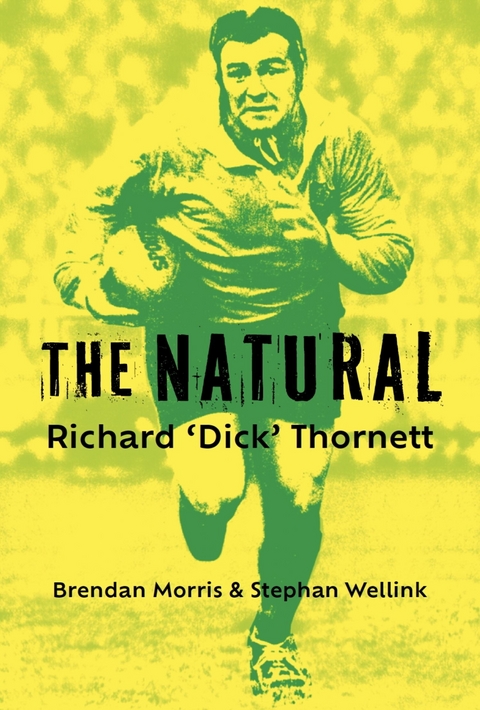
The Natural is a captivating biography that shines a spotlight on one of Australia's most extraordinary sporting talents, Richard 'Dick' Thornett.
A prodigy from his school days, Richard's exceptional abilities blossomed in adulthood, cementing his legacy as a world-class athlete in the 1960s. The youngest of three remarkable sporting brothers, Richard's achievements are nothing short of astounding.
By the age of 22, he had represented Australia in water polo at the Rome Olympics, toured with the Wallabies (rugby union) to South Africa and New Zealand alongside his brother John, and, with his brother Ken, played a pivotal role in the historic success of the 1963-64 Kangaroos (rugby league).
While The Natural celebrates Richard's unparalleled sporting accomplishments, it goes beyond the scores and records to explore the profoundly human story behind the athlete. It is a compelling account of the triumphs and trials that defined Thornett's life.
What sets The Natural apart is its raw honesty and emotional depth. It delves into Richard Thornett's journey, not only on the summits of global success but also through the valleys of personal struggle.
With Forewords by Dawn Fraser, John Eales and Michael Cronin.
CHAPTER TWO
Sunrise 1940–1957
It (our sporting ability) didn’t really come from our parents because they weren’t sporting people at all. I really put it down to the fact that we lived near Bronte Beach and my father used to enjoy swimming, so every morning he’d take us, even through winter.
Richard Thornett
Richard Norman Thornett was born at Waverley War Memorial Hospital on the 23rd of September 1940, one year and 22 days after the start of the Second World War. He was brought home from hospital to Bronte, New South Wales (NSW), Australia, the third of three sons for Harold and Marge, and a brother to John and Ken. It was a tumultuous time, with the world reeling from the chaos and uncertainty that filled the hearts of its people, both here and abroad. Yet, amid this backdrop of darkness and conflict, a spark of extraordinary talent, joining those of his brothers, would soon emerge, and in the years ahead he would provide something special for a nation so in need of it.
Richard’s mother, Marge, was a country girl, born east of Coonabarabran, although she didn’t have many fond memories of rural life during the 1920s on the family property, “Koronga”. She was from a large, reasonably affluent family and contracted polio at 14 years of age which rendered her unable to play sport, although she never complained about her condition. Marge was a modest, unassuming woman, regarded as a splendid lady who was never known to brag; she did not exist in the reflected glory of her sons. She was a great cook and hostess who provided for the many people who used to regularly drop by, for the Thornett house was often a refuge for friends of the boys who would always find a friendly welcome there and never leave hungry. In those times, a mother’s lot was to be a good homemaker and Marge would always wash the boys’ muddy football gear by hand, until the arrival of a Hoover twin tub machine which made her life a little easier. Marge unashamedly doted on and spoilt her boys; she was a gentle and caring mother who lived for her family.
Childhood friends and Randwick rugby teammates, ex-Wallaby Peter Johnson and Warren Hurt, who both spent much time at the Thornett household, spoke of Richard’s parents fondly. Johnson said, “Mrs Thornett, she was just, she was just the mother to all of us. To virtually all of us. She was, she was quite extraordinary. Everyone ran everywhere. Just, you never, ever walked. You ran… and she would, she would say to me… ‘You look hungry.’ So, you’d have to have something like a piece of fruit or something and go.”
Warren Hurt added, “You couldn’t go to the Thornetts without Mrs Thornett saying, “You’ve got to stay for dinner, for lunch. And the thing is, she’d serve up these lunches that were just phenomenal. I mean that they’d almost feed Napoleon’s retreating army, in terms of their size. She’d say, ‘Are you going home now?’ And after I’d tell her I was, she would reply, ‘Well, you better have something to eat before you go. It’s a long way to go.’ It was all the time.” Peter Johnson added, “Actually, Mr Thornett told me that when Richard left home, he saved $1.2 million on bananas alone.”
Richard’s father, Harold was born in Canada but lived his early life in England and migrated to Australia in 1904 when he was 12 years of age. One of seven children, he worked as an engineer at the railway. Harold was a keen swimmer and could be found every morning at Bronte Beach or Bronte Baths, a practice which could be traced back to his swimming sessions at Powell’s Pool in Birmingham. He was a good man, a strong Christian, unassuming, stoic and quite conservative (he was known to not be a fan of the liberated 1960s) who gave his boys anything they needed – he was totally dedicated to them. Harold was tall and lean, a height he passed onto his sons, although it seemed they skipped the leanness.
Richard’s parents were of modest means. They were both very dedicated parents, having no luxuries themselves but dedicating their lives to striving to provide the best upbringing possible for John, Ken and Richard. Neither parent had a sporting background, both because of Marge’s affliction and due to a lack of opportunity in part because Harold had come to Australia as a 12-year-old and settled in an unfamiliar world in Hanwood, near Griffith, NSW. Whilst Harold swam regularly later in life, enjoyed sailing and had played a bit of suburban cricket as a fast bowler, none of his sons had ever seen or heard of rugby in their younger years; it was never discussed at home. Most of the boys’ success can be linked to their environment – surf, sun, sand, physical fitness and supportive, nurturing parents.
Although growing up in the seaside suburb of Bronte, Richard’s love of the land sprouted (excuse the pun) early in life through a childhood hero, Uncle Gus Attwood, his mother’s brother. Gus lived on a property at Ungarie, near West Wyalong, NSW, and was a good farmer who had a strong influence on all three brothers early in their lives. He sparked a life-long passion in them for the land which remained strong throughout their lives. They visited him regularly on school holidays, taking long train trips on the Temora Mail to visit Uncle Gus on school holidays. Ken recalled, “Gus working his eight-horse teams and sowing wheat with his two lead horses, Bob and Nell. We spent many a day out rabbiting with horse and sulky accompanied by his greyhounds and by night they sprang rabbit traps. We enjoyed helping with the lamb marking and drenching and would often come back to Sydney with ten shillings or perhaps a pound for our efforts, particularly when Gus had a win at the races. Other fond memories of his visits to the country included playing the card game 500 in the evenings, Tilley lamps and kerosene, milking cows, the smell of the cypress pines and Pepper trees, and big tennis days.” Upon returning to Sydney, Richard and his brothers felt so much more privileged than their mates to have had that experience, which struck a spark for a life on the land that never left them.
The three brothers trained at Bronte swimming pool in their younger days and at the age of four or five, they joined the Bronte Swimming Club and competed in the inter-club carnivals. Their proximity to the beach and regular outdoor activities were factors in their physical development. They were out and about early and often, and then after school until late in the evenings. Almost every day saw the Thornett brothers swimming in the morning before school or during the day, or both, at Bronte and in swimming competitions every Sunday. As they grew older, this lifestyle contributed to both their fitness levels and physical well-being required to achieve at higher-level competitive sport. Water Polo and touch football helped to establish skills, timing and anticipation. Former Randwick Rugby Union teammate, Stan Sparrow, also remembers not just Richard, but all three brothers having superb ball skills, honed through their sporting prowess in the water. “All three brothers were superb handlers – the Water Polo certainly helped and achieved and maintained fitness from swimming; all three were excellent swimmers.”
Life in Bronte in the 1950s and ’60s was uncomplicated; the Park, the Gully and the surrounding beaches would draw the local young folk together from all over. It is interesting to consider the strength of sportspeople and teams who were based in Sydney’s Eastern Suburbs around this time, such as Murray Rose, Ken Catchpole and Michael Cleary (another triple-Australian representative from Randwick). Rugby League club South Sydney were premiers or runners-up in six of seven years from 1965, while Randwick Rugby Club won four from nine Shute Shields from 1959–1967; in 1967, both clubs won their respective premierships.
In summer, the brothers often went fishing for eels at low tide or caught waves at the Bogey Holes west of the baths when there was high tide and good surf. Winter would see Bronte Park (also known as ‘the Gully’) hold 20-a-side tackle football every afternoon until dark when dinner would be waiting when the Thornetts returned home. Richard was about ten and would often give away five or more years to his opponents in those games.
Those were the days when there were no agendas and children played outside for the fun of it. Local parks, beaches and pools were melting pots of children from different (but close-by) suburbs and schools – they would play with or against one another in the park during the week and do the same again on weekends. It spawned a wonderful era of sport throughout the country, long before sporting academies, outrageous playing contract sign-on fees and sporting scholarships.
Former Socceroos’ captain, Johnny Warren, described the environment in which he was raised in his book Sheilas, Wogs and Poofters: An Incomplete Biography of Johnny Warren and Soccer in Australia. “The setting of my upbringing was classic post-war Sydney. Extended and close-knit families, sun-drenched summers playing cricket, grazed knees from tarred playing fields, ‘six ‘n’ out’ and broken windows. A city rebalancing after the turmoil of the war, a society looking to redefine its mores and holding fast to what it knew to be true. My brothers and I were products of people who had lived through the Depression. The Depression...
| Erscheint lt. Verlag | 25.5.2025 |
|---|---|
| Sprache | englisch |
| Themenwelt | Literatur ► Biografien / Erfahrungsberichte |
| Schlagworte | Australian athlete • Australian sporting history • Kangaroos • Rugby League • Rugby Union • wallabies • Water Polo |
| ISBN-10 | 1-923236-23-7 / 1923236237 |
| ISBN-13 | 978-1-923236-23-3 / 9781923236233 |
| Informationen gemäß Produktsicherheitsverordnung (GPSR) | |
| Haben Sie eine Frage zum Produkt? |
 EPUB (Ohne DRM)
Digital Rights Management: ohne DRM
Dieses eBook enthält kein DRM oder Kopierschutz. Eine Weitergabe an Dritte ist jedoch rechtlich nicht zulässig, weil Sie beim Kauf nur die Rechte an der persönlichen Nutzung erwerben.
Dateiformat: EPUB (Electronic Publication)
EPUB ist ein offener Standard für eBooks und eignet sich besonders zur Darstellung von Belletristik und Sachbüchern. Der Fließtext wird dynamisch an die Display- und Schriftgröße angepasst. Auch für mobile Lesegeräte ist EPUB daher gut geeignet.
Systemvoraussetzungen:
PC/Mac: Mit einem PC oder Mac können Sie dieses eBook lesen. Sie benötigen dafür die kostenlose Software Adobe Digital Editions.
eReader: Dieses eBook kann mit (fast) allen eBook-Readern gelesen werden. Mit dem amazon-Kindle ist es aber nicht kompatibel.
Smartphone/Tablet: Egal ob Apple oder Android, dieses eBook können Sie lesen. Sie benötigen dafür eine kostenlose App.
Geräteliste und zusätzliche Hinweise
Buying eBooks from abroad
For tax law reasons we can sell eBooks just within Germany and Switzerland. Regrettably we cannot fulfill eBook-orders from other countries.
aus dem Bereich


