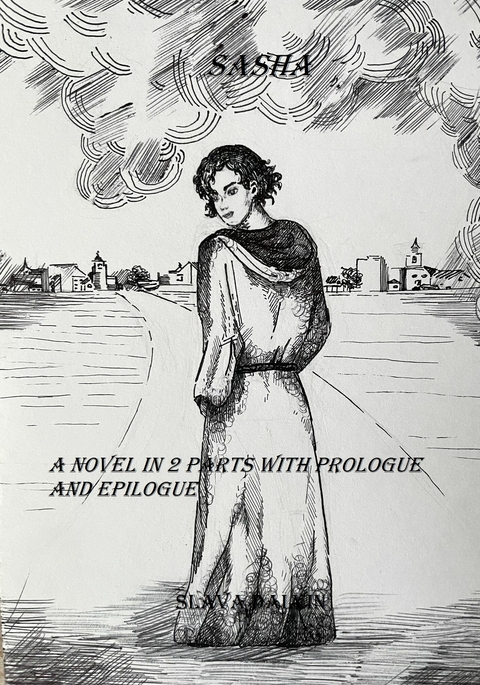
Sasha (eBook)
100 Seiten
Publishdrive (Verlag)
979-8-231-60796-9 (ISBN)
The action takes place in Russia at the beginning of the 20th century in a noble family. The main character is a blessed youth who finds himself in the midst of court intrigue in contact with different characters. The hero's inner world is revealed in Chapter 2 in his diary.
The Eve of the Holiday
St. Petersburg.
August - November, 1914
On Saturday after lunch, I set off in a carriage towards the Shulgin estate, which was peacefully located on the outskirts of our city, in its southern part. I had two-thirds of the way to go. There was fog in places, and the weather was gloomy and overcast as usual, but rare rays of sunshine stubbornly broke through the low leaden clouds and touched the ground. It was the golden autumn of St. Petersburg.
This time I was not going to the Shulgins on medical business. Pyotr Nikolayevich and Zinaida Pavlovna had kindly invited me to the name day of their eldest daughter, the incomparable Sophie, who was turning eighteen that day. I was delighted to see this wonderful family again: I loved visiting their home, being in their company and having long conversations over a glass of wine. It was a respectable and hospitable home.
The heart and soul of the family nest was, without a doubt, Anna Afanasyevna, née Ostrozhskaya, an elderly lady of seventy, a prominent representative of an ancient noble family with roots somewhere in Europe, presumably in Poland. Her refined manners, sharp mind, education and sophisticated sense of humour revealed her to be an extraordinary, charismatic, engaging and unforgettable person. Her attractive smile retained the freshness and charm of her former youth and beauty. I happened to see a photo of her from thirty years ago — she was charming. I am twelve years younger than her, and I regret not having met her earlier: even though I am younger and of lower status, I could at least have admired her from a distance. Today, I am responsible for treating Anna Afanasyevna's frequent migraine attacks and other ailments of her family members, so I perform my duties with Christian humility and compassion.
I know little about her late husband, Nikolai Alexandrovich Shulgin, who is rarely mentioned in the house, but always with great respect and sorrow. I did manage to find out that Nikolai Alexandrovich served as a naval officer, was five years older than his wife, and was fatally wounded while on duty by one of his subordinates in the winter of 1901. Their only son, the beloved and cherished Pyotr Nikolayevich Shulgin, was born in a garrison hospital in Crimea, where Nikolai Alexandrovich was serving at the time. Anna Afanasyevna accompanied her husband everywhere and remained devoted and faithful to him. She loved him sincerely, and everything good in her life was connected with her husband and their life together.
But time inevitably leaves its mark on each of us. The Shulgin family home, once quiet and inconspicuous, has recently become filled with representatives not only of different social classes and walks of life, but also of different ages, characters and beliefs. This is what happens when there is a conflict of interests and opinions, as well as a clash of unique worlds of the human spirit, experience and mind. Each of us has our own role to play in the theatre of life, where there are no empty seats or accidental spectators. It doesn't matter who you are or where you are, the main thing is what and how you can see and understand.
Ten minutes from the Shulgin family home, my attention was drawn to two unusual-looking people who had barely managed to get out of their carriage onto the pavement to continue their journey on foot. But walking was very difficult for them, or rather, for one of them. In the elderly, corpulent man dressed in expensive foreign clothes, I recognised a certain merchant and landowner, Kosyannikov, who had lost his sight six months earlier as a result of a tragic fire on his own estate. Rumour had it that the fire had been deliberately set, the cause being the malice and secret intent of his dismissed manager and treacherous enemy, who, according to local newspapers, had been accused of fraud and embezzling large sums of money from the workers' wages. As far as I know, , Kosyannikov's wife, who was known for her kind nature and care for homeless children, died of suffocation in that terrible fire. It was an event and a tragedy for our entire city.
The widowed blind landowner was led by the arm and served as his eyes, presumably by his late wife's nephew, an eighteen-year-old curly-haired brunet in austere dark clothing, wrapped in a light English scarf, with a black leather briefcase in his hand that clearly did not belong to him. He walked timidly and slowly, to please his companion, constantly shifting his gaze from the pavement to the building fifty paces ahead. The young man's pale face seemed motionless and expressed submission and humility, while his eyes were filled with deep, inconsolable sadness. His crippled companion, dressed in expensive foreign clothes, was completely at his mercy, and only the confusion of a man who had forever lost the ability to see the world around him disturbed the small twitches of his stern, swarthy face. "Rich and blind... No amount of money in the world can restore his sight!" suddenly flashed through my mind. But the thought seemed so inappropriately cruel to me that I immediately hastened to chase it away and preferred to forget about it right away.
I did not notice any other passers-by. I spent the rest of the journey to my destination in sadness and reflection on the transience of life and the insignificance of human will before the will of divine Providence.
"We're here, sir!" came the coachman's hoarse voice. I caught myself thinking that I did not remember his face. Even with this final phrase of our journey together, he sat motionless on the box and did not turn to me once. I got out of the carriage and handed him a coin, trying out of curiosity to determine whether he was a seasonal driver or an experienced one. From the fact that he took the money without looking at the denomination, but immediately put it in his coat pocket with an imperturbable expression, already satisfied that he had been given it, I came to the simple conclusion that he was one of the "Vaneks" — peasants who flocked to the city in the autumn for seasonal winter work as cab drivers.
Several carriages were waiting away from the front gate. The coachmen gathered together and talked loudly, interrupting each other. On the porch at the entrance to the house stood many colourful baskets of flowers, decorated with bright ribbons and bows. Thick black smoke billowed out of the kitchen chimney, while noble light grey smoke flowed from the fireplace in the living room through the red brick chimney topped with a wrought-iron canopy and weather vane. Feeling a surge of strength and good cheer, I hurried into the house.
At the front entrance of the house, all arriving guests were greeted by a temporary middle-aged footman in livery and epaulettes. He opened the doors in advance, skilfully took guests' coats, delicately asked about their first wish and kindly invited them to follow him into the living room, after announcing the new arrival to those already gathered. Everything was done in the best traditions of the past century, creating an atmosphere of aristocracy and sophistication.
But in this case, it did not come to a solemn announcement of my humble presence to those present. Already in the hallway, I was met by Pyotr Nikolaevich Shulgin, the owner of the house and head of the family. He hastened to embrace my heavy frame in a warm, friendly hug, after which he shook my hand firmly and vigorously. I was even taken aback by such a warm welcome, but I tried to remain relaxed and reciprocate. I have always felt a deep sympathy for this extraordinary and profound man, without exaggeration, a "hero of our time" who allowed himself to remain true to himself always and everywhere. Therefore, I will briefly interrupt my story and give a short biography of him, known to me not so much out of curiosity as out of a deep interest in the history of any extraordinary person who has interested me for various reasons.
So, Pyotr Nikolaevich Shulgin was born and raised in an old, wealthy noble family, where he received an excellent home education and foreign education, but he considered his first duty to be serving his Fatherland. After graduating from the military academy, he received the rank of lieutenant, participated in a famous military campaign, was slightly wounded on the battlefield, received treatment and was awarded a medal, after which he left to continue his military service in the Baltic Fleet. There, he did not get along with the leadership, as a result of which, after two years, he resigned and was appointed to the St. Petersburg army headquarters as an adjutant to General S., but his career growth still ended in the civil service at the Russian Ministry of Finance. His character did not fully meet the army's requirements. He was known as an overly soft and kind officer who was loyal to his subordinates, which often hindered the fulfilment of his tasks. However, his officers and subordinates respected and loved him no less for it. In short, he was a humane person who respected and loved people. 's mindset and character traits were always focused exclusively on creation, reconciliation and the establishment of fundamental values, but these were applicable only in peacetime and on peaceful soil. Unfortunately, Russia in the last century was neither.
I would add that, possessing the sober and clear mind of a financial analyst, as well as such character traits as impeccable personal integrity, nobility and a willingness to sacrifice himself for the common good, Pyotr Nikolayevich rose to the rank of Deputy Minister of Finance and was held in high esteem by his superiors. But on his way, he unfortunately encountered...
| Erscheint lt. Verlag | 1.9.2024 |
|---|---|
| Sprache | englisch |
| Themenwelt | Literatur ► Romane / Erzählungen |
| Schlagworte | blessed young man • God • Grigoriy Rasputin • Russian court society of the late 19th century • The Old Man |
| ISBN-13 | 979-8-231-60796-9 / 9798231607969 |
| Informationen gemäß Produktsicherheitsverordnung (GPSR) | |
| Haben Sie eine Frage zum Produkt? |
 EPUB (Ohne DRM)
Digital Rights Management: ohne DRM
Dieses eBook enthält kein DRM oder Kopierschutz. Eine Weitergabe an Dritte ist jedoch rechtlich nicht zulässig, weil Sie beim Kauf nur die Rechte an der persönlichen Nutzung erwerben.
Dateiformat: EPUB (Electronic Publication)
EPUB ist ein offener Standard für eBooks und eignet sich besonders zur Darstellung von Belletristik und Sachbüchern. Der Fließtext wird dynamisch an die Display- und Schriftgröße angepasst. Auch für mobile Lesegeräte ist EPUB daher gut geeignet.
Systemvoraussetzungen:
PC/Mac: Mit einem PC oder Mac können Sie dieses eBook lesen. Sie benötigen dafür die kostenlose Software Adobe Digital Editions.
eReader: Dieses eBook kann mit (fast) allen eBook-Readern gelesen werden. Mit dem amazon-Kindle ist es aber nicht kompatibel.
Smartphone/Tablet: Egal ob Apple oder Android, dieses eBook können Sie lesen. Sie benötigen dafür eine kostenlose App.
Geräteliste und zusätzliche Hinweise
Buying eBooks from abroad
For tax law reasons we can sell eBooks just within Germany and Switzerland. Regrettably we cannot fulfill eBook-orders from other countries.
aus dem Bereich