


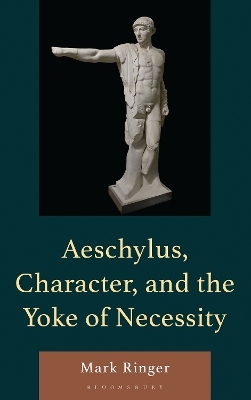
Aeschylus, Character, and the Yoke of Necessity
Seiten
2025
Rowman & Littlefield (Verlag)
978-1-6669-3908-8 (ISBN)
Rowman & Littlefield (Verlag)
978-1-6669-3908-8 (ISBN)
i.The book provides an overview of the surviving work of Aeschylus while offering a careful reappraisal of the long-neglected value of character analysis in the field of ancient Greek tragedy.
Aeschylus, Character, and the Yoke of Necessity considers the works of Aeschylus in the context of the playwright’s handling of dramatic character and the conflict between freedom and compulsion. Aeschylus was an Athenian citizen during the first generation of that polis’s democratic system. As such, he and his contemporaries were encountering a kind of free agency unknown before in history. Aeschylus presents the archetype of the “tragedy of character” that will resonate throughout world literature. It is a fascinating and essential component to the conception of his drama that his protagonists each of the six plays find ways of escaping freedom in exchange for a self-imposed spiritual bondage. They “slip [their] necks into the yoke of necessity,” to borrow a pivotal line from the Agamemnon. Caught between their individual motives and the unavoidable necessity of their situation, each protagonist handles this conflict in a way that defines the specificity of their character and results in the development of the plot. This book also explores the frequently dominant position of the Aeschylean chorus.
Aeschylus, Character, and the Yoke of Necessity considers the works of Aeschylus in the context of the playwright’s handling of dramatic character and the conflict between freedom and compulsion. Aeschylus was an Athenian citizen during the first generation of that polis’s democratic system. As such, he and his contemporaries were encountering a kind of free agency unknown before in history. Aeschylus presents the archetype of the “tragedy of character” that will resonate throughout world literature. It is a fascinating and essential component to the conception of his drama that his protagonists each of the six plays find ways of escaping freedom in exchange for a self-imposed spiritual bondage. They “slip [their] necks into the yoke of necessity,” to borrow a pivotal line from the Agamemnon. Caught between their individual motives and the unavoidable necessity of their situation, each protagonist handles this conflict in a way that defines the specificity of their character and results in the development of the plot. This book also explores the frequently dominant position of the Aeschylean chorus.
Mark Ringer is professor of theater at Marymount Manhattan College, USA.
Preface
Introduction
Chapter 1: Persians (472 BC)
Chapter 2: Seven against Thebes (467 BC)
Chapter 3: Suppliants (ca. 463 BC)
Chapter 4: The Oresteia—Agamemnon (458 BC)
Chapter 5: Libation Bearers
Chapter 6: Eumenides
Postscript
Bibliography
Appendix A: Further Reading
About the Author
| Erscheinungsdatum | 09.08.2025 |
|---|---|
| Sprache | englisch |
| Maße | 158 x 232 mm |
| Gewicht | 460 g |
| Themenwelt | Literatur ► Klassiker / Moderne Klassiker |
| Geisteswissenschaften ► Philosophie ► Philosophie Altertum / Antike | |
| Geisteswissenschaften ► Sprach- / Literaturwissenschaft ► Anglistik / Amerikanistik | |
| Geisteswissenschaften ► Sprach- / Literaturwissenschaft ► Literaturwissenschaft | |
| ISBN-10 | 1-6669-3908-0 / 1666939080 |
| ISBN-13 | 978-1-6669-3908-8 / 9781666939088 |
| Zustand | Neuware |
| Informationen gemäß Produktsicherheitsverordnung (GPSR) | |
| Haben Sie eine Frage zum Produkt? |
Mehr entdecken
aus dem Bereich
aus dem Bereich
Die Philosophie der Antike als Lebensweise in der modernen Welt
Buch | Hardcover (2025)
FinanzBuch Verlag
CHF 25,20


