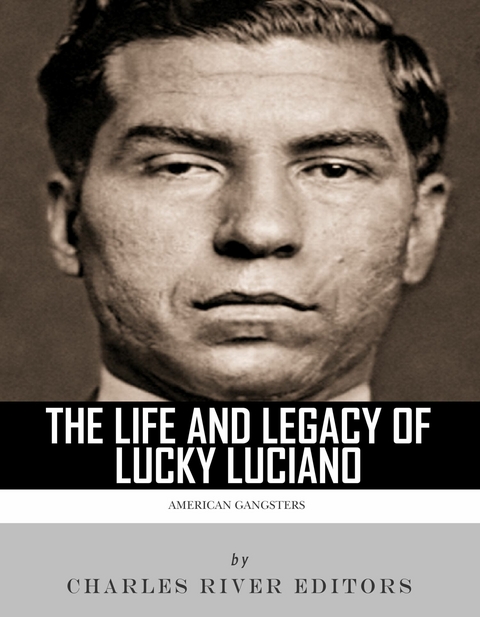
Life and Legacy of Lucky Luciano (eBook)
30 Seiten
Charles River Editors (Verlag)
978-1-4753-3098-4 (ISBN)
'He was born and died in Italy, yet the influence on America of a grubby street urchin named Salvatore Lucania ranged from the lights of Broadway to every level of law enforcement, from national politics to the world economy. First, he reinvented himself as Charles ('Lucky') Luciano. Then he reinvented the Mafia. His story was Horatio Alger with a gun, an ice pick and a dark vision of Big Business.' - Edna Buchanan, Time
The Mafia has long fascinated Americans, who have made celebrated pop culture fixtures out of men like Al Capone and turned movies and television series like The Godfather and The Sopranos into American institutions despite the violence associated with organized crime. Of all the notorious mobsters of the 20th century, the one most instrumental in putting the organization into organized crime and thus establishing the Mafia as it's recognized today was Lucky Luciano.
The man who would become the Father of Organized Crime in the United States was born Salvatore Lucania in Sicily, but he would quickly make a name for himself after his family moved to New York City when he was still a child. By his teenage years, he was running the streets, organizing his own teenage gang, and moving in circles with the likes of Meyer Lansky, who would become key figures in Lucky's rise to power.
Like so many young adults of his time, Lucky's participation in the criminal underworld began in earnest during Prohibition, and he was ambitious from the beginning. Lucky networked with other young mobsters, all of whom became known as the Young Turks, and when Lucky eliminated bosses Giuseppe Masseria and Salvatore Maranzano in 1931, he had reached the top of organized crime in New York.
From the top, Luciano would implement the organizations and mob rackets that are so familiar to Americans today. In addition to having the New York scene divided into the Five Families, Luciano established The Commission to discuss and govern organized crime across the country, and dipped his toes into every conceivable racket, including gambling, bookmaking, loan-sharking, drug trafficking, unions, labor, construction and extortion.
Eventually Lucky would run out of luck. After being arrested dozens of times over a 20 year period, Luciano was imprisoned in the mid-'30s, and a decade later he would be deported back to Italy. Nevertheless, Lucky continued to try to fight for control of organized crime in New York from his jail cell, Italy, and Cuba, staying in the game until the very end.
American Gangsters: The Life and Legacy of Lucky Luciano looks at the life and crime of the mob boss, his influence on organized crime, and his legacy. Along with pictures of Luciano and important people, places, and events in his life, you will learn about the father of organized crime like you never have before, in no time at all.
"e;He was born and died in Italy, yet the influence on America of a grubby street urchin named Salvatore Lucania ranged from the lights of Broadway to every level of law enforcement, from national politics to the world economy. First, he reinvented himself as Charles ("e;Lucky"e;) Luciano. Then he reinvented the Mafia. His story was Horatio Alger with a gun, an ice pick and a dark vision of Big Business."e; - Edna Buchanan, Time The Mafia has long fascinated Americans, who have made celebrated pop culture fixtures out of men like Al Capone and turned movies and television series like The Godfather and The Sopranos into American institutions despite the violence associated with organized crime. Of all the notorious mobsters of the 20th century, the one most instrumental in putting the organization into organized crime and thus establishing the Mafia as it s recognized today was Lucky Luciano.The man who would become the Father of Organized Crime in the United States was born Salvatore Lucania in Sicily, but he would quickly make a name for himself after his family moved to New York City when he was still a child. By his teenage years, he was running the streets, organizing his own teenage gang, and moving in circles with the likes of Meyer Lansky, who would become key figures in Lucky s rise to power.Like so many young adults of his time, Lucky s participation in the criminal underworld began in earnest during Prohibition, and he was ambitious from the beginning. Lucky networked with other young mobsters, all of whom became known as the Young Turks, and when Lucky eliminated bosses Giuseppe Masseria and Salvatore Maranzano in 1931, he had reached the top of organized crime in New York. From the top, Luciano would implement the organizations and mob rackets that are so familiar to Americans today. In addition to having the New York scene divided into the Five Families, Luciano established The Commission to discuss and govern organized crime across the country, and dipped his toes into every conceivable racket, including gambling, bookmaking, loan-sharking, drug trafficking, unions, labor, construction and extortion.Eventually Lucky would run out of luck. After being arrested dozens of times over a 20 year period, Luciano was imprisoned in the mid- 30s, and a decade later he would be deported back to Italy. Nevertheless, Lucky continued to try to fight for control of organized crime in New York from his jail cell, Italy, and Cuba, staying in the game until the very end. American Gangsters: The Life and Legacy of Lucky Luciano looks at the life and crime of the mob boss, his influence on organized crime, and his legacy. Along with pictures of Luciano and important people, places, and events in his life, you will learn about the father of organized crime like you never have before, in no time at all.
| Erscheint lt. Verlag | 6.5.2025 |
|---|---|
| Sprache | englisch |
| Themenwelt | Literatur ► Biografien / Erfahrungsberichte |
| Schlagworte | Biography • Bugsy • capone • godfather • Mafia • MOB • Rothstein |
| ISBN-10 | 1-4753-3098-7 / 1475330987 |
| ISBN-13 | 978-1-4753-3098-4 / 9781475330984 |
| Informationen gemäß Produktsicherheitsverordnung (GPSR) | |
| Haben Sie eine Frage zum Produkt? |
 EPUB (Ohne DRM)
Digital Rights Management: ohne DRM
Dieses eBook enthält kein DRM oder Kopierschutz. Eine Weitergabe an Dritte ist jedoch rechtlich nicht zulässig, weil Sie beim Kauf nur die Rechte an der persönlichen Nutzung erwerben.
Dateiformat: EPUB (Electronic Publication)
EPUB ist ein offener Standard für eBooks und eignet sich besonders zur Darstellung von Belletristik und Sachbüchern. Der Fließtext wird dynamisch an die Display- und Schriftgröße angepasst. Auch für mobile Lesegeräte ist EPUB daher gut geeignet.
Systemvoraussetzungen:
PC/Mac: Mit einem PC oder Mac können Sie dieses eBook lesen. Sie benötigen dafür die kostenlose Software Adobe Digital Editions.
eReader: Dieses eBook kann mit (fast) allen eBook-Readern gelesen werden. Mit dem amazon-Kindle ist es aber nicht kompatibel.
Smartphone/Tablet: Egal ob Apple oder Android, dieses eBook können Sie lesen. Sie benötigen dafür eine kostenlose App.
Geräteliste und zusätzliche Hinweise
Buying eBooks from abroad
For tax law reasons we can sell eBooks just within Germany and Switzerland. Regrettably we cannot fulfill eBook-orders from other countries.
aus dem Bereich