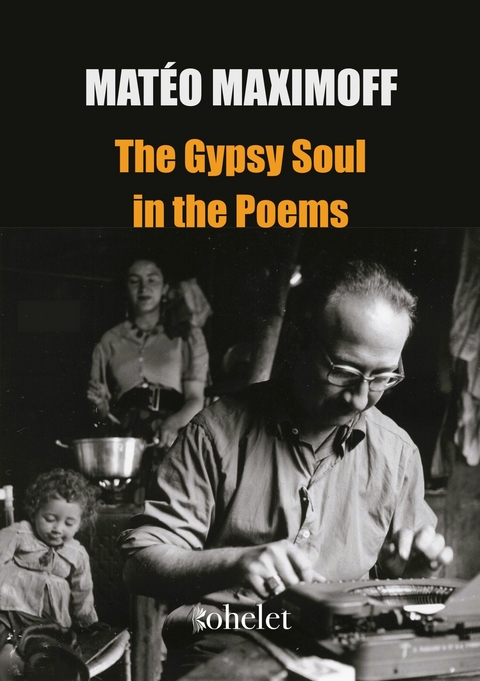
The Gypsy Soul in the Poems (eBook)
70 Seiten
Editorial Kohelet (Verlag)
9791399034707 (ISBN)
Matéo was born in 1917 in Barcelona, Spain, where his family had taken refuge after wandering through many Eastern and Western European countries, trying to escape the First World War. A few years later, in 1920, his relatives settled in France - initially as nomads without permanent residence, and then in wooden barracks in Pantin, near Paris, in what was known as 'the Zone.' His father was a Kalderash Gypsy who had fled Russia with his entire extended family (around 200 people) at the beginning of the 20th century to escape the Bolsheviks. His mother came from a family of French Manouches. Before that, their ancestors had been enslaved for five centuries in Moldavia and Wallachia (now part of modern-day Romania). Matéo never attended school. His father, a tinker, spoke poor French, and his mother, a circus performer, was illiterate. By age five, Matéo already spoke several languages, but he could not write, as no one had taught him. His father, who could read and write a little, taught him to count - a skill essential for work - and later taught him the letters of the alphabet. That was the entirety of his formal education. The rest he learned on his own. A true autodidact, Matéo read everything he could find: newspapers, magazines, cheap novels, and works by great literary masters. His mother died when he was eight years old, and his father passed away a few years later. At 14, as the eldest of five children, he began working to support his younger siblings. He started as a tinker, like his father. At seventeen, he married an older woman, and they had a son named Burtia. The marriage failed, however, and Matéo divorced and distanced himself from his Gypsy community. In 1935, after this separation, he searched for his mother's family - Manouches, who traveled through central France. He lived a nomadic life for two years with his maternal uncles, aunts, and cousins. During their travels through villages, he worked as a fairground hand, a traveling salesman, and a film projectionist - the latter job became his favorite. Cinema became his new passion, and he discovered the films of Harold Lloyd, Buster Keaton, and Charlie Chaplin. Later, he worked as an extra and background casting assistant on several film productions. When he was 21, a dramatic event pushed him toward writing. In Auvergne, near Clermont-Ferrand, two Manouche families clashed over the honor of a young woman. Matéo's relatives were involved. Many were injured, and several were killed. Matéo, like others from his clan, was arrested and imprisoned, accused of participating in a collective murder. But Matéo had not killed anyone - he was only trying to protect his own. While in prison, he wrote a letter to his lawyer, a young intern named Jacques Isorni, who later became famous for defending Marshal Pétain. Isorni, impressed by the ease with which this young Gypsy expressed himself in writing, asked him to provide a detailed account of the events to prepare his defense. Matéo complied, writing several pages describing what had happened on that tragic night. The lawyer, struck by his storytelling skill, recognized Matéo as a potential writer. He brought him paper and pencils and encouraged him to use his time in prison to write.
Matéo was born in 1917 in Barcelona, Spain, where his family had taken refuge after wandering through many Eastern and Western European countries, trying to escape the First World War. A few years later, in 1920, his relatives settled in France — initially as nomads without permanent residence, and then in wooden barracks in Pantin, near Paris, in what was known as "the Zone." His father was a Kalderash Gypsy who had fled Russia with his entire extended family (around 200 people) at the beginning of the 20th century to escape the Bolsheviks. His mother came from a family of French Manouches. Before that, their ancestors had been enslaved for five centuries in Moldavia and Wallachia (now part of modern-day Romania). Matéo never attended school. His father, a tinker, spoke poor French, and his mother, a circus performer, was illiterate. By age five, Matéo already spoke several languages, but he could not write, as no one had taught him. His father, who could read and write a little, taught him to count — a skill essential for work — and later taught him the letters of the alphabet. That was the entirety of his formal education. The rest he learned on his own. A true autodidact, Matéo read everything he could find: newspapers, magazines, cheap novels, and works by great literary masters. His mother died when he was eight years old, and his father passed away a few years later. At 14, as the eldest of five children, he began working to support his younger siblings. He started as a tinker, like his father. At seventeen, he married an older woman, and they had a son named Burtia. The marriage failed, however, and Matéo divorced and distanced himself from his Gypsy community. In 1935, after this separation, he searched for his mother's family — Manouches, who traveled through central France. He lived a nomadic life for two years with his maternal uncles, aunts, and cousins. During their travels through villages, he worked as a fairground hand, a traveling salesman, and a film projectionist — the latter job became his favorite. Cinema became his new passion, and he discovered the films of Harold Lloyd, Buster Keaton, and Charlie Chaplin. Later, he worked as an extra and background casting assistant on several film productions. When he was 21, a dramatic event pushed him toward writing. In Auvergne, near Clermont-Ferrand, two Manouche families clashed over the honor of a young woman. Matéo's relatives were involved. Many were injured, and several were killed. Matéo, like others from his clan, was arrested and imprisoned, accused of participating in a collective murder. But Matéo had not killed anyone — he was only trying to protect his own. While in prison, he wrote a letter to his lawyer, a young intern named Jacques Isorni, who later became famous for defending Marshal Pétain. Isorni, impressed by the ease with which this young Gypsy expressed himself in writing, asked him to provide a detailed account of the events to prepare his defense. Matéo complied, writing several pages describing what had happened on that tragic night. The lawyer, struck by his storytelling skill, recognized Matéo as a potential writer. He brought him paper and pencils and encouraged him to use his time in prison to write.
| Erscheint lt. Verlag | 16.4.2025 |
|---|---|
| Reihe/Serie | Mateo Maximoff |
| Verlagsort | Granada |
| Sprache | englisch |
| Themenwelt | Literatur ► Lyrik / Dramatik ► Lyrik / Gedichte |
| Schlagworte | gypsy author • Gypsy poetry • new poetry • Unpublished |
| ISBN-13 | 9791399034707 / 9791399034707 |
| Informationen gemäß Produktsicherheitsverordnung (GPSR) | |
| Haben Sie eine Frage zum Produkt? |
 EPUB (Wasserzeichen)
DRM: Digitales Wasserzeichen
Dieses eBook enthält ein digitales Wasserzeichen und ist damit für Sie personalisiert. Bei einer missbräuchlichen Weitergabe des eBooks an Dritte ist eine Rückverfolgung an die Quelle möglich.
Dateiformat: EPUB (Electronic Publication)
EPUB ist ein offener Standard für eBooks und eignet sich besonders zur Darstellung von Belletristik und Sachbüchern. Der Fließtext wird dynamisch an die Display- und Schriftgröße angepasst. Auch für mobile Lesegeräte ist EPUB daher gut geeignet.
Systemvoraussetzungen:
PC/Mac: Mit einem PC oder Mac können Sie dieses eBook lesen. Sie benötigen dafür die kostenlose Software Adobe Digital Editions.
eReader: Dieses eBook kann mit (fast) allen eBook-Readern gelesen werden. Mit dem amazon-Kindle ist es aber nicht kompatibel.
Smartphone/Tablet: Egal ob Apple oder Android, dieses eBook können Sie lesen. Sie benötigen dafür eine kostenlose App.
Geräteliste und zusätzliche Hinweise
Buying eBooks from abroad
For tax law reasons we can sell eBooks just within Germany and Switzerland. Regrettably we cannot fulfill eBook-orders from other countries.
aus dem Bereich