


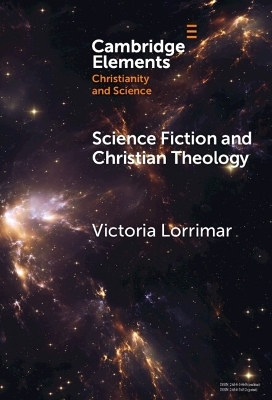
Science Fiction and Christian Theology
Seiten
2025
Cambridge University Press (Verlag)
978-1-009-56558-5 (ISBN)
Cambridge University Press (Verlag)
978-1-009-56558-5 (ISBN)
This Element provides an introduction to the use of science fiction as a conversation partner for theological reflection, arguing that it shifts the science-religion dialogue away from propositional discourse in a more fruitful and imaginative direction. Science fiction is presented as a mediator between theological and scientific disciplines.
Theologians often struggle to engage with scientific and technological proposals meaningfully in our contemporary context. This Element provides an introduction to the use of science fiction as a conversation partner for theological reflection, arguing that it shifts the science – religion dialogue away from propositional discourse in a more fruitful and imaginative direction. Science fiction is presented as a mediator between theological and scientific disciplines and worldviews in the context of recent methodological debates. Several sections provide examples of theological engagement in relation to the themes of embodiment, human uniqueness, disability and economic inequalities, exploring relevant technologies such as mind-uploading, artificial intelligence, and virtual reality in dialogue with select works of science fiction. A final section considers the pragmatic challenge of progress in the real world towards the more utopian futures presented in science fiction.
Theologians often struggle to engage with scientific and technological proposals meaningfully in our contemporary context. This Element provides an introduction to the use of science fiction as a conversation partner for theological reflection, arguing that it shifts the science – religion dialogue away from propositional discourse in a more fruitful and imaginative direction. Science fiction is presented as a mediator between theological and scientific disciplines and worldviews in the context of recent methodological debates. Several sections provide examples of theological engagement in relation to the themes of embodiment, human uniqueness, disability and economic inequalities, exploring relevant technologies such as mind-uploading, artificial intelligence, and virtual reality in dialogue with select works of science fiction. A final section considers the pragmatic challenge of progress in the real world towards the more utopian futures presented in science fiction.
1. Introduction: the genre of science fiction; 2. Science fiction as mediator; 3. Embodiment; 4. Human uniqueness; 5. Disability, economic inequality, and access; 6. Conclusion 'staying with the trouble' and Christian Hope; References.
| Erscheinungsdatum | 20.05.2025 |
|---|---|
| Reihe/Serie | Elements of Christianity and Science |
| Zusatzinfo | Worked examples or Exercises |
| Verlagsort | Cambridge |
| Sprache | englisch |
| Gewicht | 259 g |
| Themenwelt | Literatur ► Fantasy / Science Fiction ► Science Fiction |
| Religion / Theologie ► Christentum ► Kirchengeschichte | |
| ISBN-10 | 1-009-56558-3 / 1009565583 |
| ISBN-13 | 978-1-009-56558-5 / 9781009565585 |
| Zustand | Neuware |
| Informationen gemäß Produktsicherheitsverordnung (GPSR) | |
| Haben Sie eine Frage zum Produkt? |
Mehr entdecken
aus dem Bereich


aus dem Bereich
eine andere Geschichte der Papststadt
Buch | Softcover (2024)
C.H.Beck (Verlag)
CHF 25,20
die Macht des Dunklen in unserer Zeit und wie wir ihr entgegentreten
Buch | Hardcover (2025)
Verlag Herder
CHF 27,90


