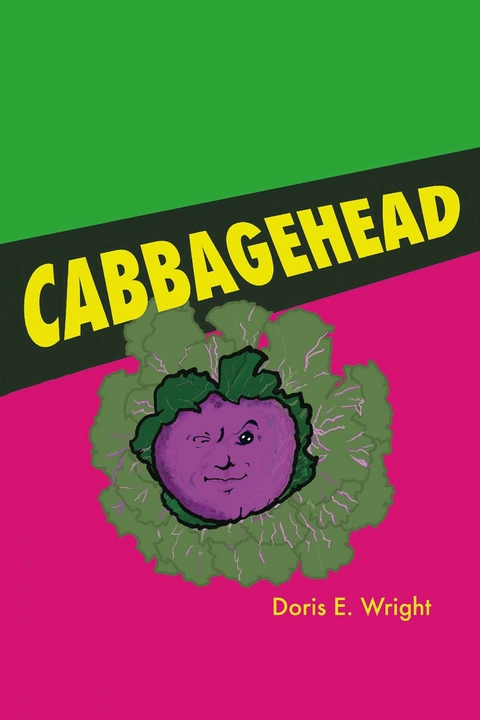
Cabbagehead (eBook)
288 Seiten
Bookbaby (Verlag)
979-8-3509-7355-6 (ISBN)
Doris E. Wright is an award-winning author whose fiction and nonfiction stories have been published in several anthologies. An undergraduate English major, she has taken graduate English classes and participated in writers' workshops, including the New York State Summer Writers Institute at Skidmore College and Colgate University's novel, short story, and poetry workshops. She is a mother, grandmother, wife, artist and writer. Always curious about what's beyond the next bend, she has ridden camels in Timbuktu, done tai chi in Xi'an, and walked the veld in Kwazulu-Natal. To facilitate her and her husband's love of travel, especially on the cheap, they have pet sat dogs, cats, tarantulas, rats, a tortoise, and both normal and unusual plants in the United States, France, Ireland, and the UK.
"e;Cabbagehead"e; is the story of a friendship between an inhibited human and an enlightened plant. Bradley Peterson has avoided being known or engaged in life through his fifty years of existence. Mistreated by his parents, bullied by his duplicitous wife, and long overwhelmed even by mundane events, Bradley has retreated to an uninspiring interior life. His only contentment is in gardening-until the day a plant, looking like a large and unlovely cabbage, speaks to him. Their conversations range from philosophy and religion to the merits of mold. Encouraged by the wise and persuasive Cabbagehead, Bradley becomes more assertive at work; reconnects with his children and father; stands up to the machinations of his scheming wife; and embraces a new, fulfilling life. The mundane life he knew before Cabbagehead is now in the past. But Bradley is alarmed when he learns of Cabbagehead's plan for him. "e;Cabbagehead"e; is a magical, humorous, insightful story of personal reflection, love, and transformation.
Chapter 2
“We meet fear. We greet the unexpected visitor and listen to what he has to tell us. When fear arrives, something is about to happen.”
—Leigh Bardugo, Crooked Kingdom
Of course when it happened, Bradley, was
not prepared for it. None of us would be. But Bradley Peterson had, throughout his life, avoided even slightly disturbing events, always carefully sidling along the periphery of his existence. But still, it happened.
On a Saturday morning following the thunderstorm, after breakfast, after reading the morning paper, after shaving and showering—for even though it was a weekend, he felt more comfortable sticking to his routine—Bradley went outside to begin his yard work.
The ground was still soaked from the storm. He slogged out to the shed to get his pruning shears, garden gloves, a shovel, and a lawn-and-leaf bag. The last two items he picked up in the event an animal had, as he feared, died in the flower bed, the reason for the strange whimpering noise coming from outside late the prior night. He walked to the far side of the house and made his way down the stone path. So far so good: his nose hadn’t picked up any malodorous scent. Then he saw it. The thing that occupied the spot where the beautiful rhododendron had once lived.
“What the hell is that?” he wondered.
It looked like a large cabbage, or one of those ornamental cabbage-like plants with large, frilly, deep-green-and-purple leaves and a bumpy, cream-colored, cabbage-like center. Bradley considered plants like these ugly and had never understood why people used them in flowerbeds or along sidewalks. This one was huge. Monstrous, even.
His first thought, that Calley had planted it, he quickly dismissed. He had never known her to weed, prune, or plant anything.
Bradley stared and then circled the plant. All that work, he thought, removing the rhododendron, to have it replaced by this ugly, this hideous. . . what?
And then the plant moved.
It rustled really, as if shaking itself awake.
And then it spoke. Not a lot. Just one word.
“Bradley.”
Bradley stopped moving and held his breath. Again, he heard it.
“Hey! Bradley!”
Bradley did not answer.
Instead, he dropped his tools and walked briskly into the house, not bothering to remove his muddy garden clogs. He locked the door behind him and leaned against it, trying to catch his breath, trying to be rational in this irrational situation. Logic had always served him well. It was not always kind, but it was dependable. He could not find the logic now, but he still had confidence that it must be there. He just needed a moment to think this through. Clearly, he had made a mistake.
“Think of some options.” he ordered himself.
“Okay,” he complied. “Let’s see. There might have been a gust of wind, or an injured animal under the plant, or. . . something. Yes, that’s it. Something.”
Bradley halfheartedly laughed at himself and unlocked the door. He walked back to the plant, taking the long way around the house, working to regulate his breathing as he went. He approached it, then got down on his knees and stared. Nothing. No movement, no sound. Just the motionless behemoth.
Good, he thought.
Then he extended his hand towards it, aiming to lift one of the large leaves to check if there was an animal beneath it. His hand poised above it for a moment, torn between his desire to know, yet realizing that this might not be a wise thing to do. After all, the animal—maybe one of those rabid raccoons that turned up every now and then—might attack him. But Bradley needed, as quickly as possible, to return to his reliable, comfortable reality, bite or no bite.
He lifted the leaf and saw beneath, no small animal, no raccoon, no rabbit, no vole or chipmunk or woodchuck, no mouse or mole. He saw instead, to his astonishment, a face, a human face. No, not really human, for though it was cream-colored it had a definite greenish hue and was part of the plant. In its round center there were what seemed to be facial features: eyes, nose, lips. The eyes were looking at him intently, the way a baby studies another person, with no shame or fear. And then it spoke, again.
“You’re Bradley, right? Well, do me a favor, will you, man? Don’t run off again. It’s incredibly annoying.”
But Bradley did. He ran towards the house, this time tripping over the tools he’d dropped before. Once inside, he locked the door and sat on the floor. He pulled up his knees and scooted himself backwards into the corner. He sat for quite a while, his heart racing, trying not to think about what he’d seen. . . and heard.
After what seemed like twenty minutes but was only five, Bradley convinced himself that what he knew had happened had, in fact, not happened; and since it hadn’t happened, he would just go about his business, do the things he did on a normal Saturday—as long as it didn’t involve going outside, at least not near that corner of the house, the place where the rhododendron had been, the place where now there was a plant that looked much like a cabbage. A plant with strange properties he didn’t wish to think about.
He spent the rest of the day doing chores he had put off, some for several years. He painted the trim in the hallway with the radio tuned loudly to a baseball game he wasn’t interested in. He finished sooner than he’d hoped. Then he washed every piece of laundry in the house, even those in his I-can-get-away-with-wearing-this-one-more-time category. He skipped lunch and ran on the treadmill instead, watching the game whose score was now eleven to zero, and carefully avoiding the gardening channel. After a long shower, hoping it would rid his head of thought, it was late enough in the day to allow himself a beer. But no, he told himself, he needed to keep a clear head—or, more accurately, find a clear head. And so, he decided to call his wife, which was something he almost never did when she was on a business trip. Calley. The very voice of reason.
He caught her in her hotel room and tried to keep her on the phone as long as he could. When she said she had to get ready to go out to dinner with some of “the team,” he asked her if she had done any planting lately. Now Calley laughed. He persisted. Had she had anyone else do any yard work? She ignored his question and asked if he’d picked up the dry cleaning.
After the phone call, Bradley felt better. Yes, Calley was his pillar, he thought—not one that offered or leant him support, but one that he could hide behind; one willing, even insistent, to be the first line of defense against a world that threw up the unexpected, the illogical, the unkind. She enjoyed being on the front line—an attribute he could not imagine having—and never expected Bradley to handle the tricky things.
He recalled his panic and helplessness many years before when he brought their daughter Katie, then age three, to the doctor and learned that her cold was pneumonia, and she would have to be hospitalized. With Calley out of town, he had to take charge, but he felt he had been utterly useless, neither able to respond to the nurses’ questions nor comfort his frightened child.
Then Calley arrived at the hospital, swooping in—he now pictured a towering Wonder Woman in patriotic bustier and shiny black boots, flailing a whip—asking the doctors all the right questions and chiding the nurses for what she perceived as their shoddy care. She had their daughter moved to a private room, called in a specialist, and stayed at the hospital, sending Bradley home. By the next day when he returned, Katie’s fever had gone down and she was sitting up in bed, coloring and watching cartoons, her normally wild, red hair neatly confined in braids, with an enormous teddy bear tucked in next to her. In his relief, Bradley was moved to tears and rushed from the room to hide his weakness.
He had not felt at that time that his daughter’s health had improved because of the human body’s resistance to disease or the progress of modern medicine, the wisdom of the specialist, or the dedication of the nurses. It was due to nothing other than Calley. She had stepped in, the irresistible force, confident and stolid, for which there was no immovable object. She alone had saved their child. As long as he stood behind her, Bradley was safe. So were his children. He would not have to endure a dreadful world of danger and insanity.
Within a few minutes of Calley’s ending the phone call, he wanted to call her back, to hear her speak, to bury himself in her firm, frequently strident voice.
Bradley walked to the window and looked out into the yard, avoiding the area in question. He tried emptying his mind of thoughts, a tactic he often used that sometimes worked, but the thought of the plant in his yard kept coming back.
It did, of course, occur to him that he might have lost his mind, or was well on his way to losing it. But he strongly felt that, crazy or not, he mustn’t act crazy. If he was crazy—mentally ill, he corrected himself—it was important that no one know. He would act normal. He had had a lot of experience with acting. Whatever he found, whatever he faced, he thought it possible that he could probably deal with it because, in the end, he could always act normal. Encouraged by this thought, and before he could change his mind, Bradley went outside and approached the plant.
It was still.
He squatted...
| Erscheint lt. Verlag | 1.11.2024 |
|---|---|
| Sprache | englisch |
| Themenwelt | Literatur |
| ISBN-13 | 979-8-3509-7355-6 / 9798350973556 |
| Informationen gemäß Produktsicherheitsverordnung (GPSR) | |
| Haben Sie eine Frage zum Produkt? |
 EPUB (Ohne DRM)
Größe: 1,3 MB
Digital Rights Management: ohne DRM
Dieses eBook enthält kein DRM oder Kopierschutz. Eine Weitergabe an Dritte ist jedoch rechtlich nicht zulässig, weil Sie beim Kauf nur die Rechte an der persönlichen Nutzung erwerben.
Dateiformat: EPUB (Electronic Publication)
EPUB ist ein offener Standard für eBooks und eignet sich besonders zur Darstellung von Belletristik und Sachbüchern. Der Fließtext wird dynamisch an die Display- und Schriftgröße angepasst. Auch für mobile Lesegeräte ist EPUB daher gut geeignet.
Systemvoraussetzungen:
PC/Mac: Mit einem PC oder Mac können Sie dieses eBook lesen. Sie benötigen dafür die kostenlose Software Adobe Digital Editions.
eReader: Dieses eBook kann mit (fast) allen eBook-Readern gelesen werden. Mit dem amazon-Kindle ist es aber nicht kompatibel.
Smartphone/Tablet: Egal ob Apple oder Android, dieses eBook können Sie lesen. Sie benötigen dafür eine kostenlose App.
Geräteliste und zusätzliche Hinweise
Buying eBooks from abroad
For tax law reasons we can sell eBooks just within Germany and Switzerland. Regrettably we cannot fulfill eBook-orders from other countries.
aus dem Bereich