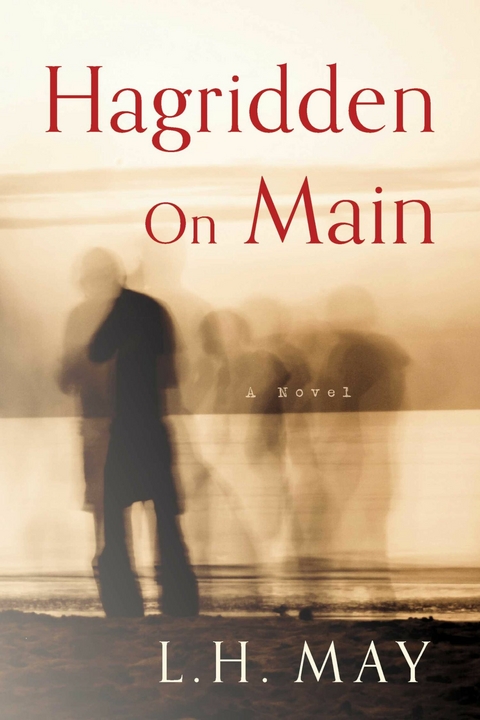
Hagridden On Main (eBook)
144 Seiten
Bookbaby (Verlag)
979-8-3509-6523-0 (ISBN)
L.H. May graduated with a B.A. cum laude in English from Yale College, and received a Juris Doctor degree from Indiana University School of Law. He practiced law for many years and has written numerous novels, many set in Peru, including 'The Gate Of Two Snakes'.
My beloved History of The English Language professor, Marie Boroff, used to claim that Joyce's "e;Finnegan's Wake"e; was 'unreadable'. While that may not be completely true, it does help to have an interpretive concordance at hand as one attempts it. This novel of mine attempts to include the tools for its own understanding. Ben advises Tom, who's trying to read "e;War And Peace"e; and keeps getting bogged down, to simply skip long passages about Freemasonry, which is important in restoring Pierre's spirit as he is becoming jaded in attitude, but is frankly more detail than most readers need on the subject. Like the classic review of "e;Moby Dick"e; from a schoolgirl (this book tells me more than I want to know about whales), if my characters rail at too great length against Trump and his Maga Corps, just skip ahead. These polemics tie in with the discussion of historians, for example, Thucydides detailing the the Fall of the Athenian Empire, and of novels as a variant of History. In passing, it's worth noting that New Criticism's attempt to uncouple Literature from Time and put it in a glass case, is a bad fit for most fiction except romance and escapism. I position this novel as existing at what may be the end of American democracy, and the beginning of we know not what. The idea that we are transitioning from traditional constitutional democracy to something like what Rome did in going from Republic to Empire, has some currency, though a questionable amount of real support. The American Experiment has released and guided human energies to some of the greatest achievements of human civilization. Herman Melville believed America had created a New Man, with endless possibilities for improvement. This author tends to believe in America as still possessing that capacity for progress in both material and social aspects. Just to look at the advances in the medical field is impressive; maybe if you look at Law, things seem to be going in the other direction, there are a lot of dedicated people in the profession. I tried to make Tom into a caring attorney who helps his friend through his troubled mental affairs, sometimes with advice, sometimes with action as when Ben's transcriptionist experiences an overdose in a motel room and the police arrive after the EMTs take her away. Of course the first author I cited before Melville was Poe, whose vision is much closer to what Ben experiences in his depressive cycle.
1
Tom Radnor is speaking about his old friend, Ben, whose wife just passed away.
“We talked on many of the immortal topics of life many times, me and my old friend, Ben Karlensky, both before and after the death of his wife, Helen. I had handled their divorce, or more exactly their dissolution of marriage, as Ohio had by then been nudged forward into the no-fault era. It was an amicable split, they had not been living together since their kids went off to college in The East, and they had each found someone else with a good fit in terms of relationship. Sadly, Helen contracted non-Hodgkin’s lymphoma, died at the age of sixty-six, and now I was attending another significant Passage of Life for her, this one into the final absorption by Death. Ben and I shed a few tears for her at the funeral, --we’re older American men and don’t cry a lot. About a week later he called me to get together at a pub we like, and have a Chautauqua. He said he’d been doing a lot of reading lately about spiritualism after he lost Helen, and he’d come across this Chekhov quote. It describes Tolstoy’s idealist notion of immortality as “a shapeless, gelatinous mass”, and asked me what I thought.
After reading the quote over, I replied that Chekhov was an undoubtedly great author of fiction and dramas, but possibly not a theologian. ‘He’s talking about Personality, which sometimes alters over time. How many of our quirks, habits, looks or orientations deserve to be preserved through Eternity. The Classic take is that the Soul is a Platonic form, beyond Time, eternal and pure.’
“But a soul can be decayed,” Ben said. “Believe me. Oh, I don’t mean Helen’s. Talk about looks. I knew it was her right away. She told me things I needed to do and she consoled me. It was after she was gone when I was still wandering in that dim space. I fell into a dark hole.”
Although Ben used the word Apparition, I knew he meant he’d seen her ghost. I had spent most of my life as an agnostic, and didn’t much believe in ghosts. I myself could close my eyes and visualize Helen perfectly, her quizzical smile and expressive eyes. She was as lovely as she was at the dissolution party when she gave me a big kiss, for guiding her through the chimeras of the Shadow of the Valley of Romantic Death. But I considered this appearance of Helen not a revenant’s visitation, but something chemical going on in whatever part of my brain that controls visual memory. It existed in no other domain than on a private screen projected on the inside of my eyelids.
“It was like sunshine breaking through grey winter overcast,” Ben said, smiling with a beatific visage before his own expression became clouded, and pausing to choose his words. “After she was gone, it became supernaturally dark. Then I saw him.”
“Saw who?” I asked.
“The Devil,” Ben said with a laugh that had a repressed frantic
urgency to it.
“And I know you don’t believe the Devil exists.”
“No, I think the Devil does exist, as a fictional personification of Evil, on whom people can blame somebody besides themselves for their own bad actions,” I said.
“I know he was not the Devil,” he said. “If you want to say he seemed to embody everything Satanic, it’s the same to me. But I did see what I saw.”
“I have no doubt that you did,” I said, preparing to push off since I didn’t covet the opportunity to listen to the finer points of Mephistophelian being or non-being, from a buddy who was stoned before he arrived to further get real drunk at the pub, and was exceeding my tolerance level for baloney. Before I left, I asked if I could be his designated driver.
“Nona will pick me up when I call,” Ben said. “She dropped me off.”
“Good,” I said, thinking that if he would drop Nona as his partner, maybe he wouldn’t be seeing so many ghosts or apparitions and any of the astral projections of other beings which Ben had been instructed by her to believe in. That was unfair to Nona; she really tried to get Ben to keep off the booze and the dope, and he was a confirmed substance abuser. After all, she was a yogini, believed in her work, in the beneficial effects of yoga for health, physical and mental, and knew the Sanskrit names for the various poses and breathing techniques. The bookstore at her studio had not only a good section on yoga, practical and metaphysical, Hindu, Buddhist, Islamic mystic sects like the Sufi, who also practiced breath control and hesychasm, and he found a copy of the great study of the Rumanian-American philologist, Mircea Eliade, Yoga and Immortality, professor at the University of Chicago. Nona had said she was getting into Tantric Yoga now, which was the branch most concerned with sex, but also professed knowledge of certain mystic phenomena, telepathy, magic carpet rides and such stuff. She was something, a mixture of a canny business owner, who was now employing five younger yoga instructors who had a busy schedule of lessons. She had also gotten into seances recently, a notable ground for frauds, --I had gotten into Ben’s finances during processing Helen’s estate, and just to check, ran a credit report of Nona, and she was by no means sucking money out of him. Quite the contrary—she was rich. She had not only her own luxury condo, but another that her kids stayed in, and another she rented out, so by no means a mendicant yogini. She seemed in her late Thirties when he met her, tall, slim, muscular, no belly fat and she could do a stomach lift, a Uddiyana Bandha Kriya, so that the outline of her spine became briefly visible. I later discovered she was in her mid-Fifties from some paperwork I sorted through from Ben. His idea of filing notices was to throw all his mail in a big sack to take to me when it got full enough, and have me find out, for example, whether the two unanswered letters from the IRS were important or not, a sad note from his daughter that they were spending Thanksgiving with her husband’s folks. It was good that he was with Nona. She kept him out of worse trouble. As far as her views on reincarnation or metempsychosis, heh, the academic world believed in B.D.S. and Defund The Police and a bunch of other doctrinaire hobbyhorses, so I was inclined to think of these paranormal topics as hard to prove or disprove, and what to do about it anyway if they’re not hurting anyone.
“I need to tell you more,” Ben said, as he saw her driving up. “I need to convince you. I can do that.”
“Why” So I can see the Devil myself?” I said. “A figure in whom I don’t believe. Don’t stress about it, man. That’s just a bad trip.”
“No, it’s so you can see me better,” Ben said. “I wouldn’t wish it on you to see all that I saw. A dark figure indeed. Right after talking to Helen. Like the phone is still off the hook. And I saw him then. I can’t say more on that now. You will understand later. I am only hoping for someone to understand. You might say I have become more religious now. I’ve come to believe in an afterlife just like the kind of thing Chekhov wanted. And when you have a deceased person call on you, you may have a personal connection on the other end of the line. It’s like Life marks us and that’s an identity and entity, and that should be the immortal soul of each of us.”
“That’s good,” I said, though thinking getting religion sure hasn’t led to him cutting back on either the alcohol or the dope. I think he believed he wasn’t a drug abuser, though he showed every sign of substance abuse, including denial. Honestly, though I was getting older, I didn’t worry much about the existence or lack of an Afterlife. It wasn’t going to make me more or less moral than I already was. In fact, if an Afterlife did exist, it might get boring after a couple centuries. And I did share the Existentialists’ emphasis on Time, whether of an atheist like Sartre, or a Christian like Marcel. I also believed Time was unidirectional, that it was capable of nurturing Progress, especially for the USA and democracies of the world, though not guaranteed no matter how great the power of those convinced of fixing its society unchanged at some golden point in the Past under a banner of Heritage.
We poured him into Nona’s car when she arrived at the pub. She seemed annoyed with him.
“Tom, he’s been like that since her funeral,” she said.
“He said he saw her –uh-- apparition,” I said.
Nona called it an Emanation, which was fine with me, as good as any other name.
“Oh, yes, which I can understand, the mother of his children, how long had they been divorced, like ten years--but did he tell you about the man he saw afterwards?” Nona said. “The dark figure? Well, I shouldn’t talk about it, but it was seeing the man that really got to him. He swore me to secrecy about it. But I’m kind of like at the end of my rope with Ben. I think he’s still hung up on Helen. She was so well-educated. You know they divorced, split up like three years before we hooked up.”
“I would know that since I handled their dissolution,” I said. “But this dark figure. You don’t think Ben’s under any threat from this man?”
“No, it’s an obsession of his that a threat may exist,” she said. “I’m not even sure it’s a real person. It’s something that makes him anxious, and it’s tied up with his recent thoughts about immortality.”
“He told me he got religion,” I said.
“He’s always been very spiritual, Tom,” she said. “This last week has been tough on him.”
“There’re all sorts...
| Erscheint lt. Verlag | 31.8.2024 |
|---|---|
| Sprache | englisch |
| Themenwelt | Literatur ► Romane / Erzählungen |
| ISBN-13 | 979-8-3509-6523-0 / 9798350965230 |
| Informationen gemäß Produktsicherheitsverordnung (GPSR) | |
| Haben Sie eine Frage zum Produkt? |
 EPUB (Ohne DRM)
Größe: 460 KB
Digital Rights Management: ohne DRM
Dieses eBook enthält kein DRM oder Kopierschutz. Eine Weitergabe an Dritte ist jedoch rechtlich nicht zulässig, weil Sie beim Kauf nur die Rechte an der persönlichen Nutzung erwerben.
Dateiformat: EPUB (Electronic Publication)
EPUB ist ein offener Standard für eBooks und eignet sich besonders zur Darstellung von Belletristik und Sachbüchern. Der Fließtext wird dynamisch an die Display- und Schriftgröße angepasst. Auch für mobile Lesegeräte ist EPUB daher gut geeignet.
Systemvoraussetzungen:
PC/Mac: Mit einem PC oder Mac können Sie dieses eBook lesen. Sie benötigen dafür die kostenlose Software Adobe Digital Editions.
eReader: Dieses eBook kann mit (fast) allen eBook-Readern gelesen werden. Mit dem amazon-Kindle ist es aber nicht kompatibel.
Smartphone/Tablet: Egal ob Apple oder Android, dieses eBook können Sie lesen. Sie benötigen dafür eine kostenlose App.
Geräteliste und zusätzliche Hinweise
Buying eBooks from abroad
For tax law reasons we can sell eBooks just within Germany and Switzerland. Regrettably we cannot fulfill eBook-orders from other countries.
aus dem Bereich