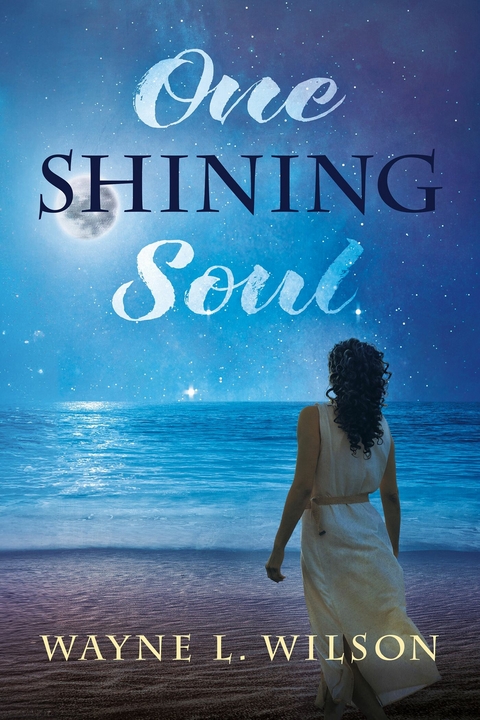
One Shining Soul (eBook)
416 Seiten
Bookbaby (Verlag)
979-8-3509-6126-3 (ISBN)
Wayne L. Wilson was born and raised in Los Angeles, California. He received a Master of Arts in Education from UCLA and a BA in Sociology from UCSB. Before establishing a career in writing, Wilson co-owned and operated an international publishing company specializing in innovative multicultural designs. Wayne has authored novels, screenplays, short stories, essays, PSAs, memoirs, biographies, history books, college textbooks, and a wide array of books for children and young adults. Furthermore, he's served as a ghostwriter for various books and publications. Wilson is a member of the Writer's Guild of America.
A new and exciting story entwined with magical realism and fantasy about a divine African American healer born in Los Angeles depicting the miracle of love. Ever since Olisa was a child, her father has feared that the world might one day find out that his daughter is blessed with very special gifts. On a fateful 4th of July, the renowned Venice Beach Boardwalk becomes the scene of a violent conflagration between Latino and Black gangs. People flee in all directions except for one black woman who fearlessly cradles the head of a notorious gang leader who has been fatally stabbed. It seems like time has come to a standstill. The fighting ends and the young man slowly rises to his feet clutching his chest not from pain, but from shock, a collective gasp is uttered. A random shout of "e;It's a miracle!"e; reverberates across the Boardwalk. A local reporter, who captured this miracle on film, will broadcast it throughout the world. This supernatural event catapults this striking, yet demure Black young woman to an unwanted fame overnight. She becomes "e;The Good Witch of Venice"e;. Society's reaction to finding a healer among them plays a major role in Olisa's journey. Is she an angel, a curandera or shaman? Or is she a devil? Who is this woman? Will our multicultural society accept this gift or will it seek to corrupt her into an icon, a diva, and a commercial entity? What is known is that the world's survival may rest on her delicate shoulders. Follow her epic journey as a modern day healer driven by faith and love.
Chapter 1
Fatalism—a doctrine that events are fixed in advance for all time in such a manner that human beings are powerless to change them.
Sooner or later, it was bound to happen. I guess I should be grateful that nothing occurred while my daughter, Olisa, was out of the country. However, it did transpire at Venice Beach on the Fourth of July days after she returned home.
It was early evening, and our soul food restaurant was packed. A twenty-minute wait increased to sixty minutes as couples and families with restless and hungry children waited for a table.
My sister, Wilma, scolded one of the new waiters in the kitchen about his billing mistakes, while I was absorbed in my own concerns. It didn’t look like I’d ordered enough chicken for the night. Meanwhile, the phone begged to be answered. Valerie, our hostess, called in late, so we were also shorthanded.
Gently lifting the phone I wanted to rip out of the wall, I affably answered, “Soul of Venice.”
“Unc, is that you? Aww, man . . . you didn’t answer your cell phone! I’ve been trying to reach you!”
“Gumbo? Anybody tell you it’s the Fourth of July? We’re shorthanded and things are insane! What’s up? You need to talk to your mother?”
“No, no, Uncle Joe, I gotta talk to you.”
“You sound like you’ve been running the decathlon. Everything all right?”
“Yeah, well, no . . . Uh, I mean everything is all right now, except . . .” He trailed off.
“Alton, I can’t understand a word you’re saying. Speak louder! What’s going on?”
Wilma stood impatiently next to me, a hand on her hip as she waited for the authorization machine to clear a Visa card. She mouthed, “What’s wrong?”
I shrugged my shoulders and covered my ear with the other hand to muffle the cacophony of voices, and clanking plates and silverware.
“Unc, you still there?”
“Yeah, Alton, ’cept I can barely hear you. Where are you now?”
“Your house . . . with Olisa.”
Right away I felt riddled by a surge of panic. “She okay?”
“Oh yeah, she’s fine. She’s asleep right now.”
“At seven?”
“Well, that’s why I called, Uncle Joe . . . Some stuff went down at the beach today.”
“Like, what stuff?”
He sighed. “Uncle Joe, this ain’t something I can talk about over the phone. Any way you can come back to the house? I know it’s crazy there. Should I try Aunt Grace at the hospital?”
“No, no, you’ll be waiting on that phone forever. I’m on the way. Give me about fifteen minutes.”
“Hey! Uncle Joe, before you hang up . . .”
“Yes?”
“Don’t talk to anyone.”
“What’s that mean?”
“Don’t speak to any reporters.”
“Huh? Reporters? It’s like that?”
“Yes, sir. Don’t say nuthin’ to nobody until you talk with me, okay? I’ll explain when you get here.”
I hung up the phone. Wilma immediately handed me the keys.
“I’m sorry. Something’s up. Gumbo wants me to come home.”
“Then you better leave. My son wouldn’t ask unless it’s important. We’ll be fine. Valerie came in while you were on the phone.”
“Okay, thanks, sis. I promise I’ll be back as soon as I can.”
“Uh-huh . . . I got a feeling that ain’t a promise you’ll be keeping. And judging by that frown on your face, it certainly won’t be tonight.”
I split out the back door, pausing for a second before climbing into my black Lexus GX 460. The underbelly of the clouds looked like pink cotton candy as the sun set. Something big was up. Wilma was right. Gumbo was too conscientious to bother me at the restaurant unless it was serious. All I could think about was what Gumbo said: “Some stuff went down . . .”
My hand trembled as I turned the ignition switch and raced the engine. I had been waiting for this. I could sense whatever happened was going to significantly change the course of our lives forever. I remember the first time our lives consequentially changed April 30, 1992, the day our daughter Olisa was born. She was born early that morning in the midst of one of the worst periods of unrest in our nation’s history—the Los Angeles riots. The event seared its way into international recognition.
The activity and damage done to LA streets were eerily similar to what James Baldwin described visiting Watts after the riots in August of 1965:
Watts doesn’t immediately look like a slum, if you come from New York: but it does if you drive from Beverly Hills . . . Over it hangs a miasma of fury and frustration, a perceptible darkening, as of storm clouds, of rage and despair, and the girls move with a ruthless, defiant dignity, and the boys move against the traffic as though they are moving against the enemy. He is not there, of course, but his soldiers are in patrol cars.
MC Hammer’s song “This Is the Way We Roll” blasted the air waves.
“Junior, turn that damn music off!” my father-in-law, Harold Willis, whispered furiously.
Junior only stared out the car window, mesmerized.
A solemn-faced Mr. Willis exasperatedly reached out and turned off the car radio. He nervously clutched the steering wheel as all three of us, bunched together in the front seat of the Jeep Grand Cherokee, slowly and deliberately drove south down Western Avenue. Carefully, we dodged roving bands of Black teenagers haphazardly sprinting across the streets, screaming and hollering, sweaty faces against the windshields of cars, obstructing traffic and stoning every police car whizzing down the street.
It was around 7:00 p.m. in the evening of April 29, 1992, about four hours after the Rodney King verdict had been read and the four officers were intolerably acquitted. The weather was moderate outside, but inside the car it was hot, incredibly hot, and our sticky shirts were plastered against our skin. The acrid smell of smoke in the air was stultifying. Los Angeles was entrenched in a fiery war of the people. There was no call to arms, no propaganda, no draft notices. The reactions were spontaneous, instinctual . . . an emotional response to the deep frustration inflicting a community. We found ourselves unwilling participants trapped in a maelstrom of violence, desperate to navigate our way home. Dense clouds of black smoke billowed into the sky, making it difficult to discern the natural course of nature’s sunset.
Cars keeled over like dominoes as we watched Brown and Black hands rocking them until their resistance weakened. Eventually they succumbed, tumbling over amidst loud triumphant cheers, finally bursting into fire as they were showered by Molotov cocktails. Darkness moved quickly upon us as we drove with our inside light on, advice that came courtesy of a teenager peering inside of our car with a pistol blatantly in the front part of his pants. “Hey, y’all, it’s getting’ dark. Better turn your inside light on so we know who you is, brothas! Know what I’m sayin’? We burnin’ this muthafucka down! The revolution will be televised! Ha! Ha!”
A moment later, shattering glass forced Mr. Willis to slam on his brakes as Junior and I jerked forward like test dummies slapping our hands against the dashboard.
“Shit! Everybody all right?” yelled Mr. Willis nervously, rubbing the bald spot on his head. The noise was so loud it sounded like our windows exploded, but they were still intact. Turned out it was the vehicle next to us as more bricks smashed its windows and shards of glass prickled our car.
A young Caucasian couple sat trapped in their Escalade, eyes stricken with terror as they fought off clawing Black hands reaching into the broken windows of their car. The man feverishly worked to start his Cadillac again, struggling with the ignition, futilely pumping the peddle of a gasping, flooded car. Derisive laughter accompanied his every effort as several people pounced upon his hood and bumper, dancing on the car and furiously beating it with sticks, bats, bricks, cement blocks, and anything else they could lay hold of.
“Kill whitey!” came the frenzied cry that consumed the air. “Hey, peckerwoods, bet you muthafuckas ain’t gon be coming through here no more, huh? Get yo asses out the car!”
“Oh my God,” whispered Mr. Willis as we sat glued in place.
They yanked the couple from the car and flung them to the ground. The man looked like some kind of account executive. They beat him so bad his clothes shredded from his body, their muffled cries stinging my ears as a mob of people engulfed them.
Somehow, by the grace of God, they actually popped out and managed to escape,...
| Erscheint lt. Verlag | 8.10.2024 |
|---|---|
| Sprache | englisch |
| Themenwelt | Literatur ► Romane / Erzählungen |
| ISBN-13 | 979-8-3509-6126-3 / 9798350961263 |
| Informationen gemäß Produktsicherheitsverordnung (GPSR) | |
| Haben Sie eine Frage zum Produkt? |
 EPUB (Ohne DRM)
Größe: 3,7 MB
Digital Rights Management: ohne DRM
Dieses eBook enthält kein DRM oder Kopierschutz. Eine Weitergabe an Dritte ist jedoch rechtlich nicht zulässig, weil Sie beim Kauf nur die Rechte an der persönlichen Nutzung erwerben.
Dateiformat: EPUB (Electronic Publication)
EPUB ist ein offener Standard für eBooks und eignet sich besonders zur Darstellung von Belletristik und Sachbüchern. Der Fließtext wird dynamisch an die Display- und Schriftgröße angepasst. Auch für mobile Lesegeräte ist EPUB daher gut geeignet.
Systemvoraussetzungen:
PC/Mac: Mit einem PC oder Mac können Sie dieses eBook lesen. Sie benötigen dafür die kostenlose Software Adobe Digital Editions.
eReader: Dieses eBook kann mit (fast) allen eBook-Readern gelesen werden. Mit dem amazon-Kindle ist es aber nicht kompatibel.
Smartphone/Tablet: Egal ob Apple oder Android, dieses eBook können Sie lesen. Sie benötigen dafür eine kostenlose App.
Geräteliste und zusätzliche Hinweise
Buying eBooks from abroad
For tax law reasons we can sell eBooks just within Germany and Switzerland. Regrettably we cannot fulfill eBook-orders from other countries.
aus dem Bereich