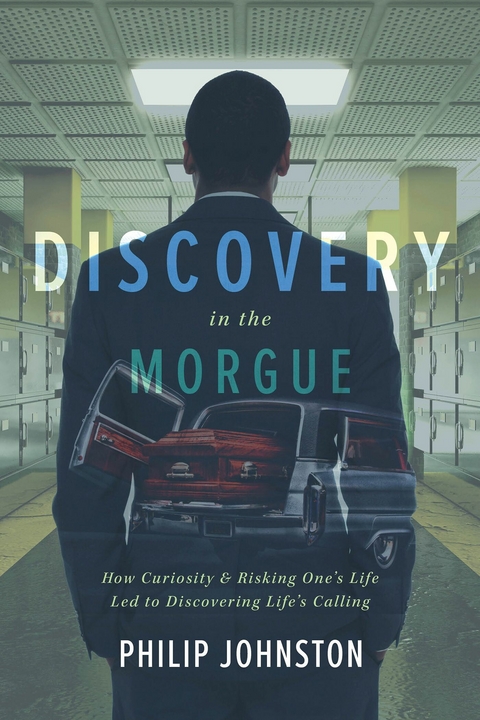
Discovery in the Morgue (eBook)
188 Seiten
Bookbaby (Verlag)
979-8-3509-2858-7 (ISBN)
Social disruption was a harsh reality in America in the late 1960s and early 1970s. Every citizen in Memphis, Tennessee, felt the impact of the assassination of Martin Luther King, national political unrest, America's failure in the Vietnam War, civil disobedience, and the emerging horror of organized crime and the drug culture. Memphis's citizens largely believed segregation was a preferred social structure, with African Americans remaining subservient. In this blend of historical fiction, memoir, and social reflection, the author reveals the struggles of young Hank Henderson. Hank is a newly minted health professional who realizes the disparities created by racial segregation and long-term mistrust and oppression of African Americans. Hank's thoughts conflict, and he becomes progressively reckless. Hank's journey evolves with a background of personal and cultural experiences that are harsh teachings. Hank's reaction to social disparities is inflaming, showing how the healthcare industry functions as a dichotomy of service to Whites versus African Americans. Healthcare was not offered to African Americans as a right but as a privilege. Realizing how contrary this is to his upbringing, Hank risks his safety and professional career to make a difference. He joins forces with a friend to solve a mystery involving members of a drug ring. As they come closer to revealing the ring's actions, Hank's restlessness and curiosity get him over his head in trouble. He faces not only years in prison but is now a hunted man. His naive decisions and what he now knows have resulted in a troublesome situation.
Chapter One
Wherever you turn, you can find someone who needs you. Even if it is a little thing, do something for which there is no pay but the privilege of doing it. Remember, you don’t live in a world all of your own.
—Albert Schweitzer 9
On Monday, July 2, 1973, I entered the University Human Resources office to begin my first professional job as a newly minted clinical pharmacist. My name is Hank Henderson. The office was in the administration building on Dunlap Street, adjacent to the School of Pharmacy building, next door to the research building, and across Madison Avenue from John Gaston Hospital in Memphis, Tennessee. July 2 was the first day for all new faculty and staff hired in the new budget year, so the office was abuzz. Several new employees were beginning that day, but none were likely as naïve as me. Classmates told me that members of the pharmacy faculty had said that the school was bringing in pharmacists who were “not prepared to be faculty” due to our young age and lack of experience in teaching, but also our lack of training and experience in research—the holy grail of academia.
That wasn’t so much on my mind at the time. My mind was directed toward getting started with a full day and meeting the folks I would work with. I was proud to be selected and recruited for a faculty position and was committed to making a positive difference—restless to improve the world. On Tuesday morning, I started in the outpatient pharmacy of Gailor Clinic, adjacent to John Gaston Hospital. That was my faculty location, and I was stationed there to teach student pharmacists.
The John Gaston Hospital was named after a restauranteur who migrated to the city and became a philanthropist after becoming wealthy. He left enough money in his will to be used to build a hospital for people in poverty. Since 1936, John Gaston had been the poor people’s hospital and the “African American people’s hospital.” Since the 1968 garbage strikes and the assassination of Martin Luther King in Memphis, the hospital had been a focus of attention among the public and in the City Council.
Phyllis, another pharmacist working in the clinic, came to work concerned about her experience the night before. She had worked the late shift and, as usual, was cautious when she left the building and walked across to the parking lot.
She asked, “Has anybody but me noticed the number of ambulances and hearses coming and going from the morgue? Last night, five vehicles lined up in the alley outside the morgue door. What was strange to me is that they all had different license plates. Aren’t most of our bodies in our morgue from around here?”
We found this humorous. Smiles were shared all around.
One student in the pharmacy commented on the hearses they had seen coming and going and said, “It gives me the creeps seeing them come and go. It makes me wonder what’s going on there.”
Having worked in the same pharmacy as a student, I had noticed the activity near the entrance to the morgue in the past but hadn’t recently thought about it. It was hard to ignore because as you exited the clinic, you stepped into the morgue’s driveway to get to the parking lot. One of the students asked if we could go into the morgue on a “field trip” and laughed. Another proudly said they had walked near there out of curiosity and had seen several well-dressed men, apparently from funeral homes. Others, they said, looked like “bouncers.” I remembered that during my rotation in the pharmacy a couple of years prior, the morgue was a mysterious place. The entrance was often occupied by police cars and out-of-town hearses and ambulances. I had my rotation in the pharmacy in January, and when work was done, it was dark outside. Walking from the building to our cars was a little eerie, I would admit.
Phyllis resisted working the evening shift alone, which was justified. While in the pharmacy, she was brazened, but when she had to leave at the end of the 3:00 to 11:00 p.m. shift, she was petrified to walk to her car, fearful of being mugged by one of the homeless people often passing by. She was always anxious at the end of a shift, imagining an unpleasant encounter with anybody on the street. Security was rarely available for an escort, but an officer would sometimes help watch as she went to her car. The pharmacy was on a busy street, and foot traffic was still present at night. The area of town was known for its high rate of crime. This was the setting I was placed in, which was quite different from the environment and culture I grew up in.
From birth until high school, my world was a “White culture.” The small town I grew up in was predominately White; the folks I went to school with were primarily White, and the folks that were my parents’ friends were all White. The folks we did business with were White, as were our doctor, dentist, attorney, jeweler, barber, and banker. African Americans lived in a small area of town together. African Americans were typically service people, maids, laborers, and maintenance workers. Their children did poorly in school. I knew no African American children who were student organization leaders or excelled in class. Our high school band had one African American student in it.
I was taught to be tolerant and respectful of African American people, although not everybody I knew was taught the same values. Jokes and comments were derogatory toward our town’s African Americans, the poor, and the ignorant. Some people in our city didn’t have a job, enough food for their families, or a permanent place to live. We didn’t associate with them except when we donated food and toys at Christmas. My life was protected from their social situations.
During high school, I worked in a community drug store, where I encountered many of the health issues the African American folks experienced. The pharmacist I worked for would care for them with kindness and patience. He taught me what they commonly used as “remedies” for various health issues. Their concerns ranged from cuts and scrapes that needed bandaging and treatment to maladies that prompted him to help them obtain care from a doctor or dentist. I didn’t know until later that most of these folks had no insurance and little money. They suffered from various problems that required care they often would not receive.
In my high school junior year, 1967, my father was transferred from a small Tennessee town to Memphis, Tennessee. In Memphis, I attended a predominately White high school in a lovely city area. There were African Americans in the school who came into the Memphis drug store I worked in. There, I met African American men and women who were professionals, active citizens, and church leaders. It was different.
At the time, Memphis was still recovering, along with the nation, from ugly situations and events that occurred in 1968. It was a disruptive year in America and Memphis. Political struggles existed between political parties and among legislators regarding the integration of schools and public services (libraries, hospitals, theaters, etc.). Memphians were staunchly opposed to integrating schools, stating that integration would harm the quality of public schools and that African Americans lacked the mental capacity to succeed in public schools. Memphis city sanitation workers were unsettled.2 African American sanitation workers were given different working conditions than Whites. The equipment used by sanitation workers needed to be updated and in better condition. The pay was meager (sixty-five cents an hour), and health benefits and retirement options did not exist. Most sanitation workers had to take on additional work to support their families. African American garbage workers had to continue collections in inclement weather, whereas White workers could go home for the day with pay. If African American workers went home, they were not paid for the day.
Amid the turmoil, two African American sanitation workers were killed3 by a faulty sanitation truck, which sparked strong reactions from the National Association for the Advancement of Colored People (NAACP). On one fateful day, two African American workers, Echol Cole and Robert Walker, stepped into the back of a garbage truck to escape the pouring rain. The truck short-circuited, and the back door crushed the two men to death. That provoked action from the NAACP and the American Federation of State, County, and Municipal Employees (AFSCME). As tension mounted, union officials recruited garbage workers and hospital employees, encouraging them to strike.4
The NAACP representatives kept the situation in Memphis newspaper headlines. Meetings between NAACP and city leaders brought forth the needs and wants of these workers, but these meetings resulted in little progress.
Martin Luther King was invited to come to Memphis, and he came, hoping to support the African American sanitation workers and to do it peacefully. His staff reached out to ministers in Memphis, asking them to join in a march on Beale Street to protest the current conditions of sanitation workers. My father was a minister and wanted to march. An argument between him and my mother will always stay in my memory. He had been convinced that he should support this effort to...
| Erscheint lt. Verlag | 20.11.2023 |
|---|---|
| Sprache | englisch |
| Themenwelt | Literatur ► Krimi / Thriller / Horror |
| ISBN-13 | 979-8-3509-2858-7 / 9798350928587 |
| Informationen gemäß Produktsicherheitsverordnung (GPSR) | |
| Haben Sie eine Frage zum Produkt? |
 EPUB (Ohne DRM)
Größe: 2,0 MB
Digital Rights Management: ohne DRM
Dieses eBook enthält kein DRM oder Kopierschutz. Eine Weitergabe an Dritte ist jedoch rechtlich nicht zulässig, weil Sie beim Kauf nur die Rechte an der persönlichen Nutzung erwerben.
Dateiformat: EPUB (Electronic Publication)
EPUB ist ein offener Standard für eBooks und eignet sich besonders zur Darstellung von Belletristik und Sachbüchern. Der Fließtext wird dynamisch an die Display- und Schriftgröße angepasst. Auch für mobile Lesegeräte ist EPUB daher gut geeignet.
Systemvoraussetzungen:
PC/Mac: Mit einem PC oder Mac können Sie dieses eBook lesen. Sie benötigen dafür die kostenlose Software Adobe Digital Editions.
eReader: Dieses eBook kann mit (fast) allen eBook-Readern gelesen werden. Mit dem amazon-Kindle ist es aber nicht kompatibel.
Smartphone/Tablet: Egal ob Apple oder Android, dieses eBook können Sie lesen. Sie benötigen dafür eine kostenlose App.
Geräteliste und zusätzliche Hinweise
Buying eBooks from abroad
For tax law reasons we can sell eBooks just within Germany and Switzerland. Regrettably we cannot fulfill eBook-orders from other countries.
aus dem Bereich