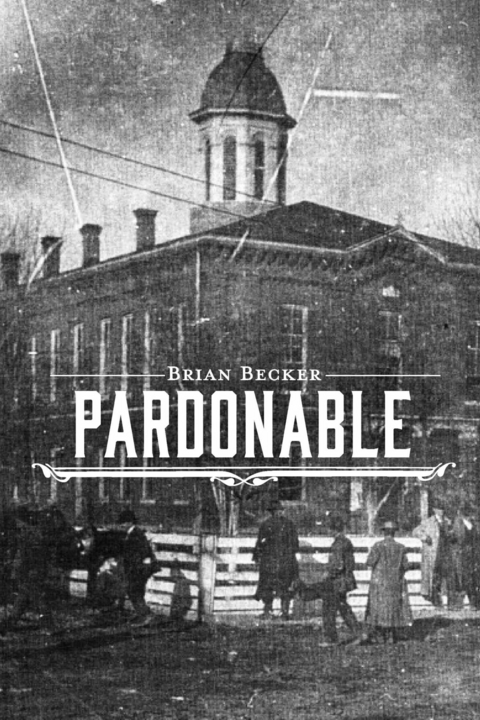
Pardonable (eBook)
274 Seiten
Bookbaby (Verlag)
979-8-3509-2186-1 (ISBN)
: Lou Bettigole could not believe his good fortune. Recruited to travel the country as a reporter for the school newspaper, Lou was first assigned to cover the 1899 baseball season. For the baseball-loving 17 year-old; an unexpected telegram from New Haven interrupted his dream assignment. The Yale Daily News was now sending him to the country's most dangerous locale, Clay County, Kentucky. Clay County had recently seen a string of one revenge murder after the other, in the long-running Baker-Howard feud. Several blocks away from Lou's hotel in Manchester, Kentucky lived the man at the center of the feud, thirty-three-year-old James "e;Big Jim"e; Howard. A stoic, contemplative man; Big Jim had tried to broker a truce between the families. Lou and Big Jim soon met and began to spend time together walking throughout Clay County. The two men felt comfortable opening up to each other, and quickly became the closest of friends. With the feud news waning, the Yale Daily News sent a telegram asking Lou to stay on for a few more weeks to monitor the hotly-contested Kentucky Gubernatorial election between Republican William Taylor and Democrat William Goebel. Several weeks later on election day, Taylor received two thousand more votes than Goebel. That was far from the end of this election, however. Committees met and hearings were held to investigate the voting. Despite the rancor and fighting, Taylor was inaugurated in December. But soon, the Democrats lodged formal protests. In late January, Lou traveled back to the state capital, Frankfort. There, he could feel and see tension in the air with armed men from both parties patrolling the city. On the morning of January 30, Lou left a key at his hotel's front desk for Big Jim Howard who would be arriving on the 10:30AM train. The friends planned to meet in the plaza in front of the State House just after Noon. At 11:15AM, Lou was standing near the State House when he saw a man point a rifle from the third floor of a nearby building. Seconds later, the man fired. The bullet hit William Goebel as he was walking in the plaza. In the chaos that ensued, Lou could not locate Big Jim Howard until late that evening. The two friends spent the next few days together, as Democrat operative Judge James Cantrill swore in William Goebel as Governor on his deathbed. Goebel's untimely death calmed the political fires in Kentucky, however, as Goebel became a martyr in Kentucky. By then, Lou and Big Jim had returned to their respective homes. Lou was finally settling into a routine at home and thinking pensively and what a great experience he had in Kentucky on his walk home from Yale. When he walked into his home, his parents greeted him at the front door with frowns and a telegram from a Kentucky friend. "e;FRANKFORT POLICE ARRESTED BIG JIM HOWARD AS GOEBEL'S MURDERER. JAMES CANTRILL WILL BE THE JUDGE AT TRIAL. COME QUICKLY!"e;Lou raced back to Kentucky, as he worried about the fairness of a trial with Judge Cantrill, the appeals process in Kentucky, whether Big Jim's family could survive with him in prison for months or even years, and how long it might take Kentucky to elect a Republican Governor who might consider pardoning Big Jim. It was a lot to take in, even for a "e;seasoned"e; eighteen-year-old reporter. Fortunately, The Yale Daily News and the New Haven Register agreed to cover Lou's expenses in exchange for publishing his accounts in the newspapers and in this book, Pardonable. Note: The characters and main stories from Pardonable are typically accurate to history, including the feud, the election protests, the assassination, and the murder trials. The exception is Lou Bettigole's role in Kentucky. He was a baseball-loving Yale freshman during 1899, but he never traveled to Kentucky as a reporter nor befriended Big Jim Howard. Lou Bettigole was in fact the great-grandfather of the author.
CHAPTER 3
Tom Baker entered this world in October 1860 just north of Manchester in Clay County, Kentucky. George Washington (“Baldy”) and Rachel Baker felt blessed to start their young family with Tom as their first child. The joy felt by the Bakers as they looked out from their porch to the Morgan Branch of Laurel Creek, however, was tempered by larger events outside of their control. The divide between the Northern and Southern states with Kentucky wedged squarely in the middle was coming to a head in the upcoming Presidential election.
Barely two weeks after Tom was born, the unimaginable happened. Abraham Lincoln was elected President.
Clay County was perhaps the most Republican-leaning county in the state of Kentucky, but even its voters would not stand for Abraham Lincoln and his party’s strong stance against slavery. The distaste for Lincoln was far more pronounced around the rest of the state where slavery was more prominent. Despite being born in Kentucky half a century earlier, Lincoln received less than one percent of the Kentucky votes for President that fall when Tom Baker came into the world.
While nursing young Tom a few months later, Rachel Baker brought up politics to her husband , “George, as I see it now, Lincoln is now officially the President. But the President of what? So many states have left the Union and there is a war starting. And Kentucky can’t figure out what to do.”
Baldy George rubbed his chin as he thought, “I guess we are pretty divided here in Kentucky. We don’t like Lincoln, but not so many of us want to actually leave the Union. I know Governor Magoffin has tried to bring the state of Kentucky into the Confederacy, but he doesn’t have the support of the people to make that happen. Now, it looks like we will claim to be neutral. But I don’t know how long that will work.”
Rachel just shook her head, “Damn politicians! I tell you how long that will work. Just until some Confederate or Union soldiers start shooting up our towns. Folks around here won’t stand for that.”
Nodding in agreement, Baldy George replied, “I reckon you are right. We are going to have to be very careful here while the war continues. Kentucky may not be the state pushing for this war, but we may end up right in the middle of the fighting since we are on the border.”
The Civil War disrupted everything in Clay County from business to schooling to families. The Bakers would not produce a second child after Tom for more than three years—a veritable lifetime for a couple who would eventually have eleven children.
Tom Baker grew up as the clear leader of his siblings. Not only would his parents have eleven children, but there would also be three more Bakers once Baldy George remarried following Rachel’s untimely passing. The children of Baldy George just kept coming. In fact, some of Tom Baker’s children were older than their aunts and uncles from Baldy George. These Bakers along with cousins, aunts, uncles, nieces, nephews, and other relatives formed a formidable share of the sparsely populated Clay County. There just seemed to be Bakers everywhere full of life and personality. None more so than Tom Baker.
Tom started his own family by marrying Eliza Allen when he was just seventeen. Although Eliza died young, Tom quickly married his neighbor, Mary Early (“Emma”) Lyttle, to help with his growing family. It seemed like every year or two, the house felt blessed with another baby. Tom Baker had fathered fifteen children before the age of forty.
With such a large family, it was no surprise that Tom was focused on the school system and the teachers in Clay County. An unofficial commissioner of the school system, Tom Baker, interviewed all of the projected job candidates.
To say an interview with Tom Baker—or any other interaction with him—was intimidating would be a gross understatement. A large muscular man who usually sported a moustache while carrying a gun, Tom Baker was treated seriously and carefully by the citizens of Clay County. That being said, he was known to be a fair man in his roles with the schools and in his logging business. A strong man to be taken seriously as a young father, Tom Baker had developed a reputation as a responsible citizen.
The citizenry changed its opinion of Tom Baker from that of careful concern to absolute fear over the course of several years. During that time, Tom’s behavior became the stuff of county lore, as he received the nickname “Bad” Tom Baker.
Tom Baker did not think much about his nickname in those years. To many, “Bad” implied a somewhat rough, but not particularly dangerous character rustling up horses, drinking too much at the local tavern, or perhaps gambling too much. When asked by a Manchester hotel operator, Nancy Potter, if these types of activities were the ones that gave Tom Baker his nickname, Sheriff Bev White replied, “That’s baby stuff compared to what this outlaw is doing.”
By the mid-1890s, Tom Baker faced a lot of pressure. Besides his usual troubles with leading the Bakers—along with his father, Baldy George—in the feud with the Howards, he faced unrelenting financial pressure to feed and raise a large family in a poor county, as he told his wife one night, “A man can barely scratch out a living in this county. The salt has mostly dried up and we don’t have coal like nearby counties.”
Emma put her arm around her husband, as she replied, “But, Tom, you have made such a success at your logging business. I’m so proud of you.”
Bad Tom smiled as he walked around the porch, “Thank you, honey. But, cutting down trees and selling them down the creek is only half of the game. We have to get a good price and pay for all of our expenses. We have some tough competition and some customers who negotiate pretty strongly on price and terms. I have people that owe me money and others that are demanding money from me.”
Bad Tom realized there really was no long-term solution to his situation. His family would always struggle to survive. He had made peace with this except when he drank too much moonshine. After that, anything could happen. One day, he was arrested for setting fire and destroying a building. While the judge eventually dismissed the arson charges in court, the people of Clay County knew better, as they began to start calling him Bad Tom.
Bad Tom did not like how he was treated by people after the fire. As he told his brother, Wiley, “They found me to be innocent. But I am treated like a criminal. It makes me want to punch any man that disrespects me in that way. The Whites and Howards control the sheriffs, the judges, and the courts. It has always been that way since Abner Baker. And it seems like that will always be the case. Unless we do something about it ourselves.”
Perhaps no more disrespect could be shown to Bad Tom than by a lawman from the Howard family. Felix Davidson, a Howard cousin, was a Deputy Sheriff who felt it his duty to follow and harass Bad Tom. Finally, Bad Tom could hold in his frustration no more, and he shot the Deputy. Felix survived, but Bad Tom was now truly known as an outlaw.
On one of his fishing trips, Bad Tom was sitting out on the bank of the creek sipping moonshine with Wiley Baker and Bad Tom’s son, James Baker. Bad Tom chuckled at a figure in the distance, “Look at that pathetic old man out there peddling his wares. Let’s go have a little fun with him.” The “fun,” however, was both violent and quick. The peddler tried to push the men aside as he begged them to stop, “Look, I wants no troubles with you. I am just heading into town to sell my wares. Please let me pass.”
The Bakers wrestled him to the ground and kept pounding. After a few minutes, Bad Tom looked carefully at the peddler and then turned towards his family, “Boys, I think we can’t hurt this fellow no more. He is a goner. We can’t leave his body out here, so lift him up and thrown him in the creek. The turtles will take care of him from there.”
Several weeks later, Bad Tom spoke with his father, “Old Bal Howard was doing his best to put me out of business by taking lumber on my land, so I threatened that old man. He told me he wasn’t scared of any Baker and stormed off. Well, that got me steamed,” Bad Tom paused for effect, as he saw no reaction on his father’s face, “So I had to do something about that to keep my honor, and the honor of this family. So, a couple of days later, Wiley, James and I set a trap for Old Bal, as we hid in the trees near their home waiting for cousin Thena to ring her dinner bell letting us know they were passing by.”
Baldy George sat up quickly and interrupted his son, “So, the group of you with your rifles hid from a bunch of unarmed Howards? Is that what you’re telling me?”
Bad Tom was disappointed to see his father so angry, “Oh, Dad. You make it sound like we were pansies. But we were just fighting our feud. They needed to be taught a lesson. And they were. We shot both Old Bal and Wilson and sent them to the ground. That last boy, Burch Stores—why we blew his head clean off! That will show them not to mess with Tom Baker.”
Baldy George looked his oldest son in the eye and said with the contempt that could only come from a father who had become so ashamed of his own son that he could stand him no more, “You did act like pansies. And cowards. And you certainly didn’t act like any Bakers that I have ever known. You are just common murders,” Baldy George paused while he considered how best to deliver an...
| Erscheint lt. Verlag | 11.10.2023 |
|---|---|
| Sprache | englisch |
| Themenwelt | Literatur ► Romane / Erzählungen |
| ISBN-13 | 979-8-3509-2186-1 / 9798350921861 |
| Informationen gemäß Produktsicherheitsverordnung (GPSR) | |
| Haben Sie eine Frage zum Produkt? |
 EPUB (Ohne DRM)
Größe: 835 KB
Digital Rights Management: ohne DRM
Dieses eBook enthält kein DRM oder Kopierschutz. Eine Weitergabe an Dritte ist jedoch rechtlich nicht zulässig, weil Sie beim Kauf nur die Rechte an der persönlichen Nutzung erwerben.
Dateiformat: EPUB (Electronic Publication)
EPUB ist ein offener Standard für eBooks und eignet sich besonders zur Darstellung von Belletristik und Sachbüchern. Der Fließtext wird dynamisch an die Display- und Schriftgröße angepasst. Auch für mobile Lesegeräte ist EPUB daher gut geeignet.
Systemvoraussetzungen:
PC/Mac: Mit einem PC oder Mac können Sie dieses eBook lesen. Sie benötigen dafür die kostenlose Software Adobe Digital Editions.
eReader: Dieses eBook kann mit (fast) allen eBook-Readern gelesen werden. Mit dem amazon-Kindle ist es aber nicht kompatibel.
Smartphone/Tablet: Egal ob Apple oder Android, dieses eBook können Sie lesen. Sie benötigen dafür eine kostenlose App.
Geräteliste und zusätzliche Hinweise
Buying eBooks from abroad
For tax law reasons we can sell eBooks just within Germany and Switzerland. Regrettably we cannot fulfill eBook-orders from other countries.
aus dem Bereich