


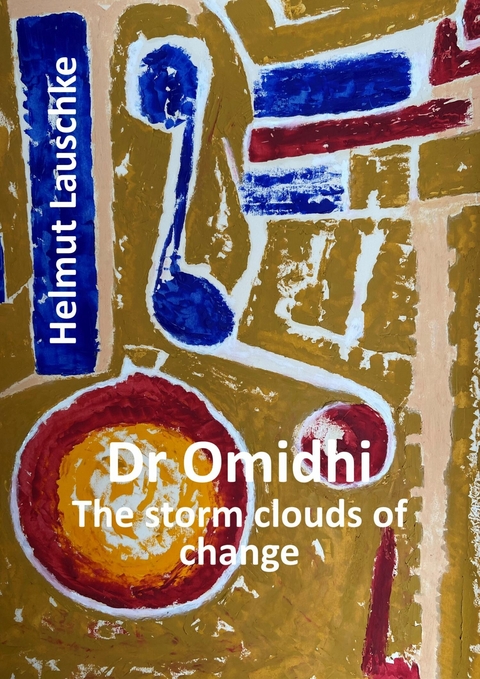
Dr Omidhi (eBook)
440 Seiten
neobooks Self-Publishing (Verlag)
978-3-7549-9661-4 (ISBN)
•1985-1998 Arzt und Chirurg/Unfallchirurg am Hospital in Oshakati (im Norden Namibias nahe der angolanischen Grenze; innerhalb der Kampfzone bis zur Unabhängigkeit 1990) •entwickelte eine Operationsmethode, Kindern mit chronischer Schienbein-Osteomyelitis den langen Knochendefekt nach Sequesterentfernung mit vitalem Knochen aus dem Wadenbein zu schließen und so das Bein vor einer Amputation zu retten. (publiziert April 1994 im American 'The Journal of Bone and Joint Surgery')
•1985-1998 Arzt und Chirurg/Unfallchirurg am Hospital in Oshakati (im Norden Namibias nahe der angolanischen Grenze; innerhalb der Kampfzone bis zur Unabhängigkeit 1990) •entwickelte eine Operationsmethode, Kindern mit chronischer Schienbein-Osteomyelitis den langen Knochendefekt nach Sequesterentfernung mit vitalem Knochen aus dem Wadenbein zu schließen und so das Bein vor einer Amputation zu retten. (publiziert April 1994 im American "The Journal of Bone and Joint Surgery")
The last year of the white rules
The storm clouds of change
B121
Immanuel Kant (1724-1804) said, if force is equal to right, nations will exhaust each other and will finally find the lasting peace in the big grave that covers the atrocities of violence with their creators. It is a fact that nations take their right by force and not by a judiciary process. Therefore, victory by force on an unlawful way cannot compromise or nullify the meaning of rights got on a lawful way.
About physics and philosophy:
Thoughts can have the speed of light
Space and time save the thought
Thoughts are alive and create forces, thoughts are wireless messages
Thought transmission as silent communication
Undulating and swaying thoughts
Thoughts as an expression of energy
Thoughts bring knowledge and create science
Thoughts have shapes of different sizes and weights
The world of thoughts is limitless
In the order of thoughts it comes to knowledge and philosophy
The world is anticipated, bundled, stretched and merged by thoughts
Thoughts are timeless in the change of reality
Thoughts are the bridge from zeitgeist to spirit and vice versa
The thought sets its environment in all directions in vibrations
The thought is inexhaustible, so thoughts are immortal.
The situation had further deteriorated and the front of resistance against the whites and the occupational forces had further hardened in the black population. The number of casualties went up from week to week. Koevoet had not changed its rude and brutal behaviour against the people. Paramilitary squads mowed down the kraals with their heavy Casspirs, if there was a suspicion of a hiding Swapo-fighter. Since koevoet squads consisted mainly of black recruits, the tortures, deportations and killings of their brothers and sisters happened every day. It was compulsory to follow the orders of the white captain. They did their reckless and often cruel work for monthly salaries and regular meals. Koevoet men did the controls and ‘investigations’ consciously but unscrupulously with filled stomachs. In contrast, their brothers and sisters in the liberation movement struggled under extreme conditions and risky circumstances against apartheid and white-blinded injustice without salary and without regular meals. The brothers in grey uniforms of koevoet were well-nourished and had a safe place to sleep. In contrast, the liberation brothers had to struggle often with empty stomachs on open sleeping places in the field. The parents were concerned and felt sad about the killings of brothers and sisters. The physical conditions of the old people had dramatically deteriorated, though they gave the liberation sons and daughters what they could afford. The old people were silent in handling discrimination and degradation with all aspects of privation in poverty and miseries. They gave mahangu, blankets and clothes and the last money to their sons and daughters who went the way for the liberation, and sat back round their huts with little or nothing. Old people did not complain despite poverty and privation, but they waited for salvation from the yoke of oppression to get back their basic human rights. These silent and haggard people had the necessary life experiences of two generations when they exercised patience with great humbleness and wisdom. They said little, while poverty and stress gnawed on them on every day. It were the old people who felt extremely sad about the Kaïn-and-Abel incidents of their sons and daughters that they prayed for an end of the war with its madness and destructive activities.
Old people became physically so weak that they passed away before the time, this mostly because of starvation and infectious diseases. Old people were maltreated by their sons in koevoet, because they did not speak badly or kept quiet about the sons and daughters who left the kraal and went into exile to take part in the liberation struggle. Sons and daughters with the vision of freedom and justice were upset how the whites and koevoet treated and tortured their fathers and mothers. They left the kraals and villages in groups or alone and walked after sunset through the field and through the night hiding them behind bushes and in ditches and holes from the patrolling koevoet. When they approached the border, they asked the local people for the mine-free path. They crossed the border to Angola, some with empty stomach and empty water bottles with torn clothes and worn out shoes. Young people who left the country, did it with patriotism to fight for liberation resisting the system of white apartheid with its discrimination and degradation of the blacks. There were school classes in the north which left together with their teachers Namibia and went into exile. There were children who did not even inform their parents waiting for them to come back from school. These classes built up their companionship with a high degree of discipline and solidarity needed to keep up the morale as the fundament of mutual trust and helpfulness. All of them had the same vision that future for all the people becomes better when the racist system has been defeated.
Koevoet continued the nightly raids inconsiderately toward the patients and frightened the sleeping people and mothers with their children on the concrete passage in front of the outpatient department building. The distracted people had to show their IDs. Koevoet beat men who had no ID. They pushed them into the Casspir and brought them to the police station for further questionings which were often associated with heavy stick blows or other kinds of torture. The civilian superintendent in the short-sleeved shirt with the red nose bulb and the sleep creases in his face was still in office when he left the morning meeting and disappeared to the toilet. He had to respond to the comment on the brutal behaviour of koevoet who threw an amputee into the Casspir and his above-knee prosthesis which had fallen off afterward, since he had no ID. This superintendent had not changed his attitude and stepped aside, if a sensitive question came up. It was his standard reaction that he pulled out the handkerchief and blew the nose or got a sneezing attack which took so long until the momentum for answering the question has subsided and finally disappeared. Sometimes he held the handkerchief against his face and the right glass, when the attack came so fast to his surprise that he could not remove the glasses from the nose. Then he looked with the left eye through the left glass like a clown into the forum that the people in the meeting started smiling and stopped repeating the question. It became a kind of standard reaction that the superintendent pulled such a clown’s face, when the question has touched the burning point. However, his run away to the toilet was the top of his dramaturgical performance.
The army doctors who had finished their military service in the north were not replaced from 1987 onward, since the military strategy had changed. The command concentrated on the combat troops and had stopped to provide the hospital with army doctors any longer what was the refusal to give medical service to the black people in the time of war. This was an indication of how the situation had escalated politically and militarily. However, new faces were in the morning meeting. These faces had Asian features. It were questioned from were the short people with the rather cubic heads and pale faces had come from who had brought with their families to the north despite the dramatic war escalation in this region. Some of the Asian people looked old as they belonged already to the senior group of pensioners. It were Filipinos who arrived from KwaZulu/Natal in the southeast of South Africa where they had worked as doctors at a general hospital. It was the time when KwaZulu people revolted against the oppression of the apartheid system and killed as kind of revenge white people and other non-Zulus on a larger scale. The lives of the Filipinos were in danger that they had left South Africa and came with their families to the far north of Namibia close to the Angolan border. Asian faces had something mysterious for me. I needed more time to learn about their way of life and why they arrived in the zone of war. It was strange for me right from the beginning that these faces showed no features of anxiety. They kept quiet and covered regardless of the topic brought up in the morning meeting or of the way the topics were handled and discussed.
The Bantu-administration had provided the Filipinos and their families already after two weeks with houses in the village signposted as “For Whites only”. Also the old Filipinos who came without relatives to the far north moved into spacious houses with large front or back gardens. It was the first time that I started doubting about the Boers’ definition of a white, but I welcomed the undermining of the anachronistic and discriminatory racist rules. An old Filipino said that he had still to work, since the pension money on the Philippines was too short. He had children and grandchildren on the Philippines and had to support them. It became apparent that the...
| Erscheint lt. Verlag | 28.5.2023 |
|---|---|
| Verlagsort | Berlin |
| Sprache | deutsch |
| Themenwelt | Literatur ► Biografien / Erfahrungsberichte |
| Schlagworte | From-white-to-black • Humanity-and-human-interests • Imminent-power-change • Power-differs-from-right • Roots-of-thinking • The-soul-as-the-colour-of-thoughts • Thinking-makes-life |
| ISBN-10 | 3-7549-9661-4 / 3754996614 |
| ISBN-13 | 978-3-7549-9661-4 / 9783754996614 |
| Informationen gemäß Produktsicherheitsverordnung (GPSR) | |
| Haben Sie eine Frage zum Produkt? |
 EPUB (Wasserzeichen)
E-Book Endkundennutzungsbedinungen des Verlages
DRM: Digitales Wasserzeichen
Dieses eBook enthält ein digitales Wasserzeichen und ist damit für Sie personalisiert. Bei einer missbräuchlichen Weitergabe des eBooks an Dritte ist eine Rückverfolgung an die Quelle möglich.
Dateiformat: EPUB (Electronic Publication)
EPUB ist ein offener Standard für eBooks und eignet sich besonders zur Darstellung von Belletristik und Sachbüchern. Der Fließtext wird dynamisch an die Display- und Schriftgröße angepasst. Auch für mobile Lesegeräte ist EPUB daher gut geeignet.
Systemvoraussetzungen:
PC/Mac: Mit einem PC oder Mac können Sie dieses eBook lesen. Sie benötigen dafür die kostenlose Software Adobe Digital Editions.
eReader: Dieses eBook kann mit (fast) allen eBook-Readern gelesen werden. Mit dem amazon-Kindle ist es aber nicht kompatibel.
Smartphone/Tablet: Egal ob Apple oder Android, dieses eBook können Sie lesen. Sie benötigen dafür eine kostenlose App.
Geräteliste und zusätzliche Hinweise
Buying eBooks from abroad
For tax law reasons we can sell eBooks just within Germany and Switzerland. Regrettably we cannot fulfill eBook-orders from other countries.
aus dem Bereich


