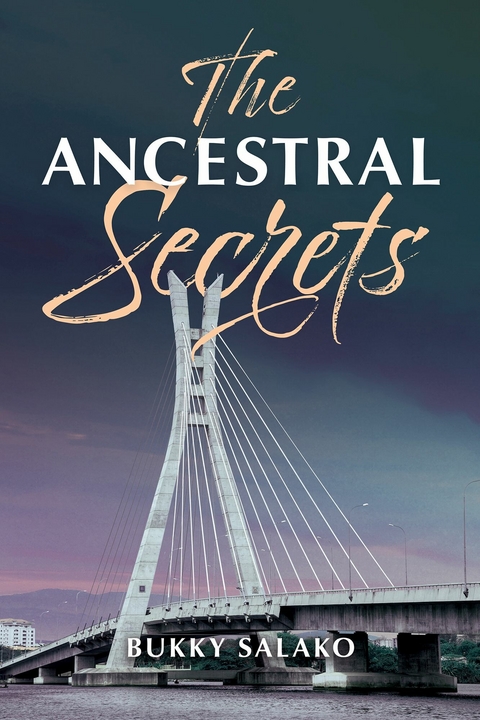
Ancestral Secrets (eBook)
138 Seiten
Bookbaby (Verlag)
978-1-6678-9736-3 (ISBN)
Vero, Victoria, and Maama all share a common secret that connects their destinies together. As they maneuver their way around the busy streets of Lagos, Nigeria, the secret that they share embeds itself into their daily routine. It is only a matter of time before circumstances force them to face the one thing that they are looking to bury. Each one is unaware of the secret that binds them spiritually together. Will their secrets be known? Will their secrets affect future generations to come?
Chapter One
The Birth
The beginning of the monsoon season, in the month of June, produced incessant rain in Nigeria. Every time it rained, no one could move freely. There was no escape from its destructive powers. The month of June brought rain that caused many to curse the land. When the rain subsided, the humidity suffocated those eager to step outside. Each day became unbearable. It was a month full of misery. It was also the month of Victoria’s birth. A birth hidden with unknown secrets. She was born in the month of June during a time when the rain showed no mercy for the land. It rained continuously for seven days.
On the eighth day, the rain stopped and Victoria Abiola Adeyemi was named by the elders. This was the month that her Yoruba mother accepted her name. Victoria’s mother, Vero, short for Veronica, never told her family about Victoria’s father. His name was a hidden secret. She refused to tell anyone. The family had no choice but to name Victoria after her grandfather’s last name. She was now crowned a name worthy of praise.
The day of her birth caused intense emotional turmoil in Vero. She couldn’t escape the shame that tormented her mind. This was the day that Vero brought shame to the Adeyemi name. It was the day that Vero, a seventeen-year-old girl, had a baby instead of completing her first year at the university. The birth was painful for Vero. Vero recalled the birth as a sin against God. The pain was excruciating. The pain was relentless, not only physically but mentally for the young Vero. It captured her body like a prisoner and refused to let her go.
It was the beginning of pain in the Adeyemi family. When Victoria was born, she came out of Vero willfully spirited with her arms holding the umbilical cord. On that day, Vero begged God to let her die. She prayed to God that the baby would die. She wanted to die. She always believed that a seventeen-year-old girl from Surulere with such talents shouldn’t have been pregnant. It was said that Surulere girls were too smart to get pregnant. They were too smart to be caught in unwholesome behavior. Surulere girls were the “babes”. The omoge, the good-looking girls.
Vero’s beauty was a different kind of mystery. She had long, thick black shoulder length hair. It was believed that her hair must have been inherited from her tainted blood, which was passed down from her half-caste great-grandmother who had an oyinbo father and a servant Nigerian mother. Vero’s great-grandmother’s white father was a white man who came to Nigeria as a missionary to free the untamed civilization. Instead of attending to his missionary duties, he had his hands in places where his Bible didn’t take him. Vero’s mother never had her mother’s yellow skin. Although Vero’s great-grandmother was praised for her beauty and oyinbo skin, she secretly wanted dark skin. With skillful planning, she married the darkest man she could find and took the glory out of giving Vero’s mother the beloved oyinbo skin. The only oyinbo gene Vero’s great-grandmother passed on was her hair. The hair that she never liked. She feared that it wouldn’t allow her to create the traditional tribal braids that her friends paraded around the village.
Vero’s mother, also known as Maama, was neither too yellow nor too dark. No hint of tainted genes affected her skin. She was the perfect mix of the past meeting the future. Her golden-brown skin glistened in the hot sun. There remains Vero too, neither too yellow, neither too dark. She was the personification of the sun before the day turned into night. Vero looked like a goddess. She had the face of an angel, round and smooth, with big oval eyes that led to the demise of many boys and men of her age. She loved to let her hair flow down her shoulders. Her hair was thick and strong like wool. She believed her hair was what made her beauty different from the rest of the pretty girls in Surulere.
It was what caused a lot of envy for Vero. Her body was also desirable, long, strong, and lean. She had just enough backside to make men jump, but not enough bosom to fill the floral dresses she wore daily. She walked with confidence; she stood with pride. She was Surulere’s pride. She may not have been Nigeria’s beauty queen, but she felt like a queen in the streets of Surulere, a vibrant neighborhood full of life. Vero’s beauty was her gift and her curse.
This was the same gift and curse that was also bestowed upon Victoria. During the pregnancy, Victoria was a secret. Vero hid her belly strategically. She wore long buba dresses to hide the pregnancy, and she claimed that she was starting a new fashion amongst the girls of Surulere. This, she claimed, freed her from conforming to societal views of women in tight mini dresses. Deep down in her spirit, she did not want to bring shame to Maama who would have shouted insults upon her head. Vero’s father would have kept silent.
They called him Baba. Everyone called him Baba out of respect. The name became his alias and continued to be used with the rest of the family. When Baba disliked something that was done to him, he never took to the cane. His silence was worse than a beating. He would simply ignore you and pretend like you didn’t exist. This is how everyone knew that you had committed some level of sin against him. More often than not, his silence was because someone’s character disgraced his moral fortitude.
He was a very peculiar man. He was shorter than Maama. This was a common marriage trait found in Maama’s time. Perhaps women at that time didn’t care about men’s stature. He was dark as coal. His dark skin made him look like an ancient warrior, simply majestic. His skin would shine in the sunlight due to the constant rubbing of the ori ointment Maama would rub on his body. She was afraid that he would leave the house with dry skin, fearing that he would become ashy. He had a very mild temper, almost non-existing.
He never said much, except “Mo ti gbọ, Maama, mo ti gbọ ---O! I said I hear you.”
He constantly repeated this to Maama when she would go on her long diatribe about him not fixing this, not paying attention to that, not arguing with the neighbors enough, and anything that tormented her memory that day.
Unlike Maama, who was quick with her tongue and quick to slap you when you got out of hand, Baba was more reserved in showing his anger. He would rather walk away and keep you in suspense before breaking his silence. It was hard to know which was worst, Maama’s quick temper and painful slaps or Baba’s death-defying silence. It’s possible they were equally the same.
Most of the time, Maama’s torturous slaps were preferred. As soon as it came, the pain left your body after a while. Now, Baba’s silence could last up to a month of pretending not to see and hear you. This pain, without a doubt, made your soul feel ashamed. It was quite disheartening. His silence caused Vero to faint during her sixth months of pregnancy, due to some infraction she made against Baba.
That day was like no other day. It seemed like a typical day in the Adeyemi family. Tutu needed to take Vero to the hospital because of the nagging pain in her belly. The two of them secretly left the house. Nobody knew about their unplanned departure from the house. It was Vero’s turn to iron Baba’s work clothes for the week, but she neglected her daughterly duties. The house was empty, and Maama went to the market to buy provisions for the week. Baba who assumed his uniform was ironed, prepared as usual for his long journey for work. Unbeknownst to him, his uniform never left his cupboard. He found it neatly folded, lacking the touch of a hot iron. He was so vexed by this blatant disrespect for his job, out of intense anger, he mistakenly closed the cupboard door on his fingers. Time was not on his side. He had no time to iron his own uniform or attend to his physical pain. His internal anger had no limitations that day.
The unreliable NEPA also added to his angry disposition by cutting off the electricity as they were fond to do after sunrise. One would frequently find Baba cursing NEPA by calling out its full name. He would always yell, “It will not be well with you National Electric Power Authority.” That curse seemed to ring through time, even after Victoria’s birth. That night, Baba began his silent treatment with Vero, which caused her so much internal anguish that she fainted out of fear.
Six months had passed, and no one knew Vero was pregnant except the middle sister named Tutu, who was one year older than Vero. Tutu, who was very close to Vero, cherished her dearly. They were inseparable. Tolu, who was three years older than Vero, did not get along with her. Tolu always felt that Vero received too much attention from Maama and Baba. Tolu never liked that Maama and Baba gave her an English name. Maama named Vero, Veronica. To her, it was elegant; it was sophisticated; it was simply English. This childish resentment lingered within Tolu for no apparent reason.
This lingering resentment may have had its roots planted in...
| Erscheint lt. Verlag | 14.6.2023 |
|---|---|
| Sprache | englisch |
| Themenwelt | Literatur ► Romane / Erzählungen |
| ISBN-10 | 1-6678-9736-5 / 1667897365 |
| ISBN-13 | 978-1-6678-9736-3 / 9781667897363 |
| Informationen gemäß Produktsicherheitsverordnung (GPSR) | |
| Haben Sie eine Frage zum Produkt? |
 EPUB (Ohne DRM)
Größe: 2,3 MB
Digital Rights Management: ohne DRM
Dieses eBook enthält kein DRM oder Kopierschutz. Eine Weitergabe an Dritte ist jedoch rechtlich nicht zulässig, weil Sie beim Kauf nur die Rechte an der persönlichen Nutzung erwerben.
Dateiformat: EPUB (Electronic Publication)
EPUB ist ein offener Standard für eBooks und eignet sich besonders zur Darstellung von Belletristik und Sachbüchern. Der Fließtext wird dynamisch an die Display- und Schriftgröße angepasst. Auch für mobile Lesegeräte ist EPUB daher gut geeignet.
Systemvoraussetzungen:
PC/Mac: Mit einem PC oder Mac können Sie dieses eBook lesen. Sie benötigen dafür die kostenlose Software Adobe Digital Editions.
eReader: Dieses eBook kann mit (fast) allen eBook-Readern gelesen werden. Mit dem amazon-Kindle ist es aber nicht kompatibel.
Smartphone/Tablet: Egal ob Apple oder Android, dieses eBook können Sie lesen. Sie benötigen dafür eine kostenlose App.
Geräteliste und zusätzliche Hinweise
Buying eBooks from abroad
For tax law reasons we can sell eBooks just within Germany and Switzerland. Regrettably we cannot fulfill eBook-orders from other countries.
aus dem Bereich