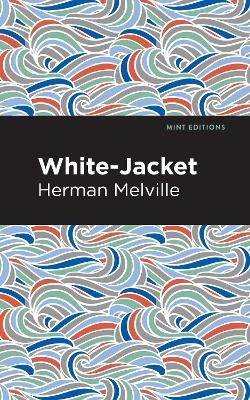
White-Jacket
Mint Editions (Verlag)
978-1-5132-0474-1 (ISBN)
White-Jacket is the name given to the novel’s protagonist, a young seaman who embarks on the USS Neversink hoping for brotherhood and adventure. As he grows accustomed to the duties and indignities of naval life, he becomes the target of ire for most of the crew and officers. His jacket, the only one of its kind on board, not only causes him to stand out, but is a source of constant danger—insufficient for the cold weather around Cape Horn, difficult to discern from the color of the Neversink’s sails, the jacket both defines and dooms the novel’s hero. Praised for its adventurous narrative and political message, White-Jacket was a critical and commercial success for Melville, enabling him to compose and publish Moby-Dick, an ambitious and complex novel now recognized as among the greatest works of American literature.
With a beautifully designed cover and professionally typeset manuscript, this edition of Herman Melville’s White-Jacket is a classic of American literature reimagined for modern readers.
Herman Melville (1819-1891) was an American novelist, poet, and short story writer. Following a period of financial trouble, the Melville family moved from New York City to Albany, where Allan, Herman’s father, entered the fur business. When Allan died in 1832, the family struggled to make ends meet, and Herman and his brothers were forced to leave school in order to work. A small inheritance enabled Herman to enroll in school from 1835 to 1837, during which time he studied Latin and Shakespeare. The Panic of 1837 initiated another period of financial struggle for the Melvilles, who were forced to leave Albany. After publishing several essays in 1838, Melville went to sea on a merchant ship in 1839 before enlisting on a whaling voyage in 1840. In July 1842, Melville and a friend jumped ship at the Marquesas Islands, an experience the author would fictionalize in his first novel, Typee (1845). He returned home in 1844 to embark on a career as a writer, finding success as a novelist with the semi-autobiographical novels Typee and Omoo (1847), befriending and earning the admiration of Nathaniel Hawthorne and Oliver Wendell Holmes, and publishing his masterpiece Moby-Dick in 1851. Despite his early success as a novelist and writer of such short stories as “Bartleby, the Scrivener” and “Benito Cereno,” Melville struggled from the 1850s onward, turning to public lecturing and eventually settling into a career as a customs inspector in New York City. Towards the end of his life, Melville’s reputation as a writer had faded immensely, and most of his work remained out of print until critical reappraisal in the early twentieth century recognized him as one of America’s finest writers.
| Erscheinungsdatum | 09.08.2021 |
|---|---|
| Reihe/Serie | Mint Editions |
| Co-Autor | Mint Editions |
| Zusatzinfo | Illustrations |
| Sprache | englisch |
| Maße | 127 x 203 mm |
| Themenwelt | Literatur ► Klassiker / Moderne Klassiker |
| Literatur ► Romane / Erzählungen | |
| ISBN-10 | 1-5132-0474-2 / 1513204742 |
| ISBN-13 | 978-1-5132-0474-1 / 9781513204741 |
| Zustand | Neuware |
| Informationen gemäß Produktsicherheitsverordnung (GPSR) | |
| Haben Sie eine Frage zum Produkt? |
aus dem Bereich