


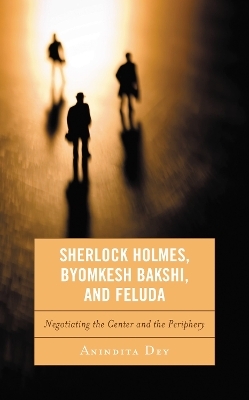
Sherlock Holmes, Byomkesh Bakshi, and Feluda
Negotiating the Center and the Periphery
Seiten
2021
Lexington Books (Verlag)
978-1-4985-1210-7 (ISBN)
Lexington Books (Verlag)
978-1-4985-1210-7 (ISBN)
The book explores some popular Bangla detective texts to perceive if there are any hegemonic influences of the Holmesian canon—if not, how has identity and existence against imperialism been established is perused. The significance of Indian texts through the leitmotif of indigeneity is foregrounded. Bengaliness resists Anglo/Eurocentrism.
Sherlock Holmes, Byomkesh Bakshi, and Feluda: Negotiating the Center and the Periphery presents a postcolonial reading of Conan Doyle’s canonical detective texts—Sherlock Holmes adventures, and some lesser known detective texts written by two Bengali (Indian) writers—Sharadindu Bandyopadhyay (1899-1970), and Satyajit Ray (1921-1992). The book proposes that in a postcolonial reading situation, the representation of Holmes problematizes the act of reading and also the act and discourse of inquiry. The fact that the Holmes adventures contribute to the hegemonic culture of “Anglo/Eurocentrism” is seen as a reinforcement of racial superiority among the “colonized.” This book studies how literary texts function as a signifier of a particular national identity, and can indicate the cultural construct of a state. It contends that only those texts which cater to the standards of global hierarchy are considered canonical, and indigenous texts, however significant, remain as "Other" literature. The book highlights colonial and postcolonial discourse in the Bengali detective texts and examines, how far Holmes has been able to reinforce racial dominance over the Indian detectives Byomkesh Bakshi and Feluda.
Sherlock Holmes, Byomkesh Bakshi, and Feluda: Negotiating the Center and the Periphery presents a postcolonial reading of Conan Doyle’s canonical detective texts—Sherlock Holmes adventures, and some lesser known detective texts written by two Bengali (Indian) writers—Sharadindu Bandyopadhyay (1899-1970), and Satyajit Ray (1921-1992). The book proposes that in a postcolonial reading situation, the representation of Holmes problematizes the act of reading and also the act and discourse of inquiry. The fact that the Holmes adventures contribute to the hegemonic culture of “Anglo/Eurocentrism” is seen as a reinforcement of racial superiority among the “colonized.” This book studies how literary texts function as a signifier of a particular national identity, and can indicate the cultural construct of a state. It contends that only those texts which cater to the standards of global hierarchy are considered canonical, and indigenous texts, however significant, remain as "Other" literature. The book highlights colonial and postcolonial discourse in the Bengali detective texts and examines, how far Holmes has been able to reinforce racial dominance over the Indian detectives Byomkesh Bakshi and Feluda.
Anindita Dey is associate professor at Debraj Roy College, Golaghat
Introduction
Chapter One: Understanding Hegemony and the Other
Chapter Two: Sherlock Holmes: Super-sleuth and Agent of British Imperialism
Chapter Three: The Politics of Centering and Othering
Chapter Four: Subverting the Centre with Byomkesh
Chapter Five: Beyond the Anglophone Shadow: Feluda Finds his Own Space
Chapter Six: You Know My Method: Beyond Detective Tasks
Conclusion
Appendix: The Legacy of Bengali Detectives
| Erscheinungsdatum | 16.08.2021 |
|---|---|
| Sprache | englisch |
| Maße | 159 x 238 mm |
| Gewicht | 490 g |
| Themenwelt | Literatur ► Krimi / Thriller / Horror |
| Geisteswissenschaften ► Sprach- / Literaturwissenschaft ► Anglistik / Amerikanistik | |
| Geisteswissenschaften ► Sprach- / Literaturwissenschaft ► Literaturwissenschaft | |
| ISBN-10 | 1-4985-1210-0 / 1498512100 |
| ISBN-13 | 978-1-4985-1210-7 / 9781498512107 |
| Zustand | Neuware |
| Informationen gemäß Produktsicherheitsverordnung (GPSR) | |
| Haben Sie eine Frage zum Produkt? |
Mehr entdecken
aus dem Bereich



aus dem Bereich
Poetik eines sozialen Urteils
Buch | Hardcover (2023)
De Gruyter (Verlag)
CHF 83,90


