


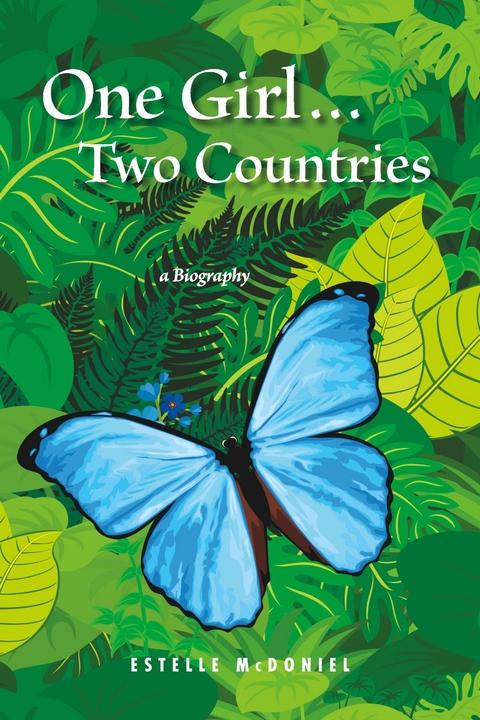
One Girl...Two Countries (eBook)
212 Seiten
Bookbaby (Verlag)
978-1-7329464-3-9 (ISBN)
It was 1953, when Terry, a thirteen years old girl and her family move from a city in Ohio to an undeveloped area of Venezuela, near the confluence of two large rivers, the Orinoco River and the Caroni River with the jungle nearby. At that time, the country of Venezuela was filled with freedom, freedom for everyone. There was beauty everywhere. Much of the beauty was in the warm welcoming spirit of the Venezuelan people. Years have passed, life has changed for Terry but her memories and love of the Venezuela she knew has remained with her forever. A personal decision caused her to leave Venezuela and to move forward with her life the best way she could. This is Terry's story. A story that blends two countries together creating long-lasting memories. Memories to be shared and cherished.
CHAPTER TWO:
A Surprise Announcement
“However,” recalled Terry, “as happy as I was in the summer of 1953 something very unusual happened to my family which greatly surprised me. I was sitting in the living-room and I could hear my parents, in their bedroom, talking very loudly to one another. It sounded like they were arguing but I had never heard my parents argue. They hardly ever raised their voices. Since my parents never argued over anything, I wondered what was happening. I sat very still and didn’t make a sound. I questioned what was going on between my parents. What were they talking about? Soon, Mother and Dad walked out of the bedroom together, holding hands. My dad called Derry to come to the living-room. Dad said he had something very important to tell us. Without hesitation, Derry and I sat down together on the couch eager to hear and wondering what Dad was going to say. Immediately, my dad told us that he would no longer be working for C&O, the Chesapeake & Ohio Railway. What? He had worked there forever. That meant, Dad continued, he would no longer be working at the railroad yard near us in Walbridge, Ohio where he had worked forever! Dad told us that he had accepted a new job in Puerto Ordaz, Venezuela and that our family would soon be moving to Venezuela. What? Venezuela? Puerto Ordaz? Where is Venezuela? Where is Puerto Ordaz? We are moving there? How can we? I’m going to be a Freshman at Clay High School in the fall, how could I move to Venezuela? I was looking forward to being in high school with my friends. Why did Dad want to move? Wasn’t he happy in Toledo? What about our family and friends? Suddenly everything was confusing to me.”
There were reasons why Jack Curran was willing to move his family to Puerto Ordaz, Venezuela. He had worked for many years at the large railroad yard in Ohio were men learned how to drive trains, care for trains, build train tracks and transfer cargo from trains to ships. There were Switchmen, Firemen, Conductors, and Engineers who worked together to care for and move the trains successfully, There was always a Yardmaster who had to monitor the trains coming and going. All the train cars had to be inspected daily and if a train car had a problem all the other train cars in front of and behind the problem car had to be moved out of the way so the problem car could be moved to the repair shop and fixed. The track gang built and took care of the train tracks. Terry knew her dad couldn’t do everything. That would be too much work for him. She wondered why her dad could leave what he knew so well and go to Venezuela. He had worked in the C&O train yard forever. What was her dad going to do in Puerto Ordaz, Venezuela? She also wondered what she was going to do in Puerto Ordaz, Venezuela.
“My dad said that all the work the men did in the train yard in Ohio is, exactly, what the men would be doing in Puerto Ordaz, Venezuela and it was going to be his job to make certain the work would all be done correctly. Dad said this new opportunity was exciting to him. It was an opportunity to live in an area that had very little. In fact, it had almost nothing. He called it a wilderness area. A wilderness area? Why would anyone want to go to a wilderness area? Dad said he would be working for the Orinoco Mining Company. He was going to help build the train yard plus the ninety miles of train tracks that would be used to carry iron ore down the mountain and onto the ships heading for the United States. Now, I was getting puzzled. What mountain? A mountain of iron ore. What’s that? I had never seen a mountain in Ohio. What is iron ore, I wondered. It was definitely time for me to learn more.”
“Dad also said he thought leaving Ohio and starting a new job would be exciting for him and for our family. He, once again, told us that we would be moving to an area that had very little of anything. There were no paved roads, no telephones, no televisions, no department stores, and, there were only a few people living in Puerto Ordaz. Dad told us that Puerto Ordaz was near the confluence of two large rivers and next to the jungle. In fact, the Orinoco Mining Company was cutting down trees and other vegetation so they could build houses for the workers. Dad told us he would leave for Venezuela soon but the rest of our family had to wait until a house was built before we could move there. What? We were moving to an area that had no houses? We had to wait for a house to be built? This all sounded very strange to me. Dad told us that the Venezuelan people spoke Spanish. Spanish? I didn’t know a word of Spanish. I thought to myself that this move to Venezuela could be a very interesting move or very puzzling move. I decided to simply think that our family would be going to Venezuela for a two year vacation and that’s it. I had to think two years because Dad said everyone who was hired had to agree to work in Venezuela for, at least, two years. How did this project start, and why Venezuela, I wondered. Dad said there was a good feeling of cooperation between the United States and Venezuela which, I suppose, I was happy to hear.”
Terry did learn that in 1945, a man by the name of Benjamin Fairless, who was president of the US Steel Company met with a man named Mack Lake who was a mining engineer. Mack Lake told Benjamin Fairless that he believed there was a mountain filled with iron ore in Venezuela. Mack Lake asked US Steel to finance his research so he could prove there really was iron ore in a certain area of Venezuela that no one else knew about. Eventually, after Mack Lake completed his research, US Steel learned that Mack Lake was absolutely correct. Indeed, there was a mountain filled with high grade iron ore in Venezuela, near an area called Puerto Ordaz. US Steel quickly moved forward with plans to mine the iron ore and bring the iron ore to the United States. Iron ore was needed to make the steel products necessary to protect the United States against the Soviet Union during the Cold War. Should the two countries ever get into a physical battle against one another, steel would be necessary in order to defend the United States. Steel would be used to build military tanks, cars, trucks, trains, plus appliances for the home, medical equipment for hospitals and even small items like knives and forks. Recognizing the need to mine the iron ore, US Steel formed a new company, a subsidiary company of US Steel called the Orinoco Mining Company (OMC). The iron ore would be mined in Venezuela and shipped to the United States’ steel mills where the iron ore would be processed and turned into valuable steel products.
Where was this mountain of iron ore? The mountain named Cerro Bolívar was near Puerto Ordaz, Venezuela. It was a mountain of iron ore; although, some people referred to it as a hill of iron ore; no matter, the hill or mountain of iron ore was nearly a mile wide. Some scientist said that the mountain, named Cerro Bolívar, had been known to hold the thickest concentration of iron ore on the face of the earth. The US Steel Company and the government of Venezuela agreed that the new company, Orinoco Mining Company would be responsible for mining the iron ore and transporting it to the United States and to other countries, when appropriate. This agreement was to last until the year 2000 but that didn’t happen because on January 1st, 1975 the government of Venezuela nationalized many companies including the Orinoco Mining Company. Private companies were now government owned companies. Nonetheless, in 1952 cooperation was strong between the United States and Venezuela so the work began. The Orinoco Mining Company moved forward to mine the iron ore from the mountain, Cerro Bolívar.
The plan was to take the iron ore from the mountain using a method known as an open-cut method. Using this method, the miners would prepare the surface of the mountain in such a way that the workers were able to collect the rocks of iron ore from the mountain and load the iron ore onto the dump trucks. The iron ore would then be dumped from the trucks into train cars. When all the train cars were filled with iron ore, the train would travel ninety miles down the mountain to the dock area. At the dock area, iron ore would, eventually, be transferred to the large ship docked at the base of the Orinoco River. The large ship would then navigate over a hundred and fifty miles to the Delta and then out to the Atlantic Ocean heading to the United States. However, before the plan could begin workers had to be hired, two communities had to be built with apartments and houses for the workers and their families, a commissary for families to by able to buy food, and, eventually, a church, a hospital, a social club, a school and other amenities appropriate for the workers and their families which would take several years to complete.
Jack Curran was to be responsible for building the ninety mile railroad track, hiring experienced railroad men to work in Puerto Ordaz, creating a working railroad yard, and overseeing the jobs necessary to get the iron ore down from the mountain and onto the ships. Jack was excited about the challenge and he hoped moving to Puerto Ordaz would be an exciting adventure for him and his family. Jack’s challenge and responsibility would be more than the work he had in Ohio.
“I knew I wasn’t as excited as my dad about moving to Venezuela; however, he kept saying that our family would enjoy new experiences and we might grow to love Venezuela. I think his enthusiasm helped me decide the move might not be too bad. I did ask my Dad if I could have a lion in Venezuela. My dad told me there are no lions in Venezuela. I don’t know why I thought about a lion but years later, looking back on that...
| Erscheint lt. Verlag | 26.2.2021 |
|---|---|
| Sprache | englisch |
| Themenwelt | Literatur ► Biografien / Erfahrungsberichte |
| ISBN-10 | 1-7329464-3-4 / 1732946434 |
| ISBN-13 | 978-1-7329464-3-9 / 9781732946439 |
| Informationen gemäß Produktsicherheitsverordnung (GPSR) | |
| Haben Sie eine Frage zum Produkt? |
 EPUB (Ohne DRM)
Größe: 10,4 MB
Digital Rights Management: ohne DRM
Dieses eBook enthält kein DRM oder Kopierschutz. Eine Weitergabe an Dritte ist jedoch rechtlich nicht zulässig, weil Sie beim Kauf nur die Rechte an der persönlichen Nutzung erwerben.
Dateiformat: EPUB (Electronic Publication)
EPUB ist ein offener Standard für eBooks und eignet sich besonders zur Darstellung von Belletristik und Sachbüchern. Der Fließtext wird dynamisch an die Display- und Schriftgröße angepasst. Auch für mobile Lesegeräte ist EPUB daher gut geeignet.
Systemvoraussetzungen:
PC/Mac: Mit einem PC oder Mac können Sie dieses eBook lesen. Sie benötigen dafür die kostenlose Software Adobe Digital Editions.
eReader: Dieses eBook kann mit (fast) allen eBook-Readern gelesen werden. Mit dem amazon-Kindle ist es aber nicht kompatibel.
Smartphone/Tablet: Egal ob Apple oder Android, dieses eBook können Sie lesen. Sie benötigen dafür eine kostenlose App.
Geräteliste und zusätzliche Hinweise
Buying eBooks from abroad
For tax law reasons we can sell eBooks just within Germany and Switzerland. Regrettably we cannot fulfill eBook-orders from other countries.
aus dem Bereich


