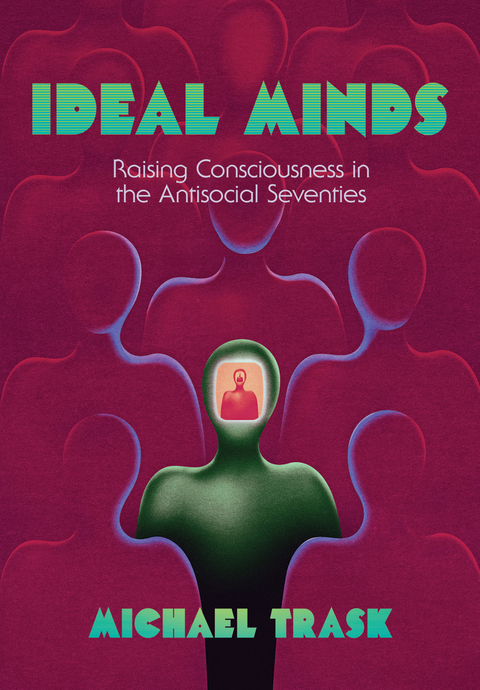
Ideal Minds (eBook)
258 Seiten
Cornell University Press (Verlag)
978-1-5017-5244-5 (ISBN)
Following the 1960s, that decade's focus on consciousness-raising transformed into an array of intellectual projects far afield of movement politics. The mind's powers came to preoccupy a range of thinkers and writers: ethicists pursuing contractual theories of justice, radical ecologists interested in the paleolithic brain, seventies cultists, and the devout of both evangelical and New Age persuasions. In Ideal Minds, Michael Trask presents a boldly revisionist argument about the revival of subjectivity in postmodern American culture, connecting familiar figures within the seventies intellectual landscape who share a commitment to what he calls "neo-idealism" as a weapon in the struggle against discredited materialist and behaviorist worldviews.
In a heterodox intellectual and literary history of the 1970s, Ideal Minds mixes ideas from cognitive science, philosophy of mind, moral philosophy, deep ecology, political theory, science fiction, neoclassical economics, and the sociology of religion. Trask also delves into the decade's more esoteric branches of learning, including Scientology, anarchist theory, rapture prophesies, psychic channeling, and neo-Malthusianism. Through this investigation, Trask argues that a dramatic inflation in the value of consciousness and autonomy beginning in the 1970s accompanied a growing argument about the state's inability to safeguard such values. Ultimately, the thinkers Trask analyzes—John Rawls, Arne Naess, L. Ron Hubbard, Hal Lindsey, Philip Dick, Ursula Le Guin, Edward Abbey, William Burroughs, John Irving, and James Merrill—found alternatives to statism in conditions that would lend intellectual support to the consolidation of these concepts in the radical free market ideologies of the 1980s.
Michael Trask is the Guy M. Davenport Professor in English at the University of Kentucky. He is the author of Cruising Modernism and Camp Sites.
Introduction: From Consciousness-Raising to Neo-idealism
1. Artificial Intelligence and the Rise of the Meritocracy
2. Radical Ecology's Mindfulness
3. That Seventies Cult
4. Millennial America and the World to Come
Afterword: The Marketization of Everything
| Erscheint lt. Verlag | 15.11.2020 |
|---|---|
| Verlagsort | Ithaca |
| Sprache | englisch |
| Maße | 150 x 150 mm |
| Themenwelt | Literatur ► Anthologien |
| Geschichte ► Allgemeine Geschichte ► Zeitgeschichte | |
| Geisteswissenschaften ► Geschichte ► Regional- / Ländergeschichte | |
| Geisteswissenschaften ► Philosophie | |
| Geisteswissenschaften ► Sprach- / Literaturwissenschaft ► Anglistik / Amerikanistik | |
| Geisteswissenschaften ► Sprach- / Literaturwissenschaft ► Literaturwissenschaft | |
| Schlagworte | cults in the seventies, libertarianism after the sixties, idealism in modern society, subjectivity in postmodern american culture |
| ISBN-10 | 1-5017-5244-8 / 1501752448 |
| ISBN-13 | 978-1-5017-5244-5 / 9781501752445 |
| Informationen gemäß Produktsicherheitsverordnung (GPSR) | |
| Haben Sie eine Frage zum Produkt? |
 EPUB (Adobe DRM)
Kopierschutz: Adobe-DRM
Adobe-DRM ist ein Kopierschutz, der das eBook vor Mißbrauch schützen soll. Dabei wird das eBook bereits beim Download auf Ihre persönliche Adobe-ID autorisiert. Lesen können Sie das eBook dann nur auf den Geräten, welche ebenfalls auf Ihre Adobe-ID registriert sind.
Details zum Adobe-DRM
Dateiformat: EPUB (Electronic Publication)
EPUB ist ein offener Standard für eBooks und eignet sich besonders zur Darstellung von Belletristik und Sachbüchern. Der Fließtext wird dynamisch an die Display- und Schriftgröße angepasst. Auch für mobile Lesegeräte ist EPUB daher gut geeignet.
Systemvoraussetzungen:
PC/Mac: Mit einem PC oder Mac können Sie dieses eBook lesen. Sie benötigen eine
eReader: Dieses eBook kann mit (fast) allen eBook-Readern gelesen werden. Mit dem amazon-Kindle ist es aber nicht kompatibel.
Smartphone/Tablet: Egal ob Apple oder Android, dieses eBook können Sie lesen. Sie benötigen eine
Geräteliste und zusätzliche Hinweise
Buying eBooks from abroad
For tax law reasons we can sell eBooks just within Germany and Switzerland. Regrettably we cannot fulfill eBook-orders from other countries.
aus dem Bereich