


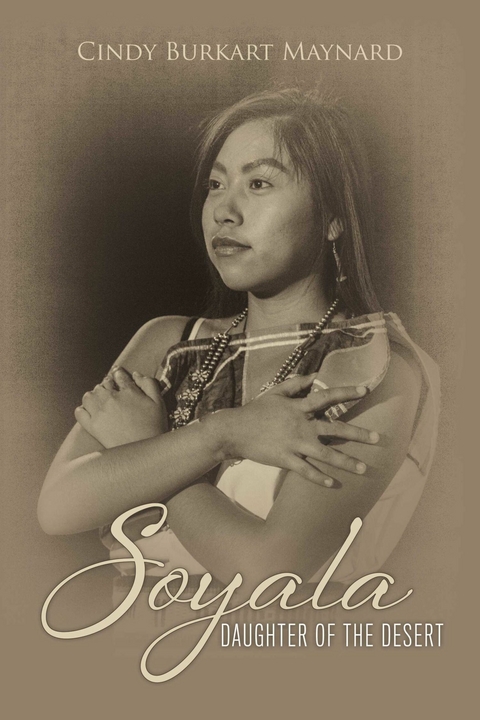
Soyala: Daughter of the Desert (eBook)
188 Seiten
Bookbaby (Verlag)
978-1-5439-6263-5 (ISBN)
Based on the archaeological and anthropological record, this story is a vivid and convincing drama depicting the lives of a small clan of ancient puebloans of northern New Mexico. It is set in the thirteenth century, long before Europeans reached the Southwest. The narrative is fresh, alive and fast-paced. The prose is highly polished and readable. Its strong, finely-drawn characters come to life showing us how they faced the challenges of climate, landscape, and survival. The themes of birth, death, love, hope, courage, fear, suffering and endurance ring true. It's as though the hundreds of years separating their experience from ours disappear. Based on the archaeological record and inspired by what it known about an actual pueblo, it feels incredibly authentic. This multi-generational story explores native American pre-history and the ancient puebloans as they set off on a great migration toward better lives.
Chapter One
A half-grown girl, midway between childhood and adulthood, dropped to her knees in the sandy red dirt of the dry arroyo. She brought her ruddy face close to a spindly shrub. Something had captured her attention. As she sprawled on the ground, her tawny skin blended into the rusty earth. Summer had almost passed, and each of the shrub’s branches was crowded with dense clusters of papery seeds. She hardly blinked as she scrutinized an industrious spider stringing its web from branch to branch. It worked with stubborn determination, never pausing as it stretched silky filaments from one spoke of its wheel to the next. The small, red ants that owned this patch of ground were starting to take little bites out of her outstretched legs when one small victim fluttered into the spider’s web. The spider darted toward the struggling form and wrapped it up in a miniature cocoon faster than the girl could say her name, Soyala.
Soyala bounded up from under her bush and called excitedly, running toward her mother, working in the corn fields. “Mama, Mama!” Her slim, strong body fairly flew over the rock-strewn earth, dust flying up behind her heels. “Guess what I just saw! The spider just captured a fly and wrapped it in a little blanket. Come see!”
Her mother, a small, sturdy woman with long, black braids and the weathered skin of one who has lived her life under the sun, lifted her eyes from the patch of corn she was tending. She did not respond to her daughter’s excited calls. Rather, like a dog who had just heard a rabbit rustle in the bushes, her head shot up, and she stared intently to the east for a moment. Suddenly she sprinted toward Soyala and unceremoniously grabbed her wrist. With the powerful grip of a woman who has spent her lifetime working with her hands, Soyala’s mother, Muna, dragged the girl into the rocky arroyo. Soyala knew instinctively to let herself be pulled after her mother. Muna shoved the girl behind a great sandstone slab that had tumbled from the cliff face above. It now rested at the bottom of the arroyo, canted on its edge at a precarious angle that left just enough room for Soyala and Muna to squeeze in behind it.
“Mama” the little girl cried. “What’s happening?”
“Hush, Soyala! Don’t make a sound. We can’t let them find us.” Muna hissed, her face contorted into a grimace.
Soyala’s deep brown eyes were luminous with fear. She peered over the ridge of knuckles pressed against her lips, afraid to breathe. She could feel her heart rattle against its delicate cage of ribs. Her mother closed her eyes and breathed deeply; her lips, drained of color, moved slowly, as if reciting one of the prayers she muttered over those who came to her for healing. Maybe Mama has medicine-prayers for healing fear, Soyala reassured herself.
Though they could not see beyond the rock face that shielded them, the cacophony of sounds wafting from their pueblo told a horrifying story. Women’s voices blended into a prolonged chorus of shouts and screams. The impossibly high notes of shrieking children overlaid the guttural shouts of rampaging men. The cadence of stone hammers pounding against the pueblo walls gave way to the rumble of collapsing rock.
This year’s corn plants had been healthy and vigorous. Their arms opened wide to support the ears in a strong, green embrace. The kernels, so near the end of the season, were plump with juice. Now the corn moaned in protest as hard hands ripped cobs from their stalks.
After the sun had moved from midday to early afternoon, the human chorus subsided into a low, keening drone. Soyala leaned tentatively out from behind the rock slab. Muna’s hand shot out and gripped Soyala’s arm, roughly pulling her back before her nose peeked out from behind their sheltering boulder. Muna’s eyes burned into Soyala’s, tacitly forbidding her to move or make a sound. “The attackers have not left yet. Stay still,” she hissed.
The lull was broken by sandaled feet pounding up the slope of the arroyo. Strange men’s voices, hoarse with emotion, commanded others to search for the stone granaries perched under the rocky ledge above. As fast as collared lizards scrambling across a boulder, the men climbed the incline to the sheltered granaries. Finally, stone hammers began their destructive beat again, this time above them on the canyon walls, where their granaries were hidden. In less time than it took to build a cooking fire, they looted last year’s surplus corn, retreated down the slope, and fled back across the arroyo. The triumphant voices of the marauders receded into the distance as they melted into the expanse of sandstone desert.
Finally, there was silence.
The women and children who had zigzagged into the brush like desert hares evading a coyote now crept out from their scattered hideouts. They huddled at the edges of the fields. They muttered. Some raised their voices in anger. Tansy, the youngest woman, wept.
“What will we do now?” she cried, overcome by the sight of the destruction.
An older woman wrapped a comforting arm around the young woman’s shoulder. “We will do what we always have done,” she answered. “We will tend what remains of our crops as best we can. We will prepare ourselves for the hardships yet to come.”
They shuffled through the remains of their carefully tended gardens. The mounds of soil where crops had been growing were trampled. The leaves of the corn plants hung in ribbons, their sturdy stalks broken. Some had been yanked from the soil, their shallow roots open to the sky. The bean plants trailed on the ground, no longer supported by their ravaged corn-sister. Their pods had been crushed into the earth. The delicate squash blossoms lay crumpled, their half-grown fruits flattened. The women silently bent their backs to the afternoon sun and began salvaging anything that might be edible.
Still clutching Soyala’s thin wrist, Muna slipped from behind the rock. With hunched backs, they crept toward the pueblo, using the pale, silvery-gray sagebrush to shield them. As they approached, the sobs of a frightened young mother and shrill wails of both her toddler and five-year-old wafted across sagebrush toward the women. The interior wall that had separated Tansy’s living area from the storage room now lay tumbled to the ground. The marauders had pounded a large hole in the wall separating the two rooms, knowing the storage room held their valuable cache of food. Broken rocks and grains of corn were scattered across the living area.
Amid the destruction Muna’s sister, Tansy, and her boys cowered in a corner, covered in dust and debris from the fallen rock. The toddler’s arm was bent at an unnatural angle, blood flowing from a deep gash. His blood stained Tansy’s simple cotton smock a lurid shade of dark red. The ragged end of a shattered bone jutted from the boy’s ripped flesh.
Tansy, round with her third pregnancy, had felt queasy that morning and had stayed behind in the pueblo with her ancient grandmother, Nona, the healer. Muna moved quietly from mother to child, checking for injuries. She bent over the toddler who was now old enough to be released from his cradleboard and allowed to wobble about the pueblo on his chubby legs.
“They grabbed him and threw him against the wall like a sack of corn meal,” Tansy moaned, huddling over the screaming baby.
“Don’t worry, I will do my best to help him,” Muna muttered. She tenderly felt the along the length of the little boy’s arm and ran her hands over his body, checking for other injuries. “Hold him as motionless as possible,” Muna ordered. With a sudden jerk she pushed the broken ends of bone together. The child shrieked and tried to pull away, but Tansy, unable to hold back her own tears, held him firmly in her lap. Muna quickly prepared a poultice of yarrow from her medicine pouch and fastened it across the gashed arm. She then removed her wide yucca belt and wound it around the entire length of the boy’s arm, pulling it as tight as she dared. When she was done, she bent his arm at the elbow and bound it tightly to his body to keep it immobile. As was her practice, she mumbled prayers to the yucca and to the healing yarrow, asking them to use their powers to heal the boy.
“Hush now, little man. The yarrow and yucca plants will heal you. Your arm will be well in no time,” she whispered into his ear. His shrieks tapered to a wounded whimper. Then, exhausted by the ordeal, he collapsed against his mother’s breast.
“Make him swallow some willow bark tea,” Muna instructed. “It will dull the pain. I will return later and replace the yarrow with a poultice of cattails. It will prevent the wound from festering and swelling.” Muna tucked stray hair that had escaped from her braid behind her ear. “I know he is a very active little boy, but you must keep him still until the healing plants have done their work.”
“I understand,” muttered Tansy. “I will put him back in the cradleboard for one more moon. He won’t like it, but he will need strong arms when he is a man, or he will never be a skilled hunter.”
“You are a good mother, my sister. Now Tansy, let’s have a look at you.” Muna ran her gentle fingers over Tansy’s round belly, softly whispering to the baby growing inside. “You will be strong and brave, little one,” she whispered to the unborn child. “You have already survived your first battle.”
Refocusing on Tansy’s glazed eyes, Muna said, “Tansy, your gentle flower spirit has lived through this...
| Erscheint lt. Verlag | 15.4.2019 |
|---|---|
| Sprache | englisch |
| Themenwelt | Literatur ► Historische Romane |
| ISBN-10 | 1-5439-6263-7 / 1543962637 |
| ISBN-13 | 978-1-5439-6263-5 / 9781543962635 |
| Informationen gemäß Produktsicherheitsverordnung (GPSR) | |
| Haben Sie eine Frage zum Produkt? |
 EPUB (Ohne DRM)
Größe: 598 KB
Digital Rights Management: ohne DRM
Dieses eBook enthält kein DRM oder Kopierschutz. Eine Weitergabe an Dritte ist jedoch rechtlich nicht zulässig, weil Sie beim Kauf nur die Rechte an der persönlichen Nutzung erwerben.
Dateiformat: EPUB (Electronic Publication)
EPUB ist ein offener Standard für eBooks und eignet sich besonders zur Darstellung von Belletristik und Sachbüchern. Der Fließtext wird dynamisch an die Display- und Schriftgröße angepasst. Auch für mobile Lesegeräte ist EPUB daher gut geeignet.
Systemvoraussetzungen:
PC/Mac: Mit einem PC oder Mac können Sie dieses eBook lesen. Sie benötigen dafür die kostenlose Software Adobe Digital Editions.
eReader: Dieses eBook kann mit (fast) allen eBook-Readern gelesen werden. Mit dem amazon-Kindle ist es aber nicht kompatibel.
Smartphone/Tablet: Egal ob Apple oder Android, dieses eBook können Sie lesen. Sie benötigen dafür eine kostenlose App.
Geräteliste und zusätzliche Hinweise
Buying eBooks from abroad
For tax law reasons we can sell eBooks just within Germany and Switzerland. Regrettably we cannot fulfill eBook-orders from other countries.
aus dem Bereich


