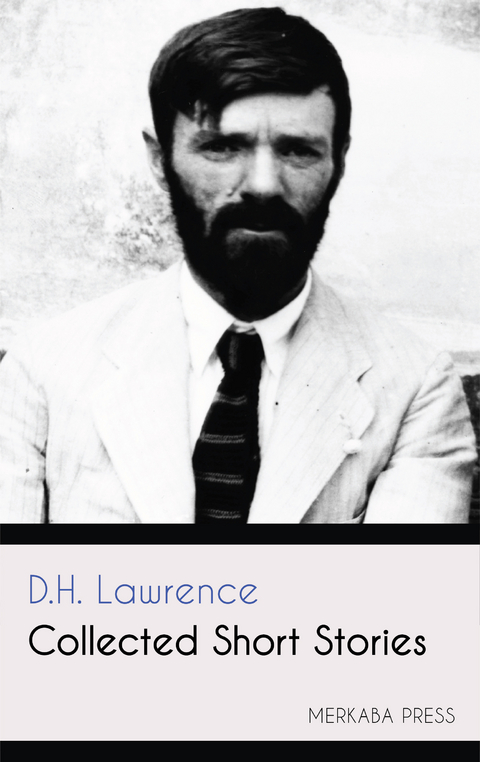
Collected Short Stories (eBook)
163 Seiten
Merkaba Press (Verlag)
978-0-00-002267-7 (ISBN)
The road was heavy with mud. It was labour to move along it. The old, wide way, forsaken and grown over with grass, used not to be so bad. The farm traffic from Coney Grey must have cut it up. The young man crossed carefully again to the strip of grass on the other side.
It was a dreary, out-of-doors track, saved only by low fragments of fence and occasional bushes from the desolation of the large spaces of arable and of grassland on either side, where only the unopposed wind and the great clouds mattered, where even the little grasses bent to one another indifferent of any traveller. The abandoned road used to seem clean and firm. Cyril Mersham stopped to look round and to bring back old winters to the scene, over the ribbed red land and the purple wood. The surface of the field seemed suddenly to lift and break. Something had startled the peewits, and the fallow flickered over with pink gleams of birds white-breasting the sunset. Then the plovers turned, and were gone in the dusk behind.
Darkness was issuing out of the earth, and clinging to the trunks of the elms which rose like weird statues, lessening down the wayside. Mersham laboured forwards, the earth sucking and smacking at his feet. In front the Coney Grey farm was piled in shadow on the road. He came near to it, and saw the turnips heaped in a fabulous heap up the side of the barn, a buttress that rose almost to the eaves, and stretched out towards the cart-ruts in the road. Also, the pale breasts of the turnips got the sunset, and they were innumerable orange glimmers piled in the dusk. The two labourers who were pulping at the foot of the mound stood shadow-like to watch as he passed, breathing the sharp scent of turnips...
A MODERN LOVER
I
The road was heavy with mud. It was labour to move along it. The old, wide way, forsaken and grown over with grass, used not to be so bad. The farm traffic from Coney Grey must have cut it up. The young man crossed carefully again to the strip of grass on the other side.
It was a dreary, out-of-doors track, saved only by low fragments of fence and occasional bushes from the desolation of the large spaces of arable and of grassland on either side, where only the unopposed wind and the great clouds mattered, where even the little grasses bent to one another indifferent of any traveller. The abandoned road used to seem clean and firm. Cyril Mersham stopped to look round and to bring back old winters to the scene, over the ribbed red land and the purple wood. The surface of the field seemed suddenly to lift and break. Something had startled the peewits, and the fallow flickered over with pink gleams of birds white-breasting the sunset. Then the plovers turned, and were gone in the dusk behind.
Darkness was issuing out of the earth, and clinging to the trunks of the elms which rose like weird statues, lessening down the wayside. Mersham laboured forwards, the earth sucking and smacking at his feet. In front the Coney Grey farm was piled in shadow on the road. He came near to it, and saw the turnips heaped in a fabulous heap up the side of the barn, a buttress that rose almost to the eaves, and stretched out towards the cart-ruts in the road. Also, the pale breasts of the turnips got the sunset, and they were innumerable orange glimmers piled in the dusk. The two labourers who were pulping at the foot of the mound stood shadow-like to watch as he passed, breathing the sharp scent of turnips.
It was all very wonderful and glamorous here, in the old places that had seemed so ordinary. Three-quarters of the scarlet sun was settling among the branches of the elm in front, right ahead where he would come soon. But when he arrived at the brow where the hill swooped downwards, where the broad road ended suddenly, the sun had vanished from the space before him, and the evening star was white where the night urged up against the retreating, rose-coloured billow of day. Mersham passed through the stile and sat upon the remnant of the thorn tree on the brink of the valley. All the wide space before him was full of a mist of rose, nearly to his feet. The large ponds were hidden, the farms, the fields, the far-off coal-mine, under the rosy outpouring of twilight. Between him and the spaces of Leicestershire and the hills of Derbyshire, between him and all the South Country which he had fled, was the splendid rose-red strand of sunset, and the white star keeping guard.
Here, on the lee-shore of day, was the only purple showing of the woods and the great hedge below him; and the roof of the farm below him, with a film of smoke rising up. Unreal, like a dream which wastes a sleep with unrest, was the South and its hurrying to and fro. Here, on the farther shore of the sunset, with the flushed tide at his feet, and the large star flashing with strange laughter, did he himself naked walk with lifted arms into the quiet flood of life.
What was it he wanted, sought in the slowly-lapsing tide of days? Two years he had been in the large city in the south. There always his soul had moved among the faces that swayed on the thousand currents in that node of tides, hovering and wheeling and flying low over the faces of the multitude like a sea-gull over the waters, stopping now and again, and taking a fragment of life--a look, a contour, a movement--to feed upon. Of many people, his friends, he had asked that they would kindle again the smouldering embers of their experience; he had blown the low fires gently with his breath, and had leaned his face towards their glow, and had breathed in the words that rose like fumes from the revived embers, till he was sick with the strong drug of sufferings and ecstasies and sensations, and the dreams that ensued. But most folk had choked out the fires of their fiercer experience with rubble of sentimentality and stupid fear, and rarely could he feel the hot destruction of Life fighting out its way.
Surely, surely somebody could give him enough of the philtre of life to stop the craving which tortured him hither and thither, enough to satisfy for a while, to intoxicate him till he could laugh the crystalline laughter of the star, and bathe in the retreating flood of twilight like a naked boy in the surf, clasping the waves and beating them and answering their wild clawings with laughter sometimes, and sometimes gasps of pain.
He rose and stretched himself. The mist was lying in the valley like a flock of folded sheep; Orion had strode into the sky, and the Twins were playing towards the West. He shivered, stumbled down the path, and crossed the orchard, passing among the dark trees as if among people he knew.
II
He came into the yard. It was exceedingly, painfully muddy. He felt a disgust of his own feet, which were cold, and numbed, and heavy.
The window of the house was uncurtained, and shone like a yellow moon, with only a large leaf or two of ivy, and a cord of honeysuckle hanging across it. There seemed a throng of figures moving about the fire. Another light gleamed mysteriously among the out-buildings. He heard a voice in the cow-shed, and the impatient movement of a cow, and the rhythm of milk in the bucket.
He hesitated in the darkness of the porch; then he entered without knocking. A girl was opposite him, coming out of the dairy doorway with a loaf of bread. She started, and they stood a moment looking at each other across the room. They advanced to each other; he took her hand, plunged overhead, as it were, for a moment in her great brown eyes. Then he let her go, and looked aside, saying some words of greeting. He had not kissed her; he realised that when he heard her voice:
"When did you come?"
She was bent over the table, cutting bread-and-butter. What was it in her bowed, submissive pose, in the dark, small head with its black hair twining and hiding her face, that made him wince and shrink and close over his soul that had been open like a foolhardy flower to the night? Perhaps it was her very submission, which trammelled him, throwing the responsibility of her wholly on him, making him shrink from the burden of her.
Her brothers were home from the pit. They were two well-built lads of twenty and twenty-one. The coal-dust over their faces was like a mask, making them inscrutable, hiding any glow of greeting, making them strangers. He could only see their eyes wake with a sudden smile, which sank almost immediately, and they turned aside. The mother was kneeling at a big brown stew-jar in front of the open oven. She did not rise, but gave him her hand, saying: "Cyril! How are you?" Her large dark eyes wavered and left him. She continued with the spoon in the jar.
His disappointment rose as water suddenly heaves up the side of a ship. A sense of dreariness revived, a feeling, too, of the cold wet mud that he had struggled through.
These were the people who, a few months before, would look up in one fine broad glow of welcome whenever he entered the door, even if he came daily. Three years before, their lives would draw together into one flame, and whole evenings long would flare with magnificent mirth, and with play. They had known each other's lightest and deepest feelings. Now, when he came back to them after a long absence, they withdrew, turned aside. He sat down on the sofa under the window, deeply chagrined. His heart closed tight like a fir-cone, which had been open and full of naked seeds when he came to them.
They asked him questions of the South. They were starved for news, they said, in that God-forsaken hole.
"It is such a treat to hear a bit of news from outside," said the mother.
News! He smiled, and talked, plucking for them the leaves from off his tree: leaves of easy speech. He smiled, rather bitterly, as he slowly reeled off his news, almost mechanically. Yet he knew--and that was the irony of it--that they did not want his "records"; they wanted the timorous buds of his hopes, and the unknown fruits of his experience, full of the taste of tears and what sunshine of gladness had gone to their ripening. But they asked for his "news", and, because of some subtle perversity, he gave them what they begged, not what they wanted, not what he desired most sincerely to give them.
Gradually he exhausted his store of talk, that he had thought was limitless. Muriel moved about all the time, laying the table and listening, only looking now and again across the barren garden of his talk into his windows. But he hardened his heart and turned his head from her. The boys had stripped to their waists, and had knelt on the hearth-rug and washed themselves in a large tin bowl, the mother sponging and drying their backs. Now they stood wiping themselves, the firelight bright and rosy on their fine torsos, their heavy arms swelling and sinking with life. They seemed to cherish the firelight on their bodies. Benjamin, the younger, leaned his breast to the warmth, and threw back his head, showing his teeth in a voluptuous little smile. Mersham watched them, as he had watched the peewits and the sunset.
Then they sat down to their dinners, and the room was dim with the steam of food. Presently the father and the eldest brother were in from the cow-sheds, and all assembled at table. The conversation went haltingly; a little badinage on Mersham's part, a few questions on politics from the father. Then there grew an acute, fine feeling of discord. Mersham, particularly sensitive, reacted. He became extremely attentive to...
| Erscheint lt. Verlag | 25.7.2017 |
|---|---|
| Sprache | englisch |
| Themenwelt | Literatur ► Romane / Erzählungen |
| ISBN-10 | 0-00-002267-5 / 0000022675 |
| ISBN-13 | 978-0-00-002267-7 / 9780000022677 |
| Informationen gemäß Produktsicherheitsverordnung (GPSR) | |
| Haben Sie eine Frage zum Produkt? |
 EPUB (Adobe DRM)
Größe: 289 KB
Kopierschutz: Adobe-DRM
Adobe-DRM ist ein Kopierschutz, der das eBook vor Mißbrauch schützen soll. Dabei wird das eBook bereits beim Download auf Ihre persönliche Adobe-ID autorisiert. Lesen können Sie das eBook dann nur auf den Geräten, welche ebenfalls auf Ihre Adobe-ID registriert sind.
Details zum Adobe-DRM
Dateiformat: EPUB (Electronic Publication)
EPUB ist ein offener Standard für eBooks und eignet sich besonders zur Darstellung von Belletristik und Sachbüchern. Der Fließtext wird dynamisch an die Display- und Schriftgröße angepasst. Auch für mobile Lesegeräte ist EPUB daher gut geeignet.
Systemvoraussetzungen:
PC/Mac: Mit einem PC oder Mac können Sie dieses eBook lesen. Sie benötigen eine
eReader: Dieses eBook kann mit (fast) allen eBook-Readern gelesen werden. Mit dem amazon-Kindle ist es aber nicht kompatibel.
Smartphone/Tablet: Egal ob Apple oder Android, dieses eBook können Sie lesen. Sie benötigen eine
Geräteliste und zusätzliche Hinweise
Buying eBooks from abroad
For tax law reasons we can sell eBooks just within Germany and Switzerland. Regrettably we cannot fulfill eBook-orders from other countries.
aus dem Bereich