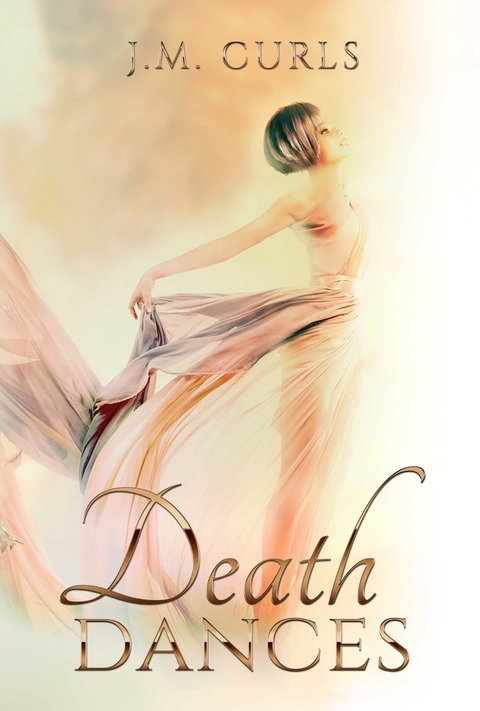
Death Dances (eBook)
334 Seiten
Bookbaby (Verlag)
978-1-7321506-1-4 (ISBN)
Death - a must have experience!Told in the first person, with humor, wit, and wonder, Death Dances tells the story of an African American woman's journey from the early 1950's through 2017. The unnamed narrator redefines time, encapsulating the lives of twelve women within a twelve month year of dances and songs. The narrator then, through each woman's dance and song, unfurrows her own life recounting childhood innocence, coming of age, civil unrest, social change, emerging sexual identities, the healing power of art, the devastating footprint of crime, and the restorative power of faith, hope, and love. Each death dance advances the narrator's search for her meaning of life and death. Releasing her life, she finds the answer.
The Observance
Spring is coming unreasonably late to Atchison. It is mid-April, and the ground is rock hard. It doesn’t help that my feet are killing me. The shoes are over-the-top classy. When I walked into the store, they called to me in a siren song. I answered. It was a to-die-for sale at Neiman’s last call. The shoes are mine. But why would I buy a half size too small? What was I thinking? No part of my body is getting smaller. It was the hypnotic trance of the shoe siren song, and now I am paying the price.
Less than two weeks earlier I had been at the Mount, shorthand for Mount Saint Scholastica. For 152 years, Mount Saint Scholastica was the mother house and convent for the Atchison, Kansas, Sisters’ Order of Saint Benedict. In 1863, these nuns opened a school for girls and, in 1923, its college. This college was the sister college of St. Benedict’s. The Mount was the nexus and the incubator that grew young girls into religious women. As the convent grew, the work of this religious order expanded, spreading to other towns in Kansas, Missouri, Iowa, Nebraska, and Colorado. These women were teachers, staffing Catholic high schools and a junior college in Kansas City, Kansas.
When I was introduced to the Mount’s campus in Atchison, it housed an elementary school, high school, and college. The convent, administration building, dorms, student center, various houses, gardens, miscellaneous other buildings, and a cemetery comprised the campus. The vibrant world of nuns, as I knew them then, has today become a dying star. In 1965, there were one hundred and eighty thousand nuns in the United States. Today there are fifty-six thousand. Their average age is seventy-four. For the Benedictine nuns at Atchison, their high schools are gone. Mount Saint Scholastica’s administration building and dorms have also been demolished. What remains is the convent, a retreat center, and a recently remodeled complex called Dooley Center that houses their aging and invalid sisters.
One should, however, never imagine this to be a bleak or dour environment. Nothing could be further from the truth. These amazing women are astonishingly adaptable and have reinvented themselves in ways hard to imagine. These are extremely well-educated, assertive women who are on a mission. Their mission is ministry, service, education, and social justice. Their resilience and vitality are palpable. They go to their death committed to and working for what they believe in, and I am here today to bury one. Her real name is Teresa O’Malley, but when I met her, she was Sr. Patricia Anne.
I follow the procession that trails her casket as her religious community, family, and friends make their way to the nun’s burial grounds nestled behind the Stations of the Cross. With its rows of headstones, the cemetery, is startling. Clearly, there are more sisters dead than there are alive. Everyone gathers around the gaping ground. The wind is taking little slices out of my face.
The priest intones the prayer. I begin to drift away. Wasn’t it two weeks ago that I had come to see her for her birthday? I had gone to Sr. Teresa’s bedroom, where she was sitting and ready. I knocked on her cracked door. She was expecting me.
“Hello, my lovely.” Sister smiled, and I was sixteen again.
“Hello, Sister.”
“Come, sit beside me.” I did as ordered.
“Whose woods are these?” she began.
“I think I know,” I responded.
“His house is in the village, though.” Her eyes twinkled as we picked up the tempo. Sr. Teresa loved Robert Frost, especially this poem. She claimed the last line for herself.
“But I have promises to keep, and miles to go before I sleep.” She clutched my hand.
“And miles to go before I sleep.”
“Happy birthday, Sister.” I leaned into her emaciated cheek and kissed it.
“Is it my birthday?”
“You know it is.”
“And so it is.”
“I brought you something.”
“Oh, how you spoil me. You know I need absolutely nothing.” She was opening the wrapped box. Then she conceded.
“But I will take this. It’s so me, don’t you think?” The gift was a blue-and-white silk blouse. I had to buy it two sizes too large to accommodate the hump that had widened across her back.
“OK. Let’s get me all gussied up, and then we will go to the dining room for lunch.”
The dining room was the eating space for the nuns who lived in the convent or for the ones who resided in Dooley Center who did not require special assistance. Sr. Teresa seldom ate in the dining room, but today was her birthday. Fortified with the determination only nuns can muster, Sr. Teresa was committed to eating there.
I put on her new blouse and combed her gun-metal-gray hair. I even put a little of my lipstick and blush on her face for color and contrast.
“Now that’s a hoot,” she chortled, holding the mirror. In my opinion, for ninety-six, she looked pretty damned great.
I put her in her wheelchair and pushed her to the dining room. When we came through the door, most of the nuns were seated, but upon seeing her, they rose and applauded. Food in the dining room was served à la carte. I went through the food line and got her what she requested, but she didn’t eat it.
There were prayers and reflections during lunch. A parade of sisters kept stopping by the table to greet her, wish her happy birthday, and tell her how pretty she looked.
“You know they’re jealous.” Sr. Teresa chuckled in my ear.
The prioress approached the podium and announced it was Sr. Teresa O’Malley’s ninety-sixth birthday. Another standing ovation and a robust singing of “Happy Birthday” followed.
It was a week to the day when the call came.
“This is Sr. Michelle. We have been sitting vigil all night with Sr. Teresa. She is slipping fast. We want you to tell her it is all right to go. Here, I am going to put the phone up to her ear.”
What I heard next was labored breathing that gurgled.
“Sr. Teresa, it’s me. There are no more promises. You have kept them all. Every single one. It’s OK now. Go to sleep.”
Thirty minutes later the phone rang again.
“Sr. Teresa is now with her loving God. Thank you.”
Yesterday I came to Atchison. I wanted to be in the foyer when the funeral home returned her body. The entire available community of nuns and friends had gathered to receive her. Her casket was taken to Scholastica Chapel, where she lay in repose. At the appointed time we were admitted for the visitation. There were prayers and songs. Then came the time to view the body. When my time came to process by, I stopped and looked down at my teacher, my mentor, my light walker. That devilish smile was blooming on her lips, and she was wearing my blue-and-white silk blouse.
After the visitation, all guests gathered in the sisters’ dining room for supper. When the meal concluded, the prioress approached the podium as she had a little over a week ago.
“Tonight we remember Sr. Teresa O’Malley. What a lady!”
The agreement was audible. “What a lifetime!” For me, it felt as if the room was levitating.
“And so tonight we will share stories of our friend, and we will call on all and any who wish to say how she impacted their lives.”
The Dance
Sophomore Year
My assimilation began my sophomore year. The third period was biology, taught by Sr. Mary Thomas. I had had general science the prior year, but after all the brouhaha about Sputnik, nothing else was very exciting.
That was not the case with biology. It spoke to the natural world, to plants, animals, and humans. Sr. Mary Thomas was an engaging biology teacher who used words like photosynthesis and metamorphosis to explain incomprehensible events in nature. I was alone now; my two classmates were gone. I sat in the back of the class, but Sr. Mary Thomas had the voice projection of a bass drum, so I missed nothing.
This day she was explaining tadpoles, which we were later going to the lab to dissect. Sister was saying that scientists now believed that tadpoles had at one time been fish but over thousands of years evolved, developed feet and lungs, which enabled them to leave the water and walk onto land.
A hand waved in the air.
“Yes, Bobby. Stand and state your question.”
“Sister, I thought the Bible said God created the world in seven days. How does that work if it took thousands of years to get a tadpole?”
“A good question, Bobby.”
I certainly thought so. With that, Sr. Mary Thomas pushed her glasses back on her face, planted her feet apart, and bellowed her defense of God.
“Listen, people. It needs to be understood that seven days to God is not the same as seven days to us. What we do know—and I want you always to remember this—is that true faith and true science never contradict.” Her finger underscored the point....
| Erscheint lt. Verlag | 25.6.2018 |
|---|---|
| Sprache | englisch |
| Themenwelt | Literatur ► Romane / Erzählungen |
| ISBN-10 | 1-7321506-1-3 / 1732150613 |
| ISBN-13 | 978-1-7321506-1-4 / 9781732150614 |
| Informationen gemäß Produktsicherheitsverordnung (GPSR) | |
| Haben Sie eine Frage zum Produkt? |
 EPUB (Ohne DRM)
Größe: 776 KB
Digital Rights Management: ohne DRM
Dieses eBook enthält kein DRM oder Kopierschutz. Eine Weitergabe an Dritte ist jedoch rechtlich nicht zulässig, weil Sie beim Kauf nur die Rechte an der persönlichen Nutzung erwerben.
Dateiformat: EPUB (Electronic Publication)
EPUB ist ein offener Standard für eBooks und eignet sich besonders zur Darstellung von Belletristik und Sachbüchern. Der Fließtext wird dynamisch an die Display- und Schriftgröße angepasst. Auch für mobile Lesegeräte ist EPUB daher gut geeignet.
Systemvoraussetzungen:
PC/Mac: Mit einem PC oder Mac können Sie dieses eBook lesen. Sie benötigen dafür die kostenlose Software Adobe Digital Editions.
eReader: Dieses eBook kann mit (fast) allen eBook-Readern gelesen werden. Mit dem amazon-Kindle ist es aber nicht kompatibel.
Smartphone/Tablet: Egal ob Apple oder Android, dieses eBook können Sie lesen. Sie benötigen dafür eine kostenlose App.
Geräteliste und zusätzliche Hinweise
Buying eBooks from abroad
For tax law reasons we can sell eBooks just within Germany and Switzerland. Regrettably we cannot fulfill eBook-orders from other countries.
aus dem Bereich