PREFACE
Real knowledge is to know the extent of one’s ignorance.
—Confucius
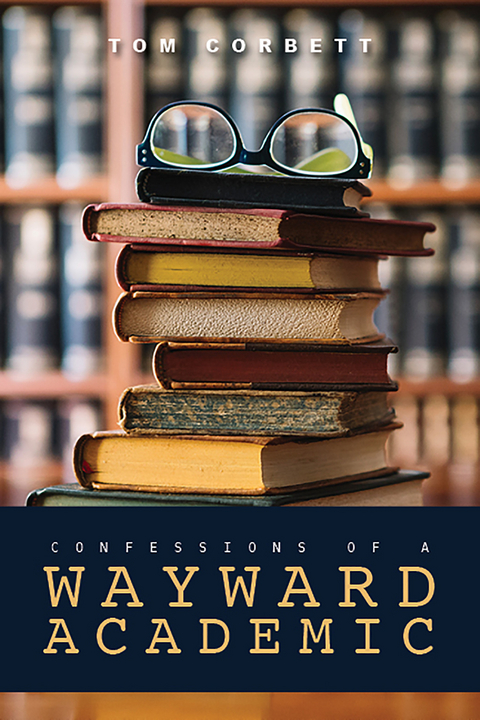
In 2014, I wrote Browsing through My Candy Store, a memoir of my career practicing the public policy arts. That book, though enjoying modest sales at best, was well received by members of the academy, by those members of the public who stumbled upon this gem, and by so-called book scouts who ferret out literary finds. That pleased me greatly. My intent was to develop a crossover work that might bridge both the real and the academic worlds. I tried to avoid being so technical that the average reader risked being driven into a deep coma. That is an unfortunate condition I too often witnessed among my university students, especially the undergraduates I taught in early-morning required courses.
More than once, I called in paramedics to check for signs of life among the apparently lifeless forms sitting in front of me. Chastened by such near-death experiences, among my hostage-like students at least, it became my firm conviction that works of substance do not have to be dreary tomes. In fact, one of my more enduring life goals has been to bring some wit and savoir faire to a policy world normally infused with way too much angst and anger. I think I may just have accomplished that in these pages though, in the final analysis, only the reader can judge my success or failure in that regard.
Still, why republish an updated version of Browsing? Three reasons: First, the initial effort was not well-marketed, something we hope to remedy this time around. Second, during the summer of 2017, I began receiving numerous phone calls from assorted marketing and publishing firms saying that book scouts loved the work while offering to help push Browsing in the marketplace. One caller breathlessly informed me that Browsing had scored a 90 percent mark in originality—whatever that means. Third, much has changed in the policy world over the past four years, especially at the national political and policy levels. I welcome the opportunity to comment on the dire public policy environment we now confront.
The original work did not materialize out of thin air. Rather, the birth of my professional memoir was the result of a rather fascinating gestation period. Over the Memorial Day weekend in May of 2009, Peace Corps (PC) volunteers from what was known as the India-44 group gathered in Oakland, California. It was the fortieth anniversary of our return home from service in either Rajasthan or Maharashtra, two provinces located in the western part of India. Whatever our expectations might have been, the reality of the get together proved remarkably personal and rewarding.
This sharing of experiences and feelings evoked memories and emotions long muted by time and the demands of our frantic lives. Those of us who wished would put thoughts and reflections to paper—what brought us to Peace Corps; what we experienced during training and service; how those experiences shaped our subsequent life; and what those subsequent lives looked like. These reflections served as a kind of palimpsest that uncovered a deeper set of memories for me and the others. Each specific recollection serving as a source for images and feelings long buried under the detritus of a life long-lived, if not well-lived.
Then it hit me. With a modest, or not so modest, expansion of effort and a slight alteration of focus, my India reflections could serve as inspiration for Tom’s scintillating story as a policy guru or, as I prefer to say, a policy wonk. Such a narrative would surely compete on any futility scale with my fanciful efforts to single-handedly turn India into a developed country way back in the 1960s. With the right marketing, I might be able to hawk this rendition of my professional experiences to the Pentagon, perhaps as an insidious instrument of torture. Employed with sufficient care, my years in the trenches might replace the infamous waterboarding technique that fell into such disrepute after Vice President Cheney left office.
I often have ideas, however, which excite me in the moment, yet never see the light of day. Perhaps this vision would be another of those. I was blessed, though, when a couple of people inadvertently pushed me along. One was Michael Simonds, one of my Peace Corps colleagues who helped in developing the two volumes capturing our experiences in India. Michael also wrote a set of personal reflections, one based on his triumphs and tragedies (mostly the latter, in his view) with the women he met through online dating services after his divorce. He asked me to read an early draft, which I found moving, sometimes sad, occasionally humorous, but always entertaining. This is good stuff, I thought.
Besides, I am eternally grateful for the way Michael pictured me in a chapter of his draft that went all the way back to our final Peace Corps days. He apparently despaired of lucking out with some of the PC gals at a final “going home” party in New Delhi. Unbelievably, he feared competition from me for the affections of the young ladies. He went on to describe me as “tall and dark, with the rugged good looks of someone who could adorn the cover of a romance novel.” Of course, this was just hours before it was discovered that he had a detached retina and was whisked off to a U.S. military base in Germany for emergency eye surgery.
But the specific origins for this tale of woe may well go back further, to the early days of this century. I was headed to Washington, D.C. for a National Governors Association meeting. At the airport, I ran into the woman who headed the highly touted welfare reform program in Wisconsin known as W-2 or “Wisconsin Works.” Jennifer Noyes had formerly been a policy advisor to Governor Tommy Thompson who, at the time of this trip, was serving as Secretary of Health and Human Services under President George W. Bush. I was then the Associate Director of the Institute for Research on Poverty at the University of Wisconsin. Now, Secretary Thompson, the former Governor of Wisconsin, did not like the Institute. He did not like me. By extension, Jennifer was required to dislike me as well. But, since we were headed to the same destination, we struck up a conversation.
This turned out to be the trip from hell though not because she and I found ourselves traveling together, at least not on my part. Cancelled flights, bus trips from Madison to Milwaukee, sitting on the tarmac waiting for the weather to clear for what seemed like days, and sundry other hurdles turned a four-hour trip into a twelve-plus-hour ordeal. To avoid talking about welfare, politics, or other sensitive subjects, I regaled her with stories of my life. After all, my life just happens to be one of my favorite topics.
By the time we reached the Washington hotel at 3:00 AM or so, she was in desperate straits. Importantly, she had agreed to help repair the State’s relationship with the Institute (well, not quite true just yet) and to give me her firstborn, anything to avoid hearing any more about Tom’s early years. I was struck with an insight at that very moment. The power of an excruciatingly boring story cannot be overestimated. Exposed to endless repetitions of my life, I suspect even Sarah Palin would break down and willingly sign on as an Obamacare fan.
As much fun as it might be to torture others, there are more defensible reasons for setting down my recollections. My story, if truth be told, is not terribly unusual or dramatic. Variants of my journey from an ethnic working-class childhood to modest success as a policy wonk, and even some limited success as an academic, is neither exciting nor remarkable. Countless others have tread down similar paths. And yet, each of us, no matter how humble or unremarkable, has a story to tell. Each life contains moments of drama, despair, joy, sadness, triumph, failure, roads that should not have been taken, and redemptive moments that, on occasion, set things right. Looking back, even my ordinary tale has all these elements.
I also came to realize that if my memories are not retrieved and recorded, they will soon surely be lost. Clearly, no one else will document my journey through life, neither for commercial gain since there would not be any, nor for historical justification since not that much of note occurred.
And so, it is up to me to set my story down before all is lost amidst cognitive decay and mental confusion. This narrative, in effect, serves as my personal journey through a series of social policy challenges that dominated the past half century or so of our political history. It encompasses such topics as poverty, welfare reform, and the growing inequality in social opportunities.
I do not cover everything. That would be too daunting, and even I can take pity on others. But this work does touch upon many of the highlights and lowlights which I have shared with others verbally when necessity required that they endure my company. You will soon understand why I have so few friends. The chapters that follow permit the reader to journey through what I often call my policy candy store. I characterize my professional career as such because, despite everything, it was a pure delight and a joy to experience. This remained true despite the many frustrations, the failures, and the grueling hours.
There were many nooks and crannies in my professional candy store...


 EPUB (Ohne DRM)