Guermantes Way (eBook)
Charles River Editors (Verlag)
978-1-5080-1707-3 (ISBN)
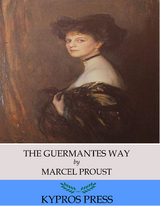
Marcel Proust was a French novelist best known for In Search of Lost Time, a seven volume novel published between 1913 and 1927. Proust is considered to be one of the most important authors of the 20th century. This edition of The Guermantes Way includes a table of contents.
“SO YOU’D RATHER STAY with me and sleep here, would you, than to go the hotel by yourself?” Saint-Loup asked me, smiling.
“Oh, Robert, it is cruel of you to be sarcastic about it,” I pleaded; “you know it’s not possible, and you know how wretched I shall be over there.”
“Good! You flatter me!” he replied. “It occurred to me just now that you would rather stay here to-night. And that is precisely what I stopped to ask the Captain.”
“And he has given you leave?” I cried.
“He hadn’t the slightest objection.”
“Oh! I adore him!”
“No; that would be going too far. But now, let me just get hold of my batman and tell him to see about our dinner,” he went on, while I turned away so as to hide my tears.
We were several times interrupted by one or other of Saint-Loup’s friends’ coming in. He drove them all out again.
“Get out of here. Buzz off!”
I begged him to let them stay.
“No, really; they would bore you stiff; they are absolutely uncultured; all they can talk about is racing, or stables shop. Besides, I don’t want them here either; they would spoil these precious moments I’ve been looking forward to. But you mustn’t think, when I tell you that these fellows are brainless, that everything military is devoid of intellectuality. Far from it. We have a major here who is a splendid chap. He’s given us a course in which military history is treated like a demonstration, like a problem in algebra. Even from the aesthetic point of view there is a curious beauty, alternately inductive and deductive, about it which you couldn’t fail to appreciate.”
“That’s not the officer who’s given me leave to stay here to-night?”
“No; thank God! The man you ‘adore’ for so very trifling a service is the biggest fool that ever walked the face of the earth. He is perfect at looking after messing, and at kit inspections; he spends hours with the serjeant major and the master tailor. There you have his mentality. Apart from that he has a vast contempt, like everyone here, for the excellent major I was telling you about. No one will speak to him because he’s a freemason and doesn’t go to confession. The Prince de Borodino would never have an outsider like that in his house. Which is pretty fair cheek, when all’s said and done, from a man whose great-grandfather was a small farmer, and who would probably be a small farmer himself if it hadn’t been for the Napoleonic wars. Not that he hasn’t a lurking sense of his own rather ambiguous position in society, where he’s neither flesh nor fowl. He hardly ever shews his face at the Jockey, it makes him feel so deuced awkward, this so-called Prince,” added Robert, who, having been led by the same spirit of imitation to adopt the social theories of his teachers and the worldly prejudices of his relatives, had unconsciously wedded the democratic love of humanity to a contempt for the nobility of the Empire.
I was looking at the photograph of his aunt, and the thought that, since Saint-Loup had this photograph in his possession, he might perhaps give it to me, made me feel all the fonder of him and hope to do him a thousand services, which seemed to me a very small exchange for it. For this photograph was like one encounter more, added to all those that I had already had, with Mme. de Guermantes; better still, a prolonged encounter, as if, by some sudden stride forward in our relations, she had stopped beside me, in a garden hat, and had allowed me for the first time to gaze at my leisure at that plump cheek, that arched neck, that tapering eyebrow (veiled from me hitherto by the swiftness of her passage, the bewilderment of my impressions, the imperfection of memory); and the contemplation of them, as well as of the bare bosom and arms of a woman whom I had never seen save in a high-necked and long-sleeved bodice, was to me a voluptuous discovery, a priceless favour. Those lines, which had seemed to me almost a forbidden spectacle, I could study there, as in a text-book of the only geometry that had any value for me. Later on, when I looked at Robert, I noticed that he too was a little like the photograph of his aunt, and by a mysterious process which I found almost as moving, since, if his face had not been directly created by hers, the two had nevertheless a common origin. The features of the Duchesse de Guermantes, which were pinned to my vision of Combray, the nose like a falcon’s beak, the piercing eyes, seemed to have served also as a pattern for the cutting out—in another copy analogous and slender, with too delicate a skin—of Robert’s face, which might almost be superimposed upon his aunt’s. I saw in him, with a keen longing, those features characteristic of the Guermantes, of that race which had remained so individual in the midst of a world with which it was not confounded, in which it remained isolated in the glory of an ornithomorphic divinity, for it seemed to have been the issue, in the age of mythology, of the union of a goddess with a bird.
Robert, without being aware of its cause, was touched by my evident affection. This was moreover increased by the sense of comfort inspired in me by the heat of the fire and by the champagne which bedewed at the same time my brow with beads of sweat and my cheeks with tears; it washed down the partridges; I ate mine with the dumb wonder of a profane mortal of any sort when he finds in a form of life with which he is not familiar what he has supposed that form of life to exclude—the wonder, for instance, of an atheist who sits down to an exquisitely cooked dinner in a presbytery. And next morning, when I awoke, I rose and went to cast from Saint-Loup’s window, which being at a great height overlooked the whole countryside, a curious scrutiny to make the acquaintance of my new neighbour, the landscape which I had not been able to distinguish the day before, having arrived too late, at an hour when it was already sleeping beneath the outspread cloak of night. And yet, early as it had awoken from its sleep, I could see the ground, when I opened the window and looked out, only as one sees it from the window of a country house, overlooking the lake, shrouded still in its soft white morning gown of mist which scarcely allowed me to make out anything at all. But I knew that, before the troopers who were busy with their horses in the square had finished grooming them, it would have cast its gown aside. In the meantime, I could see only a meagre hill, rearing close up against the side of the barracks a back already swept clear of darkness, rough and wrinkled. Through the transparent curtain of frost I could not take my eyes from this stranger who, too, was looking at me for the first time. But when I had formed the habit of coming to the barracks, my consciousness that the hill was there, more real, consequently, even when I did not see it, than the hotel at Balbec, than our house in Paris, of which I thought as of absent—or dead—friends, that is to say without any strong belief in their existence, brought it about that, even although I was not aware of it myself, its reflected shape outlined itself on the slightest impressions that I formed at Doncières, and among them, to begin with this first morning, on the pleasing impression of warmth given me by the cup of chocolate prepared by Saint-Loup’s batman in this comfortable room, which had the effect of being an optical centre from which to look out at the hill—the idea of there being anything else to do but just gaze at it, the idea of actually climbing it, being rendered impossible by this same mist. Imbibing the shape of the hill, associated with the taste of hot chocolate and with the whole web of my fancies at that particular time, this mist, without my having thought at all about it, succeeded in moistening all my subsequent thoughts about that period, just as a massive and unmelting lump of gold had remained allied to my impressions of Balbec, or as the proximity of the outside stairs of blackish sandstone gave a grey background to my impressions of Combray. It did not, however, persist late into the day; the sun began by hurling at it, in vain, a few darts which sprinkled it with brilliants before they finally overcame it. The hill might expose its grizzled rump to the sun’s rays, which, an hour later, when I went down to the town, gave to the russet tints of the autumn leaves, to the reds and blues of the election posters pasted on the walls, an exaltation which raised my spirits also and made me stamp, singing as I went, on the pavements from which I could hardly keep myself from jumping in the air for joy.
But after that first night I had to sleep at the hotel. And I knew beforehand that I was doomed to find sorrow there. It was like an unbreathable aroma which all my life long had been exhaled for me by every new bedroom, that is to say by every bedroom; in the one which I usually occupied I was not present, my mind remained elsewhere, and in its place sent only the sense of familiarity. But I could not employ this servant, less sensitive than myself, to look after things for me in a new place, where I preceded him, where I arrived by myself, where I must bring into contact with its environment that ‘Self’ which I rediscovered only at year-long intervals, but always the same, having not grown at all since Combray, since my first arrival at Balbec, weeping, without any possibility of consolation, on the edge of an...
| Erscheint lt. Verlag | 22.3.2018 |
|---|---|
| Übersetzer | Marcel Proust |
| Sprache | englisch |
| Themenwelt | Literatur ► Anthologien |
| Literatur ► Klassiker / Moderne Klassiker | |
| Literatur ► Romane / Erzählungen | |
| Schlagworte | French • History • In Search of Lost Time • Swann's Way • the captive • the sweet cheat gone • within a budding grove |
| ISBN-10 | 1-5080-1707-7 / 1508017077 |
| ISBN-13 | 978-1-5080-1707-3 / 9781508017073 |
| Informationen gemäß Produktsicherheitsverordnung (GPSR) | |
| Haben Sie eine Frage zum Produkt? |
 EPUB (Adobe DRM)
Größe: 777 KB
Kopierschutz: Adobe-DRM
Adobe-DRM ist ein Kopierschutz, der das eBook vor Mißbrauch schützen soll. Dabei wird das eBook bereits beim Download auf Ihre persönliche Adobe-ID autorisiert. Lesen können Sie das eBook dann nur auf den Geräten, welche ebenfalls auf Ihre Adobe-ID registriert sind.
Details zum Adobe-DRM
Dateiformat: EPUB (Electronic Publication)
EPUB ist ein offener Standard für eBooks und eignet sich besonders zur Darstellung von Belletristik und Sachbüchern. Der Fließtext wird dynamisch an die Display- und Schriftgröße angepasst. Auch für mobile Lesegeräte ist EPUB daher gut geeignet.
Systemvoraussetzungen:
PC/Mac: Mit einem PC oder Mac können Sie dieses eBook lesen. Sie benötigen eine
eReader: Dieses eBook kann mit (fast) allen eBook-Readern gelesen werden. Mit dem amazon-Kindle ist es aber nicht kompatibel.
Smartphone/Tablet: Egal ob Apple oder Android, dieses eBook können Sie lesen. Sie benötigen eine
Geräteliste und zusätzliche Hinweise
Buying eBooks from abroad
For tax law reasons we can sell eBooks just within Germany and Switzerland. Regrettably we cannot fulfill eBook-orders from other countries.
EPUB (Ohne DRM)Digital Rights Management: ohne DRM
Dieses eBook enthält kein DRM oder Kopierschutz. Eine Weitergabe an Dritte ist jedoch rechtlich nicht zulässig, weil Sie beim Kauf nur die Rechte an der persönlichen Nutzung erwerben.
Dateiformat: EPUB (Electronic Publication)
EPUB ist ein offener Standard für eBooks und eignet sich besonders zur Darstellung von Belletristik und Sachbüchern. Der Fließtext wird dynamisch an die Display- und Schriftgröße angepasst. Auch für mobile Lesegeräte ist EPUB daher gut geeignet.
Systemvoraussetzungen:
PC/Mac: Mit einem PC oder Mac können Sie dieses eBook lesen. Sie benötigen dafür die kostenlose Software Adobe Digital Editions.
eReader: Dieses eBook kann mit (fast) allen eBook-Readern gelesen werden. Mit dem amazon-Kindle ist es aber nicht kompatibel.
Smartphone/Tablet: Egal ob Apple oder Android, dieses eBook können Sie lesen. Sie benötigen dafür eine kostenlose App.
Geräteliste und zusätzliche Hinweise
Buying eBooks from abroad
For tax law reasons we can sell eBooks just within Germany and Switzerland. Regrettably we cannot fulfill eBook-orders from other countries.
aus dem Bereich