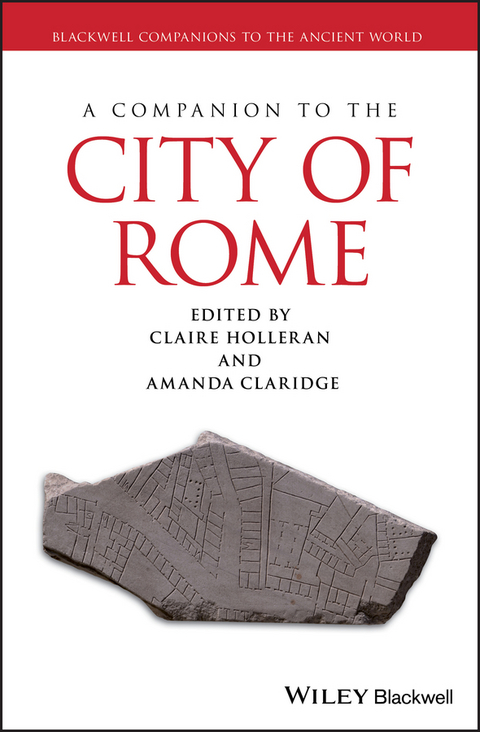
A Companion to the City of Rome (eBook)
John Wiley & Sons (Verlag)
978-1-118-30069-5 (ISBN)
A Companion to the City of Rome presents a series of original essays from top experts that offer an authoritative and up-to-date overview of current research on the development of the city of Rome from its origins until circa AD 600.
- Offers a unique interdisciplinary, closely focused thematic approach and wide chronological scope making it an indispensible reference work on ancient Rome
- Includes several new developments on areas of research that are available in English for the first time
- Newly commissioned essays written by experts in a variety of related fields
- Original and up-to-date readings pertaining to the city of Rome on a wide variety of topics including Rome's urban landscape, population, economy, civic life, and key events
CLAIRE HOLLERAN is Senior Lecturer in Classics and Ancient History at the University of Exeter. She is co-editor of Demography and the Graeco-Roman World (with April Pudsey, 2011) and author of Shopping in Ancient Rome: the Retail Trade in the Late Republic and the Principate (2012).
AMANDA CLARIDGE is Emeritus Professor of Roman Archaeology at Royal Holloway University of London. Her recent publications include Rome: An Oxford Archaeological Guide (2012) and Paper Museum of Cassiano dal Pozzo: Classical manuscript illustrations (with Ingo Herklotz, 2012).
A Companion to the City of Rome presents a series of original essays from top experts that offer an authoritative and up-to-date overview of current research on the development of the city of Rome from its origins until circa AD 600. Offers a unique interdisciplinary, closely focused thematic approach and wide chronological scope making it an indispensible reference work on ancient Rome Includes several new developments on areas of research that are available in English for the first time Newly commissioned essays written by experts in a variety of related fields Original and up-to-date readings pertaining to the city of Rome on a wide variety of topics including Rome s urban landscape, population, economy, civic life, and key events
CLAIRE HOLLERAN is Senior Lecturer in Classics and Ancient History at the University of Exeter. She is co-editor of Demography and the Graeco-Roman World (with April Pudsey, 2011) and author of Shopping in Ancient Rome: the Retail Trade in the Late Republic and the Principate (2012). AMANDA CLARIDGE is Emeritus Professor of Roman Archaeology at Royal Holloway University of London. Her recent publications include Rome: An Oxford Archaeological Guide (2012) and Paper Museum of Cassiano dal Pozzo: Classical manuscript illustrations (with Ingo Herklotz, 2012).
Title Page 7
Copyright Page 8
Contents 9
Preface 21
Abbreviations 23
List of Illustrations 25
List of Tables 29
List of Maps 31
Part I Introductory 39
Chapter One 41
i Archaeological Sources 41
Guide to Further Reading 44
Digital Resources 44
References 44
ii Written Sources 47
Guide to Further Reading 50
References 50
iii The Marble Plans 51
Guide to Further Reading 55
References 55
iv The Epigraphic Record 58
Guide to Further Reading 60
References 61
v Coins 62
Guide to Further Reading 65
References 65
Chapter Two Historical Overview: From City-state to Christian Center 67
Beginnings 67
The Consequences of Growth 71
Towards Monarchy 77
Imperial Rome 78
Decline and Fall? 86
Guide to Further Reading 87
References 88
Part II The Urban Landscape 91
Chapter Three A City of Stories 93
The Trader: Eumakhos of Mile?tos, c. 525 bce 93
The Lawgiver: Hermodoros of Ephesos, c. 450 bce 96
The Ambassador: Kineas of Thessalia, 280 bce 98
The Rhetorician: Diophanes of Mityle?ne?, 133 bce 101
The Astrologer: Thrasyllos of Alexandreia, 2 ce 103
Suggestions for Further Reading 105
References 106
Chapter Four Defining the City: The Boundaries of Rome 109
Introduction 109
Defending and Defining: The City Walls 110
Religion and politics: The pomerium 113
A Practical Perspective: Law, Taxation and Administration 117
Man and nature: The Tiber 119
The Power of the Past: Boundary Traditions 121
Conclusion 123
Guide to Further Reading 124
References 125
Chapter Five The Development of the City: An Archaeological Perspective 131
i) From its Origins to the Second Century bce 131
ii) From 100 bce to 600 ce 153
References 171
Part III The People 175
Chapter Six The Population 177
Counting the inhabitants of Rome: The methodological problem 178
The Dynamics of the Population: Immigration and Natural Reproduction 183
Causes of decline 187
Guide to Further Reading 188
References 189
Chapter Seven Social Structure and the plebs Romana 193
Introduction 193
Legal Status 195
Immigrants and Natives 197
Wealth and Poverty 200
Social Relations 202
Public Opinion 204
Guide to Further Reading 206
References 207
Chapter Eight The Army in Imperial Rome 211
Introduction 211
The Praetorian Guard 213
Horseguards 216
Soldiers and the metropolis 218
Other soldiers in and Around Rome 221
The Metropolitan Military Community 222
Guide to Further Reading 226
Endnotes 227
References 227
Part IV The Urban Infrastructure 235
Chapter Nine Rivers, Roads, and Ports 237
Rome’s Natural Setting 237
Republican Rome 239
Imperial Rome 243
Guide to Further Reading 252
References 252
Chapter Ten Feeding Rome: The Grain Supply 257
Population Growth and “Grain Psychosis” 258
Rome and Overseas Grain 258
The Granaries at Rome 263
What does “Rome” mean? 264
Fiscal Grain or not? The Role of the Private Market 264
Ships and “Grain of the Sea” 267
The “Best Grain” 268
Guide to Further Reading 270
Endnotes 270
References 275
Chapter Eleven Water Supply and Sewers 285
How Aqueducts Worked 285
Frontinus on Rome’s Water System 288
Water disposal: Sewers in Ancient Rome 298
Guide to Further Reading 299
References 299
Chapter Twelve Streets and Street Life 301
Different Streets 301
Streets and Infrastructure 302
Planning and the Street System 304
Names and Addresses 306
Administration and Maintenance 309
People on the Streets 310
The Street as Destination 311
Example of a Street Club: Vici and Compitalia2 312
Conclusion 314
Guide to Further Reading 315
Endnote 315
References 315
Chapter Thirteen Urban Administration in Rome 317
Introduction 317
The Republican system in outline 318
Caesar and Augustus 319
The Imperial system 322
Fires 322
Law and order 324
The Aediles and the day?to?day administration of the city 328
Conclusion 329
Guide to Further Reading 330
References 331
Part V Living in Rome 335
Chapter Fourteen 337
i The Development and Role of the Roman Aristocratic Domus 337
Introduction 337
The Roman Aristocratic domus in Ancient Text 338
The Roman Aristocratic domus in Archaeology 342
The Structure and Function of the domus: Interpreting “Public” and “Private” Space 349
Guide to Further Reading 351
References 351
ii Insulae 355
Guide to Further Reading 360
References 360
Chapter Fifteen The Imperial Thermae 363
The nature of the evidence 363
Origins and Architectural Development 366
The Large Imperial Thermae 369
The thermae and the city 374
Guide to Further Reading 377
Endnote 378
References 378
Chapter Sixteen Libraries and Literary Culture in Rome 381
Roman Literary Life Under the Republic 382
Roman Literary Life Under the Principate 383
Literacy, Books, and Cultural Competence 384
Roman Libraries 385
“Public” libraries? 387
Later Libraries at Rome 388
Form and use of Libraries 389
Catalogues, Staff, Languages, access, and Bath?House Libraries 391
Libraries and literary life in Rome 393
Appendix: Sources for Rome’s Public Libraries 395
Guide to Further Reading 397
References 397
Part VI Dying in Rome 401
Chapter Seventeen Hazards of Life in Ancient Rome: Floods, Fires, Famines, Footpads, Filth, and Fevers 403
Introduction 403
Floods 403
Fires 407
Famines 409
Footpads 410
Filth 411
Fevers 414
Conclusion: The Fatal Metropolis? 416
Guide to Further Reading 417
References 417
Chapter Eighteen Funerary Practice in the City of Rome 421
The Perfect Death 421
From the Deathbed to the Grave 423
Social Divisions 427
Mourners and Undertakers 429
Rituals of Transition 431
Guide to Further Reading 434
Endnotes 434
References 435
Chapter Nineteen Roman Cemeteries and Tombs 441
Guide to Further Reading 457
References 458
Part VII The Urban Economy 463
Chapter Twenty The Labor Market 465
Introduction 465
Sources and methods 466
Servile and Free Labor 468
Skilled and Unskilled Labor 470
Male and Female Labor 472
Dependence and independence 474
Conclusion: An Open Labor Market? 477
Guide to Further Reading 478
Endnote 478
References 478
Chapter Twenty-One Production in Rome 481
Manufacturing 482
Economic Hierarchies within Rome 488
Financial Services 491
Conclusion 492
Guide to Further Reading 493
References 493
Chapter Twenty-Two The Retail Trade 497
The Topography of Trade 497
Tabernae 500
Markets 502
Streets and Other Public Spaces 505
Auctions 506
Conclusions 507
Guide to Further Reading 508
References 508
Chapter Twenty-Three The Construction Industry 511
The Development of a Construction Industry in Rome 511
Contractors and builders 514
The Organization of Construction 518
The Supply of Building Materials 521
Guide to Further Reading 524
References 524
Part VIII Civic Life 529
Chapter Twenty-Four Temples, Colleges, and Priesthoods 531
Introduction 531
Infrastructure? 535
Associations 538
Priestly Colleges 542
Conclusion 546
Guide to Further Reading 546
References 546
Chapter Twenty-Five Entertainment 549
Entertainments in the Early and Middle Republic 552
Entertainments in the Late Republic and Early Empire 557
The High Empire and Beyond 559
Guide to Further Reading 562
Endnote 563
References 563
Chapter Twenty-Six Law and Lawcourts 565
Rome’s Legal System 566
The Courts within Rome’s Physical Landscape 568
Guide to Further Reading 574
Endnote 575
References 575
Chapter Twenty-Seven The Roman Church 579
Introduction 579
Beginnings 580
The Ways of God 582
Material Culture 583
Constantine 587
Conclusions 590
Guide to Further Reading 591
Endnotes 591
References 592
Chapter Twenty-Eight Political Space 597
The Republican Forum Romanum 597
The Republican Campus Martius 604
Theatrum Pompei 605
Julius Caesar’s Building Project 607
Augustus and Imperial Power 608
Alternative Political Spaces: The Domus Aurea and Its Aftermath 611
Diocletian, Tetrarchy, and the Forum Romanum 613
Guide to Further Reading 615
References 616
Part IX The Roman Triumph 619
Chapter Twenty-Nine The Triumphal Procession 621
Introduction 621
The route of the triumphal Procession 623
The Triumphal Procession: Cities, Nations, Rivers on display 625
Captives on display 628
Spoils of war 629
Triumphing general and chariot 631
Spectators at the triumph 631
Conclusion 632
Guide to Further Reading 633
References 634
Chapter Thirty Urban Commemoration: The Pompa Triumphalis in Rome 637
The City Shapes the performance 643
The Performance Shapes the city 649
Guide to Further Reading 653
Endnotes 654
References 654
Part X Receptions of Rome 657
Chapter Thirty-One Written Rome: Ancient Literary Responses 659
Entering a city of texts: the Via Flaminia 661
Towards Pompey’s Entertainment Complex 664
The Palatine gaze 667
The Forum point-of-view 670
Last exit to… 671
Conclusion 673
Guide to Further Reading 673
References 674
Chapter Thirty-Two The Renaissance: The “Discovery” of Ancient Rome 681
Introduction: The Renaissance 681
Rome: The Exquisite Corpse 682
Humanism, politics, and the recovery of Classical literature 689
Ruins and Renovatio 690
The discovery of Roman art and imagery 693
The reconstruction (and replication) of Ancient Rome 699
Guide to Further Reading 701
Chapter Thirty-Three Napoleonic Rome and “Roma Capitale” 711
Guide to Further Reading 718
References 718
Chapter Thirty-Four Mussolini and Rome 721
Guide to Further Reading 734
References 734
Chapter Thirty-Five The City of Ancient Rome on Screen 737
Early cinema 738
Cinema’s Golden Age 741
A New Epic 748
Television 748
Guide to Further Reading 750
References 751
Index 753
Topographical Index 769
Source Index 777
EULA 797
| Erscheint lt. Verlag | 10.7.2018 |
|---|---|
| Reihe/Serie | Blackwell Companions to the Ancient World | Blackwell Companions to the Ancient World |
| Sprache | englisch |
| Themenwelt | Literatur ► Klassiker / Moderne Klassiker |
| Geisteswissenschaften ► Geschichte ► Allgemeines / Lexika | |
| Geschichte ► Allgemeine Geschichte ► Vor- und Frühgeschichte | |
| Geisteswissenschaften ► Geschichte ► Regional- / Ländergeschichte | |
| Geisteswissenschaften ► Sprach- / Literaturwissenschaft ► Anglistik / Amerikanistik | |
| Geisteswissenschaften ► Sprach- / Literaturwissenschaft ► Literaturwissenschaft | |
| Schlagworte | Classical Studies • Humanistische Studien • <p>Roman, ancient Rome, Romulus and Remus, Tiber, Roman history, Roman demography, ancient population, urban history, ancient urban, ancient cities, ancient city, Roman economy</p> • Rom |
| ISBN-10 | 1-118-30069-6 / 1118300696 |
| ISBN-13 | 978-1-118-30069-5 / 9781118300695 |
| Informationen gemäß Produktsicherheitsverordnung (GPSR) | |
| Haben Sie eine Frage zum Produkt? |
 PDF (Adobe DRM)
Kopierschutz: Adobe-DRM
Adobe-DRM ist ein Kopierschutz, der das eBook vor Mißbrauch schützen soll. Dabei wird das eBook bereits beim Download auf Ihre persönliche Adobe-ID autorisiert. Lesen können Sie das eBook dann nur auf den Geräten, welche ebenfalls auf Ihre Adobe-ID registriert sind.
Details zum Adobe-DRM
Dateiformat: PDF (Portable Document Format)
Mit einem festen Seitenlayout eignet sich die PDF besonders für Fachbücher mit Spalten, Tabellen und Abbildungen. Eine PDF kann auf fast allen Geräten angezeigt werden, ist aber für kleine Displays (Smartphone, eReader) nur eingeschränkt geeignet.
Systemvoraussetzungen:
PC/Mac: Mit einem PC oder Mac können Sie dieses eBook lesen. Sie benötigen eine
eReader: Dieses eBook kann mit (fast) allen eBook-Readern gelesen werden. Mit dem amazon-Kindle ist es aber nicht kompatibel.
Smartphone/Tablet: Egal ob Apple oder Android, dieses eBook können Sie lesen. Sie benötigen eine
Geräteliste und zusätzliche Hinweise
Buying eBooks from abroad
For tax law reasons we can sell eBooks just within Germany and Switzerland. Regrettably we cannot fulfill eBook-orders from other countries.
aus dem Bereich