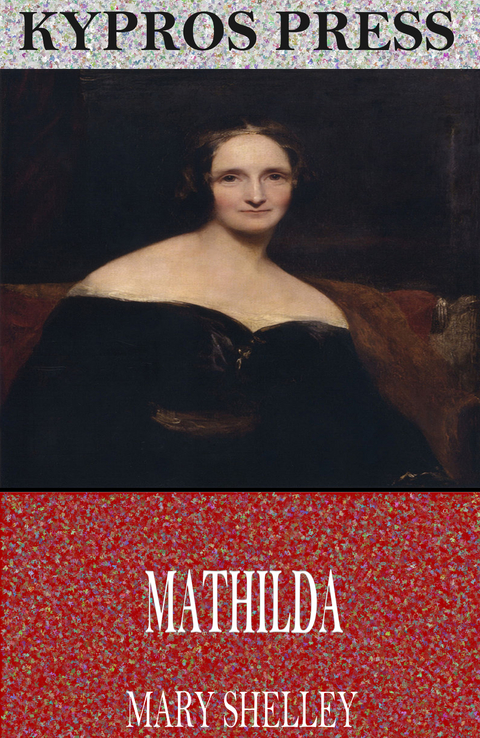
Mathilda (eBook)
155 Seiten
Charles River Editors (Verlag)
978-1-5312-7670-6 (ISBN)
Mary Shelley was an English writer best known for the classic gothic novel Frankenstein which has been adapted into film many times. This edition of Mathilda includes a table of contents.
CHAPTER III
It was on my sixteenth birthday that my aunt received a letter from my father. I cannot describe the tumult of emotions that arose within me as I read it. It was dated from London; he had returned![15] I could only relieve my transports by tears, tears of unmingled joy. He had returned, and he wrote to know whether my aunt would come to London or whether he should visit her in Scotland. How delicious to me were the words of his letter that concerned me: “I cannot tell you,” it said, “how ardently I desire to see my Mathilda. I look on her as the creature who will form the happiness of my future life: she is all that exists on earth that interests me. I can hardly prevent myself from hastening immediately to you but I am necessarily detained a week and I write because if you come here I may see you somewhat sooner.” I read these words with devouring eyes; I kissed them, wept over them and exclaimed, “He will love me!"—
My aunt would not undertake so long a journey, and in a fortnight we had another letter from my father, it was dated Edinburgh: he wrote that he should be with us in three days. “As he approached his desire of seeing me,” he said, “became more and more ardent, and he felt that the moment when he should first clasp me in his arms would be the happiest of his life.”
How irksome were these three days to me! All sleep and appetite fled from me; I could only read and re-read his letter, and in the solitude of the woods imagine the moment of our meeting. On the eve of the third day I retired early to my room; I could not sleep but paced all night about my chamber and, as you may in Scotland at midsummer, watched the crimson track of the sun as it almost skirted the northern horizon. At day break I hastened to the woods; the hours past on while I indulged in wild dreams that gave wings to the slothful steps of time, and beguiled my eager impatience. My father was expected at noon but when I wished to return to me[e]t him I found that I had lost my way: it seemed that in every attempt to find it I only became more involved in the intracacies of the woods, and the trees hid all trace by which I might be guided.[16] I grew impatient, I wept; [sic] and wrung my hands but still I could not discover my path.
It was past two o’clock when by a sudden turn I found myself close to the lake near a cove where a little skiff was moored—It was not far from our house and I saw my father and aunt walking on the lawn. I jumped into the boat, and well accustomed to such feats, I pushed it from shore, and exerted all my strength to row swiftly across. As I came, dressed in white, covered only by my tartan rachan, my hair streaming on my shoulders, and shooting across with greater speed that it could be supposed I could give to my boat, my father has often told me that I looked more like a spirit than a human maid. I approached the shore, my father held the boat, I leapt lightly out, and in a moment was in his arms.
And now I began to live. All around me was changed from a dull uniformity to the brightest scene of joy and delight. The happiness I enjoyed in the company of my father far exceeded my sanguine expectations. We were for ever together; and the subjects of our conversations were inexhaustible. He had passed the sixteen years of absence among nations nearly unknown to Europe; he had wandered through Persia, Arabia and the north of India and had penetrated among the habitations of the natives with a freedom permitted to few Europeans. His relations of their manners, his anecdotes and descriptions of scenery whiled away delicious hours, when we were tired of talking of our own plans of future life.
The voice of affection was so new to me that I hung with delight upon his words when he told me what he had felt concerning me during these long years of apparent forgetfulness. “At first"—said he, “I could not bear to think of my poor little girl; but afterwards as grief wore off and hope again revisited me I could only turn to her, and amidst cities and desarts her little fairy form, such as I imagined it, for ever flitted before me. The northern breeze as it refreshed me was sweeter and more balmy for it seemed to carry some of your spirit along with it. I often thought that I would instantly return and take you along with me to some fertile island where we should live at peace for ever. As I returned my fervent hopes were dashed by so many fears; my impatience became in the highest degree painful. I dared not think that the sun should shine and the moon rise not on your living form but on your grave. But, no, it is not so; I have my Mathilda, my consolation, and my hope."—
My father was very little changed from what he described himself to be before his misfortunes. It is intercourse with civilized society; it is the disappointment of cherished hopes, the falsehood of friends, or the perpetual clash of mean passions that changes the heart and damps the ardour of youthful feelings; lonly wanderings in a wild country among people of simple or savage manners may inure the body but will not tame the soul, or extinguish the ardour and freshness of feeling incident to youth. The burning sun of India, and the freedom from all restraint had rather encreased the energy of his character: before he bowed under, now he was impatient of any censure except that of his own mind. He had seen so many customs and witnessed so great a variety of moral creeds that he had been obliged to form an independant one for himself which had no relation to the peculiar notions of any one country: his early prejudices of course influenced his judgement in the formation of his principles, and some raw colledge ideas were strangely mingled with the deepest deductions of his penetrating mind.
The vacuity his heart endured of any deep interest in life during his long absence from his native country had had a singular effect upon his ideas. There was a curious feeling of unreality attached by him to his foreign life in comparison with the years of his youth. All the time he had passed out of England was as a dream, and all the interest of his soul[,] all his affections belonged to events which had happened and persons who had existed sixteen years before. It was strange when you heard him talk to see how he passed over this lapse of time as a night of visions; while the remembrances of his youth standing seperate as they did from his after life had lost none of their vigour. He talked of my Mother as if she had lived but a few weeks before; not that he expressed poignant grief, but his discription of her person, and his relation of all anecdotes connected with her was thus fervent and vivid.
In all this there was a strangeness that attracted and enchanted me. He was, as it were, now awakened from his long, visionary sleep, and he felt some what like one of the seven sleepers, or like Nourjahad,[17] in that sweet imitation of an eastern tale: Diana was gone; his friends were changed or dead, and now on his awakening I was all that he had to love on earth.
How dear to me were the waters, and mountains, and woods of Loch Lomond now that I had so beloved a companion for my rambles. I visited with my father every delightful spot, either on the islands, or by the side of the tree-sheltered waterfalls; every shady path, or dingle entangled with underwood and fern. My ideas were enlarged by his conversation. I felt as if I were recreated and had about me all the freshness and life of a new being: I was, as it were, transported since his arrival from a narrow spot of earth into a universe boundless to the imagination and the understanding. My life had been before as a pleasing country rill, never destined to leave its native fields, but when its task was fulfilled quietly to be absorbed, and leave no trace. Now it seemed to me to be as a various river flowing through a fertile and lovely lanscape, ever changing and ever beautiful. Alas! I knew not the desart it was about to reach; the rocks that would tear its waters, and the hideous scene that would be reflected in a more distorted manner in its waves. Life was then brilliant; I began to learn to hope and what brings a more bitter despair to the heart than hope destroyed?
Is it not strange[18] that grief should quickly follow so divine a happiness? I drank of an enchanted cup but gall was at the bottom of its long drawn sweetness. My heart was full of deep affection, but it was calm from its very depth and fulness. I had no idea that misery could arise from love, and this lesson that all at last must learn was taught me in a manner few are obliged to receive it. I lament now, I must ever lament, those few short months of Paradisaical bliss; I disobeyed no command, I ate no apple, and yet I was ruthlessly driven from it. Alas! my companion did, and I was precipitated in his fall.[19] But I wander from my relation—let woe come at its appointed time; I may at this stage of my story still talk of happiness.
Three months passed away in this delightful intercourse, when my aunt fell ill. I passed a whole month in her chamber nursing her, but her disease was mortal and she died, leaving me for some time inconsolable, Death is so dreadful to the living;[20] the chains of habit are so strong even when affection does not link them that the heart must be agonized when they break. But my father was beside me to console me and to drive away bitter memories by bright hopes: methought that it was sweet to grieve that he might dry my tears.
Then again he distracted my thoughts from my sorrow by comparing it with his despair when he lost my mother. Even at that time...
| Erscheint lt. Verlag | 22.3.2018 |
|---|---|
| Sprache | englisch |
| Themenwelt | Literatur ► Anthologien |
| Literatur ► Klassiker / Moderne Klassiker | |
| Literatur ► Romane / Erzählungen | |
| Schlagworte | creepy • English • Frankenstein • Gothic • Historical • Mathilda • Percy Bysshe Shelley • scary |
| ISBN-10 | 1-5312-7670-9 / 1531276709 |
| ISBN-13 | 978-1-5312-7670-6 / 9781531276706 |
| Informationen gemäß Produktsicherheitsverordnung (GPSR) | |
| Haben Sie eine Frage zum Produkt? |
 EPUB (Adobe DRM)
Größe: 997 KB
Kopierschutz: Adobe-DRM
Adobe-DRM ist ein Kopierschutz, der das eBook vor Mißbrauch schützen soll. Dabei wird das eBook bereits beim Download auf Ihre persönliche Adobe-ID autorisiert. Lesen können Sie das eBook dann nur auf den Geräten, welche ebenfalls auf Ihre Adobe-ID registriert sind.
Details zum Adobe-DRM
Dateiformat: EPUB (Electronic Publication)
EPUB ist ein offener Standard für eBooks und eignet sich besonders zur Darstellung von Belletristik und Sachbüchern. Der Fließtext wird dynamisch an die Display- und Schriftgröße angepasst. Auch für mobile Lesegeräte ist EPUB daher gut geeignet.
Systemvoraussetzungen:
PC/Mac: Mit einem PC oder Mac können Sie dieses eBook lesen. Sie benötigen eine
eReader: Dieses eBook kann mit (fast) allen eBook-Readern gelesen werden. Mit dem amazon-Kindle ist es aber nicht kompatibel.
Smartphone/Tablet: Egal ob Apple oder Android, dieses eBook können Sie lesen. Sie benötigen eine
Geräteliste und zusätzliche Hinweise
Buying eBooks from abroad
For tax law reasons we can sell eBooks just within Germany and Switzerland. Regrettably we cannot fulfill eBook-orders from other countries.
EPUB (Ohne DRM)Digital Rights Management: ohne DRM
Dieses eBook enthält kein DRM oder Kopierschutz. Eine Weitergabe an Dritte ist jedoch rechtlich nicht zulässig, weil Sie beim Kauf nur die Rechte an der persönlichen Nutzung erwerben.
Dateiformat: EPUB (Electronic Publication)
EPUB ist ein offener Standard für eBooks und eignet sich besonders zur Darstellung von Belletristik und Sachbüchern. Der Fließtext wird dynamisch an die Display- und Schriftgröße angepasst. Auch für mobile Lesegeräte ist EPUB daher gut geeignet.
Systemvoraussetzungen:
PC/Mac: Mit einem PC oder Mac können Sie dieses eBook lesen. Sie benötigen dafür die kostenlose Software Adobe Digital Editions.
eReader: Dieses eBook kann mit (fast) allen eBook-Readern gelesen werden. Mit dem amazon-Kindle ist es aber nicht kompatibel.
Smartphone/Tablet: Egal ob Apple oder Android, dieses eBook können Sie lesen. Sie benötigen dafür eine kostenlose App.
Geräteliste und zusätzliche Hinweise
Buying eBooks from abroad
For tax law reasons we can sell eBooks just within Germany and Switzerland. Regrettably we cannot fulfill eBook-orders from other countries.
aus dem Bereich