Touchstone (eBook)
107 Seiten
Charles River Editors (Verlag)
978-1-5183-0184-1 (ISBN)
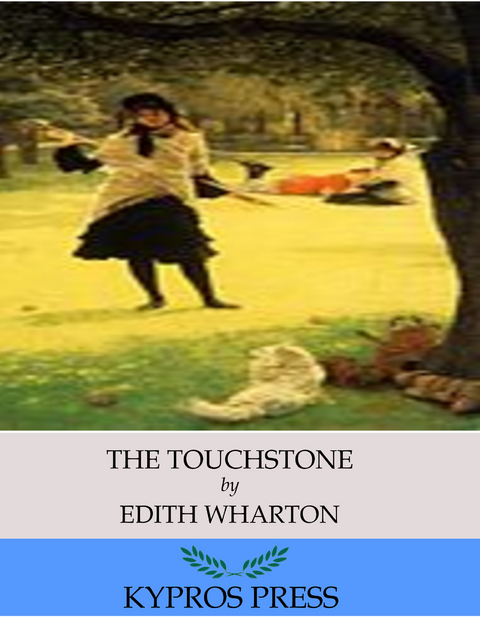
Edith Wharton was one of the most famous American authors of the early 20th century. Wharton's writings were known for their witty presentation on upper class society in America. This edition of The Touchstone includes a table of contents.
I
PROFESSOR JOSLIN, WHO, AS OUR readers are doubtless aware, is engaged in writing the life of Mrs. Aubyn, asks us to state that he will be greatly indebted to any of the famous novelist’s friends who will furnish him with information concerning the period previous to her coming to England. Mrs. Aubyn had so few intimate friends, and consequently so few regular correspondents, that letters will be of special value. Professor Joslin’s address is 10 Augusta Gardens, Kensington, and he begs us to say that he “will promptly return any documents entrusted to him.”
Glennard dropped the Spectator and sat looking into the fire. The club was filling up, but he still had to himself the small inner room, with its darkening outlook down the rain-streaked prospect of Fifth Avenue. It was all dull and dismal enough, yet a moment earlier his boredom had been perversely tinged by a sense of resentment at the thought that, as things were going, he might in time have to surrender even the despised privilege of boring himself within those particular four walls. It was not that he cared much for the club, but that the remote contingency of having to give it up stood to him, just then, perhaps by very reason of its insignificance and remoteness, for the symbol of his increasing abnegations; of that perpetual paring-off that was gradually reducing existence to the naked business of keeping himself alive. It was the futility of his multiplied shifts and privations that made them seem unworthy of a high attitude; the sense that, however rapidly he eliminated the superfluous, his cleared horizon was likely to offer no nearer view of the one prospect toward which he strained. To give up things in order to marry the woman one loves is easier than to give them up without being brought appreciably nearer to such a conclusion.
Through the open door he saw young Hollingsworth rise with a yawn from the ineffectual solace of a brandy-and-soda and transport his purposeless person to the window. Glennard measured his course with a contemptuous eye. It was so like Hollingsworth to get up and look out of the window just as it was growing too dark to see anything! There was a man rich enough to do what he pleased—had he been capable of being pleased—yet barred from all conceivable achievement by his own impervious dulness; while, a few feet off, Glennard, who wanted only enough to keep a decent coat on his back and a roof over the head of the woman he loved, Glennard, who had sweated, toiled, denied himself for the scant measure of opportunity that his zeal would have converted into a kingdom—sat wretchedly calculating that, even when he had resigned from the club, and knocked off his cigars, and given up his Sundays out of town, he would still be no nearer attainment.
The Spectator had slipped to his feet and as he picked it up his eye fell again on the paragraph addressed to the friends of Mrs. Aubyn. He had read it for the first time with a scarcely perceptible quickening of attention: her name had so long been public property that his eye passed it unseeingly, as the crowd in the street hurries without a glance by some familiar monument.
“Information concerning the period previous to her coming to England....” The words were an evocation. He saw her again as she had looked at their first meeting, the poor woman of genius with her long pale face and short-sighted eyes, softened a little by the grace of youth and inexperience, but so incapable even then of any hold upon the pulses. When she spoke, indeed, she was wonderful, more wonderful, perhaps, than when later, to Glennard’s fancy at least, the conscious of memorable things uttered seemed to take from even her most intimate speech the perfect bloom of privacy. It was in those earliest days, if ever, that he had come near loving her; though even then his sentiment had lived only in the intervals of its expression. Later, when to be loved by her had been a state to touch any man’s imagination, the physical reluctance had, inexplicably, so overborne the intellectual attraction, that the last years had been, to both of them, an agony of conflicting impulses. Even now, if, in turning over old papers, his hand lit on her letters, the touch filled him with inarticulate misery....
“She had so few intimate friends... that letters will be of special value.” So few intimate friends! For years she had had but one; one who in the last years had requited her wonderful pages, her tragic outpourings of love, humility, and pardon, with the scant phrases by which a man evades the vulgarest of sentimental importunities. He had been a brute in spite of himself, and sometimes, now that the remembrance of her face had faded, and only her voice and words remained with him, he chafed at his own inadequacy, his stupid inability to rise to the height of her passion. His egoism was not of a kind to mirror its complacency in the adventure. To have been loved by the most brilliant woman of her day, and to have been incapable of loving her, seemed to him, in looking back, the most derisive evidence of his limitations; and his remorseful tenderness for her memory was complicated with a sense of irritation against her for having given him once for all the measure of his emotional capacity. It was not often, however, that he thus probed the past. The public, in taking possession of Mrs. Aubyn, had eased his shoulders of their burden. There was something fatuous in an attitude of sentimental apology toward a memory already classic: to reproach one’s self for not having loved Margaret Aubyn was a good deal like being disturbed by an inability to admire the Venus of Milo. From her cold niche of fame she looked down ironically enough on his self-flagellations.... It was only when he came on something that belonged to her that he felt a sudden renewal of the old feeling, the strange dual impulse that drew him to her voice but drove him from her hand, so that even now, at sight of anything she had touched, his heart contracted painfully. It happened seldom nowadays. Her little presents, one by one, had disappeared from his rooms, and her letters, kept from some unacknowledged puerile vanity in the possession of such treasures, seldom came beneath his hand....
“Her letters will be of special value—” Her letters! Why, he must have hundreds of them—enough to fill a volume. Sometimes it used to seem to him that they came with every post—he used to avoid looking in his letter-box when he came home to his rooms—but her writing seemed to spring out at him as he put his key in the door—.
He stood up and strolled into the other room. Hollingsworth, lounging away from the window, had joined himself to a languidly convivial group of men to whom, in phrases as halting as though they struggled to define an ultimate idea, he was expounding the cursed nuisance of living in a hole with such a damned climate that one had to get out of it by February, with the contingent difficulty of there being no place to take one’s yacht to in winter but that other played-out hole, the Riviera. From the outskirts of this group Glennard wandered to another, where a voice as different as possible from Hollingsworth’s colorless organ dominated another circle of languid listeners.
“Come and hear Dinslow talk about his patent: admission free,” one of the men sang out in a tone of mock resignation.
Dinslow turned to Glennard the confident pugnacity of his smile. “Give it another six months and it’ll be talking about itself,” he declared. “It’s pretty nearly articulate now.”
“Can it say papa?” someone else inquired.
Dinslow’s smile broadened. “You’ll be deuced glad to say papa to IT a year from now,” he retorted. “It’ll be able to support even you in affluence. Look here, now, just let me explain to you—”
Glennard moved away impatiently. The men at the club—all but those who were “in it"—were proverbially “tired” of Dinslow’s patent, and none more so than Glennard, whose knowledge of its merits made it loom large in the depressing catalogue of lost opportunities. The relations between the two men had always been friendly, and Dinslow’s urgent offers to “take him in on the ground floor” had of late intensified Glennard’s sense of his own inability to meet good luck half way. Some of the men who had paused to listen were already in evening clothes, others on their way home to dress; and Glennard, with an accustomed twinge of humiliation, said to himself that if he lingered among them it was in the miserable hope that one of the number might ask him to dine. Miss Trent had told him that she was to go to the opera that evening with her rich aunt; and if he should have the luck to pick up a dinner-invitation he might join her there without extra outlay.
He moved about the room, lingering here and there in a tentative affectation of interest; but though the men greeted him pleasantly no one asked him to dine. Doubtless they were all engaged, these men who could afford to pay for their dinners, who did not have to hunt for invitations as a beggar rummages for a crust in an ash-barrel! But no—as Hollingsworth left the lessening circle about the table an admiring youth called out—"Holly, stop and dine!”
Hollingsworth turned on him the crude countenance that looked like the wrong side of a more finished face. “Sorry I can’t. I’m in for a beastly...
| Erscheint lt. Verlag | 22.3.2018 |
|---|---|
| Sprache | englisch |
| Themenwelt | Literatur ► Anthologien |
| Literatur ► Klassiker / Moderne Klassiker | |
| Literatur ► Romane / Erzählungen | |
| Schlagworte | age of innocence • American • Classic • Contemporary Women • cultural heritage • Ethan Frome • Upper Class |
| ISBN-10 | 1-5183-0184-3 / 1518301843 |
| ISBN-13 | 978-1-5183-0184-1 / 9781518301841 |
| Informationen gemäß Produktsicherheitsverordnung (GPSR) | |
| Haben Sie eine Frage zum Produkt? |
 EPUB (Adobe DRM)
Größe: 585 KB
Kopierschutz: Adobe-DRM
Adobe-DRM ist ein Kopierschutz, der das eBook vor Mißbrauch schützen soll. Dabei wird das eBook bereits beim Download auf Ihre persönliche Adobe-ID autorisiert. Lesen können Sie das eBook dann nur auf den Geräten, welche ebenfalls auf Ihre Adobe-ID registriert sind.
Details zum Adobe-DRM
Dateiformat: EPUB (Electronic Publication)
EPUB ist ein offener Standard für eBooks und eignet sich besonders zur Darstellung von Belletristik und Sachbüchern. Der Fließtext wird dynamisch an die Display- und Schriftgröße angepasst. Auch für mobile Lesegeräte ist EPUB daher gut geeignet.
Systemvoraussetzungen:
PC/Mac: Mit einem PC oder Mac können Sie dieses eBook lesen. Sie benötigen eine
eReader: Dieses eBook kann mit (fast) allen eBook-Readern gelesen werden. Mit dem amazon-Kindle ist es aber nicht kompatibel.
Smartphone/Tablet: Egal ob Apple oder Android, dieses eBook können Sie lesen. Sie benötigen eine
Geräteliste und zusätzliche Hinweise
Buying eBooks from abroad
For tax law reasons we can sell eBooks just within Germany and Switzerland. Regrettably we cannot fulfill eBook-orders from other countries.
EPUB (Ohne DRM)Digital Rights Management: ohne DRM
Dieses eBook enthält kein DRM oder Kopierschutz. Eine Weitergabe an Dritte ist jedoch rechtlich nicht zulässig, weil Sie beim Kauf nur die Rechte an der persönlichen Nutzung erwerben.
Dateiformat: EPUB (Electronic Publication)
EPUB ist ein offener Standard für eBooks und eignet sich besonders zur Darstellung von Belletristik und Sachbüchern. Der Fließtext wird dynamisch an die Display- und Schriftgröße angepasst. Auch für mobile Lesegeräte ist EPUB daher gut geeignet.
Systemvoraussetzungen:
PC/Mac: Mit einem PC oder Mac können Sie dieses eBook lesen. Sie benötigen dafür die kostenlose Software Adobe Digital Editions.
eReader: Dieses eBook kann mit (fast) allen eBook-Readern gelesen werden. Mit dem amazon-Kindle ist es aber nicht kompatibel.
Smartphone/Tablet: Egal ob Apple oder Android, dieses eBook können Sie lesen. Sie benötigen dafür eine kostenlose App.
Geräteliste und zusätzliche Hinweise
Buying eBooks from abroad
For tax law reasons we can sell eBooks just within Germany and Switzerland. Regrettably we cannot fulfill eBook-orders from other countries.
aus dem Bereich