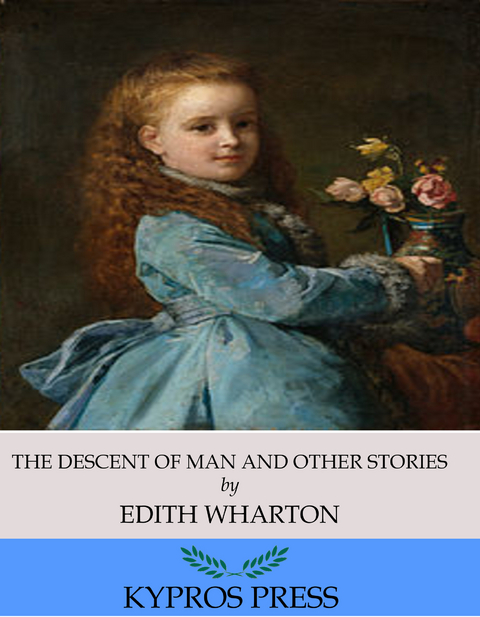
Descent of Man and Other Stories (eBook)
291 Seiten
Charles River Editors (Verlag)
978-1-5183-0181-0 (ISBN)
Edith Wharton was one of the most famous American authors of the early 20th century. Wharton's writings were known for their witty presentation on upper class society in America. This edition of The Descent of Man and Other Stories includes a table of contents.
THE DESCENT OF MAN
I
When Professor Linyard came back from his holiday in the Maine woods the air of rejuvenation he brought with him was due less to the influences of the climate than to the companionship he had enjoyed on his travels. To Mrs. Linyard’s observant eye he had appeared to set out alone; but an invisible traveller had in fact accompanied him, and if his heart beat high it was simply at the pitch of his adventure: for the Professor had eloped with an idea.
No one who has not tried the experiment can divine its exhilaration. Professor Linyard would not have changed places with any hero of romance pledged to a flesh-and-blood abduction. The most fascinating female is apt to be encumbered with luggage and scruples: to take up a good deal of room in the present and overlap inconveniently into the future; whereas an idea can accommodate itself to a single molecule of the brain or expand to the circumference of the horizon. The Professor’s companion had to the utmost this quality of adaptability. As the express train whirled him away from the somewhat inelastic circle of Mrs. Linyard’s affections, his idea seemed to be sitting opposite him, and their eyes met every moment or two in a glance of joyous complicity; yet when a friend of the family presently joined him and began to talk about college matters, the idea slipped out of sight in a flash, and the Professor would have had no difficulty in proving that he was alone.
But if, from the outset, he found his idea the most agreeable of fellow-travellers, it was only in the aromatic solitude of the woods that he tasted the full savour of his adventure. There, during the long cool August days, lying full length on the pine-needles and gazing up into the sky, he would meet the eyes of his companion bending over him like a nearer heaven. And what eyes they were!—clear yet unfathomable, bubbling with inexhaustible laughter, yet drawing their freshness and sparkle from the central depths of thought! To a man who for twenty years had faced an eye reflecting the obvious with perfect accuracy, these escapes into the inscrutable had always been peculiarly inviting; but hitherto the Professor’s mental infidelities had been restricted by an unbroken and relentless domesticity. Now, for the first time since his marriage, chance had given him six weeks to himself, and he was coming home with his lungs full of liberty.
It must not be inferred that the Professor’s domestic relations were defective: they were in fact so complete that it was almost impossible to get away from them. It is the happy husbands who are really in bondage; the little rift within the lute is often a passage to freedom. Marriage had given the Professor exactly what he had sought in it; a comfortable lining to life. The impossibility of rising to sentimental crises had made him scrupulously careful not to shirk the practical obligations of the bond. He took as it were a sociological view of his case, and modestly regarded himself as a brick in that foundation on which the state is supposed to rest. Perhaps if Mrs. Linyard had cared about entomology, or had taken sides in the war over the transmission of acquired characteristics, he might have had a less impersonal notion of marriage; but he was unconscious of any deficiency in their relation, and if consulted would probably have declared that he didn’t want any woman bothering with his beetles. His real life had always lain in the universe of thought, in that enchanted region which, to those who have lingered there, comes to have so much more colour and substance than the painted curtain hanging before it. The Professor’s particular veil of Maia was a narrow strip of homespun woven in a monotonous pattern; but he had only to lift it to step into an empire.
This unseen universe was thronged with the most seductive shapes: the Professor moved Sultan-like through a seraglio of ideas. But of all the lovely apparitions that wove their spells about him, none had ever worn quite so persuasive an aspect as this latest favourite. For the others were mostly rather grave companions, serious-minded and elevating enough to have passed muster in a Ladies’ Debating Club; but this new fancy of the Professor’s was simply one embodied laugh. It was, in other words, the smile of relaxation at the end of a long day’s toil: the flash of irony that the laborious mind projects, irresistibly, over labour conscientiously performed. The Professor had always been a hard worker. If he was an indulgent friend to his ideas, he was also a stern task-master to them. For, in addition to their other duties, they had to support his family: to pay the butcher and baker, and provide for Jack’s schooling and Millicent’s dresses. The Professor’s household was a modest one, yet it tasked his ideas to keep it up to his wife’s standard. Mrs. Linyard was not an exacting wife, and she took enough pride in her husband’s attainments to pay for her honours by turning Millicent’s dresses and darning Jack’s socks, and going to the College receptions year after year in the same black silk with shiny seams. It consoled her to see an occasional mention of Professor Linyard’s remarkable monograph on the Ethical Reactions of the Infusoria, or an allusion to his investigations into the Unconscious Cerebration of the Amoeba.
Still there were moments when the healthy indifference of Jack and Millicent reacted on the maternal sympathies; when Mrs. Linyard would have made her husband a railway-director, if by this transformation she might have increased her boy’s allowance and given her daughter a new hat, or a set of furs such as the other girls were wearing. Of such moments of rebellion the Professor himself was not wholly unconscious. He could not indeed understand why any one should want a new hat; and as to an allowance, he had had much less money at college than Jack, and had yet managed to buy a microscope and collect a few “specimens”; while Jack was free from such expensive tastes! But the Professor did not let his want of sympathy interfere with the discharge of his paternal obligations. He worked hard to keep the wants of his family gratified, and it was precisely in the endeavor to attain this end that he at length broke down and had to cease from work altogether.
To cease from work was not to cease from thought of it; and in the unwonted pause from effort the Professor found himself taking a general survey of the field he had travelled. At last it was possible to lift his nose from the loom, to step a moment in front of the tapestry he had been weaving. From this first inspection of the pattern so long wrought over from behind, it was natural to glance a little farther and seek its reflection in the public eye. It was not indeed of his special task that he thought in this connection. He was but one of the great army of weavers at work among the threads of that cosmic woof; and what he sought was the general impression their labour had produced.
When Professor Linyard first plied his microscope, the audience of the man of science had been composed of a few fellow-students, sympathetic or hostile as their habits of mind predetermined, but versed in the jargon of the profession and familiar with the point of departure. In the intervening quarter of a century, however, this little group had been swallowed up in a larger public. Every one now read scientific books and expressed an opinion on them. The ladies and the clergy had taken them up first; now they had passed to the school-room and the kindergarten. Daily life was regulated on scientific principles; the daily papers had their “Scientific Jottings”; nurses passed examinations in hygienic science, and babies were fed and dandled according to the new psychology.
The very fact that scientific investigation still had, to some minds, a flavour of heterodoxy, gave it a perennial interest. The mob had broken down the walls of tradition to batten in the orchard of forbidden knowledge. The inaccessible goddess whom the Professor had served in his youth now offered her charms in the market-place. And yet it was not the same goddess after all, but a pseudo-science masquerading in the garb of the real divinity. This false goddess had her ritual and her literature. She had her sacred books, written by false priests and sold by millions to the faithful. In the most successful of these works, ancient dogma and modern discovery were depicted in a close embrace under the lime-lights of a hazy transcendentalism; and the tableau never failed of its effect. Some of the books designed on this popular model had lately fallen into the Professor’s hands, and they filled him with mingled rage and hilarity. The rage soon died: he came to regard this mass of pseudo-literature as protecting the truth from desecration. But the hilarity remained, and flowed into the form of his idea. And the idea—the divine, incomparable idea—was simply that he should avenge his goddess by satirizing her false interpreters. He would write a skit on the “popular” scientific book; he would so heap platitude on platitude, fallacy on fallacy, false analogy on false analogy, so use his superior knowledge to abound in the sense of the ignorant, that even the gross crowd would join in the laugh against its augurs. And the laugh should be something more than the distension of mental muscles; it should be the trumpet-blast bringing down the walls of ignorance, or at least the little stone striking the giant between the eyes.
II
The Professor, on presenting his...
| Erscheint lt. Verlag | 22.3.2018 |
|---|---|
| Sprache | englisch |
| Themenwelt | Literatur ► Anthologien |
| Literatur ► Klassiker / Moderne Klassiker | |
| Literatur ► Romane / Erzählungen | |
| Schlagworte | age of innocence • American • Classic • Contemporary Women • cultural heritage • Ethan Frome • Upper Class |
| ISBN-10 | 1-5183-0181-9 / 1518301819 |
| ISBN-13 | 978-1-5183-0181-0 / 9781518301810 |
| Informationen gemäß Produktsicherheitsverordnung (GPSR) | |
| Haben Sie eine Frage zum Produkt? |
 EPUB (Adobe DRM)
Größe: 680 KB
Kopierschutz: Adobe-DRM
Adobe-DRM ist ein Kopierschutz, der das eBook vor Mißbrauch schützen soll. Dabei wird das eBook bereits beim Download auf Ihre persönliche Adobe-ID autorisiert. Lesen können Sie das eBook dann nur auf den Geräten, welche ebenfalls auf Ihre Adobe-ID registriert sind.
Details zum Adobe-DRM
Dateiformat: EPUB (Electronic Publication)
EPUB ist ein offener Standard für eBooks und eignet sich besonders zur Darstellung von Belletristik und Sachbüchern. Der Fließtext wird dynamisch an die Display- und Schriftgröße angepasst. Auch für mobile Lesegeräte ist EPUB daher gut geeignet.
Systemvoraussetzungen:
PC/Mac: Mit einem PC oder Mac können Sie dieses eBook lesen. Sie benötigen eine
eReader: Dieses eBook kann mit (fast) allen eBook-Readern gelesen werden. Mit dem amazon-Kindle ist es aber nicht kompatibel.
Smartphone/Tablet: Egal ob Apple oder Android, dieses eBook können Sie lesen. Sie benötigen eine
Geräteliste und zusätzliche Hinweise
Buying eBooks from abroad
For tax law reasons we can sell eBooks just within Germany and Switzerland. Regrettably we cannot fulfill eBook-orders from other countries.
EPUB (Ohne DRM)Digital Rights Management: ohne DRM
Dieses eBook enthält kein DRM oder Kopierschutz. Eine Weitergabe an Dritte ist jedoch rechtlich nicht zulässig, weil Sie beim Kauf nur die Rechte an der persönlichen Nutzung erwerben.
Dateiformat: EPUB (Electronic Publication)
EPUB ist ein offener Standard für eBooks und eignet sich besonders zur Darstellung von Belletristik und Sachbüchern. Der Fließtext wird dynamisch an die Display- und Schriftgröße angepasst. Auch für mobile Lesegeräte ist EPUB daher gut geeignet.
Systemvoraussetzungen:
PC/Mac: Mit einem PC oder Mac können Sie dieses eBook lesen. Sie benötigen dafür die kostenlose Software Adobe Digital Editions.
eReader: Dieses eBook kann mit (fast) allen eBook-Readern gelesen werden. Mit dem amazon-Kindle ist es aber nicht kompatibel.
Smartphone/Tablet: Egal ob Apple oder Android, dieses eBook können Sie lesen. Sie benötigen dafür eine kostenlose App.
Geräteliste und zusätzliche Hinweise
Buying eBooks from abroad
For tax law reasons we can sell eBooks just within Germany and Switzerland. Regrettably we cannot fulfill eBook-orders from other countries.
aus dem Bereich