Four Books (eBook)
599 Seiten
Seltzer Books (Verlag)
978-1-4554-0191-8 (ISBN)
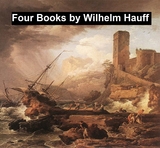
Included in this collection are: The Banished, The Cold Heart, The Oriental Story Book, and The Wine Ghosts of Bremen. According to Wikipedia: 'Wilhelm Hauff (November 29, 1802 - November 18, 1827) was born in Stuttgart, the son of August Friedrich Hauff, a secretary in the ministry of foreign affairs, and Hedwig Wilhelmine Elsaesser Hauff... Considering his brief life, Hauff was an extraordinarily prolific writer. The freshness and originality of his talent, his inventiveness, and his genial humour have won him a high place among the southern German prose writers of the early nineteenth century.'
Included in this collection are: The Banished, The Cold Heart, The Oriental Story Book, and The Wine Ghosts of Bremen. According to Wikipedia: "e;Wilhelm Hauff (November 29, 1802 - November 18, 1827) was born in Stuttgart, the son of August Friedrich Hauff, a secretary in the ministry of foreign affairs, and Hedwig Wilhelmine Elsaesser Hauff... Considering his brief life, Hauff was an extraordinarily prolific writer. The freshness and originality of his talent, his inventiveness, and his genial humour have won him a high place among the southern German prose writers of the early nineteenth century."e;
"A pretty love messenger, who at the same time pries into our affairs! Are you not aware that that dangerous man is the fifer of Hardt?"
"The fifer of Hardt?" asked Albert: "this is the first time I have heard that name; what does it mean?"
"Nobody knows exactly; but he was one of the most formidable leaders in the insurrection of Poor Conrad, for which he, however, afterwards obtained pardon; since that time he leads a restless, roving life, and is now a spy of the Duke of Würtemberg."
"Is he arrested?" inquired Albert, for he involuntarily felt a warm interest in his new servant.
"No; it is just that which is so incomprehensible; whatever notice we may have of his being in Ulm, though communicated in the quietest manner possible, becomes known to him immediately; for example, when we heard of his being in your stable, and sent secretly to arrest him, he was not to be found. But I trust to your honour that he comes to you on no other business. You may be assured of this, however, if it be the same man I mean, he does not visit Ulm for your sake alone. Should you ever meet him again, be guarded how you trust such a vagabond. But the watchman now calls ten o'clock. Lay down again, and dream away your confinement. But before I go, give me your word about the fourteen days; and, I can tell you, if you leave Ulm without saying farewell to old Fronsberg----"
"I will not fail to do so!" cried Albert, touched by the pain which he perceived his revered friend felt at parting, and which he tried to smother under a smile. He gave him his hand as a pledge of his promise, according to the desire of the council of war, upon which the knight left the room, with long measured steps.
CHAPTER XII.
"Could I but once that face so dear
Behold before we sever;
And once again those accents hear,
Before we part for ever."
C. GRÜNEISEN.
On the following day a horseman, oppressed by the heat of the mid-day sun, was bending his way over that part of the Swabian Alb which leads towards Franconia. He was young, more slim than strong built, and rode a large brown horse; he was well armed with cuirass, dagger, and sword; some parts of his defensive apparel, such as his helmet, and steel plates to cover his limbs, hung to his saddle. The striped light blue and white scarf, which passed across his breast over the right shoulder (the distinguishing prerogative of high rank in those days), shewed the young man to be of noble birth.
He had reached the summit of a hill, which afforded a view into the valley below, and stopping his horse, he turned on one side to enjoy the beautiful prospect. Before him lay an extended plain, bounded on each side by wooded heights, through which flowed the green waters of the Danube; on his right the chain of hills of the Würtemberg Alb; on his left the distant snow-capped Tyrolean Alps. The blue vault of heaven encircled the scene, and its soft colouring brought out in strong relief the dark walls of Ulm, its massive spire, and the whole extent of the town, which lay at the foot of the mountain.
Noon was announced at this moment by the tolling of the bells of the cathedral; their solemn tones resounded throughout the town and its extended plain, until they were lost among the distant mountains.
"The same sounds accompany my departure which greeted my arrival," thought the young man: "but how different did I interpret their brazen voices, when for the first time they reached my ear, and guided me to my love; and now that I depart disconsolate, and without object, the same tones follow me! They celebrated the birth of my hope, and now ring its knell. It is the picture of life!" he added, as he took a last farewell of the town in the valley beneath, and turned his horse away: "it is, indeed, the picture of life! These same sounds float over cradle and coffin; and the bells of the chapel of my house which rang a merry peal at my baptism, will also accompany the last of the Sturmfeders to the grave."
The mountain now became steeper; and Albert, whom the reader will have recognised as the young cavalier, allowed his horse to have his own way. Upon quitting Ulm, he had determined to return to his home in Franconia, and there wait events, or at any rate the expiration of the fourteen days' truce he had promised his friend Fronsberg. His heart naturally would lead him to Lichtenstein, the contrary way to the path he was now pursuing; yet he felt he had chosen the one most honourable to his engagements. The balance, however, between the two was very equally poised, and had he had a friend to decide for him and convince him that he was now a free agent to travel whither he pleased, provided he took no part in the contest for fourteen days, he felt that the bent of his inclinations would turn the scale in favour of the neighbourhood of his love. The comparison between his present situation and the former position which he had held only a few days back, did not tend to cheer his spirits. Sudden changes--violent emotions--his confinement on the day before--and, above all, the pain of taking leave of men who had his welfare at heart, produced recollections which almost unmanned him.
Dieterick von Kraft, above all, bewailed his departure. From the first moment of their acquaintance in the room of the town hall when they pledged each other in a bumper, to the last hour when they bid adieu in a parting cup, that excellent friend had manifested the same uninterrupted good feeling towards him. And how had he requited his kindness? Occupied solely with self, he had but partially expressed his sense of obligation to him; and to the honest, straightforward Breitenstein, who, as well as Fronsberg, had held him up as their favourite in the army, what return had he made? Truly there is nothing more painful to a noble mind than the thought of being ungrateful where its object is to be esteemed.
Full of these gloomy thoughts, he proceeded some distance on his journey. Feeling the rays of the March sun oppressive, and the mountain path becoming more rugged, he determined to repose himself and horse under the shade of an oak tree. He dismounted, loosened the girths of his saddle, and let his weary beast make the most of the stunted grass in the neighbourhood. He stretched himself under the tree, and though his fatiguing ride and the cool shade invited him to rest, still the unquiet state of the country, so near the theatre of war, the care of his horse and of his weapons, kept him awake until he at last sank into that state between watching and sleep, which the body combats in vain.
V He might have been about half an hour in this situation, when the neighing of his horse roused him; he looked about, and perceived a man with his back towards him, occupying himself with the beast. His first thought was, that taking advantage of his carelessness, the man intended to make away with his steed; he sprang upon his legs, drew his sword, and in a trice was by his side. "Stop, villain! what have you to do with that horse?" he cried, at the same time taking him by the collar rather roughly.
"Have you already discharged me from your service, sir?" said the man, whom Albert immediately recognised as the messenger Bertha had sent to him. The young man was undecided what line of conduct to pursue; for Fronsberg's warning made him distrustful of the man, whilst Bertha's confidence in him recommended him. The countryman continued his conversation, showing him at the same time a handful of hay; "I guessed you would not have provided fodder for your journey; and as there is not much grass to be picked up on the mountains, I brought an armful with me for the brown horse." So spoke the peasant, and continued feeding the beast.
"And where do you now come from?" asked Albert, having recovered from his astonishment.
"Why, you rode away from Ulm in such haste, I was not able to follow you immediately," he answered.
"Don't tell me a falsehood," said the young man, "otherwise I cannot trust you any more. You do not come from that town at present."
"Well, I suppose you will not be angry, if I was a little earlier than you on the road?" said the countryman, and turned away; but the cunning smile on his countenance did not escape Albert.
"Let my horse alone," said Albert, impatiently. "Come, sit down with me under that oak, and tell me, without hesitation, why you left the town so suddenly yesterday evening?"
"It was not with the Ulmers' good will; for they even wanted to induce me to remain longer with them, and to give me board and lodging gratis," replied the man.
"Yes, they would have put you in the lowest cell of the prison, where you would have seen neither sun nor moon, the place appropriated to spies and such like gentry."
"Excuse me, sir," replied the messenger, "though I might have been somewhat lower, we should both have been under the same roof."
"Dog of a spy!" cried Albert, with anger burning on his cheek; "would you place my father's son in...
| Erscheint lt. Verlag | 1.3.2018 |
|---|---|
| Sprache | englisch |
| Themenwelt | Literatur ► Anthologien |
| Literatur ► Klassiker / Moderne Klassiker | |
| Literatur ► Romane / Erzählungen | |
| ISBN-10 | 1-4554-0191-9 / 1455401919 |
| ISBN-13 | 978-1-4554-0191-8 / 9781455401918 |
| Informationen gemäß Produktsicherheitsverordnung (GPSR) | |
| Haben Sie eine Frage zum Produkt? |
 EPUB (Adobe DRM)
Größe: 1,2 MB
Kopierschutz: Adobe-DRM
Adobe-DRM ist ein Kopierschutz, der das eBook vor Mißbrauch schützen soll. Dabei wird das eBook bereits beim Download auf Ihre persönliche Adobe-ID autorisiert. Lesen können Sie das eBook dann nur auf den Geräten, welche ebenfalls auf Ihre Adobe-ID registriert sind.
Details zum Adobe-DRM
Dateiformat: EPUB (Electronic Publication)
EPUB ist ein offener Standard für eBooks und eignet sich besonders zur Darstellung von Belletristik und Sachbüchern. Der Fließtext wird dynamisch an die Display- und Schriftgröße angepasst. Auch für mobile Lesegeräte ist EPUB daher gut geeignet.
Systemvoraussetzungen:
PC/Mac: Mit einem PC oder Mac können Sie dieses eBook lesen. Sie benötigen eine
eReader: Dieses eBook kann mit (fast) allen eBook-Readern gelesen werden. Mit dem amazon-Kindle ist es aber nicht kompatibel.
Smartphone/Tablet: Egal ob Apple oder Android, dieses eBook können Sie lesen. Sie benötigen eine
Geräteliste und zusätzliche Hinweise
Buying eBooks from abroad
For tax law reasons we can sell eBooks just within Germany and Switzerland. Regrettably we cannot fulfill eBook-orders from other countries.
EPUB (Ohne DRM)Digital Rights Management: ohne DRM
Dieses eBook enthält kein DRM oder Kopierschutz. Eine Weitergabe an Dritte ist jedoch rechtlich nicht zulässig, weil Sie beim Kauf nur die Rechte an der persönlichen Nutzung erwerben.
Dateiformat: EPUB (Electronic Publication)
EPUB ist ein offener Standard für eBooks und eignet sich besonders zur Darstellung von Belletristik und Sachbüchern. Der Fließtext wird dynamisch an die Display- und Schriftgröße angepasst. Auch für mobile Lesegeräte ist EPUB daher gut geeignet.
Systemvoraussetzungen:
PC/Mac: Mit einem PC oder Mac können Sie dieses eBook lesen. Sie benötigen dafür die kostenlose Software Adobe Digital Editions.
eReader: Dieses eBook kann mit (fast) allen eBook-Readern gelesen werden. Mit dem amazon-Kindle ist es aber nicht kompatibel.
Smartphone/Tablet: Egal ob Apple oder Android, dieses eBook können Sie lesen. Sie benötigen dafür eine kostenlose App.
Geräteliste und zusätzliche Hinweise
Buying eBooks from abroad
For tax law reasons we can sell eBooks just within Germany and Switzerland. Regrettably we cannot fulfill eBook-orders from other countries.
aus dem Bereich