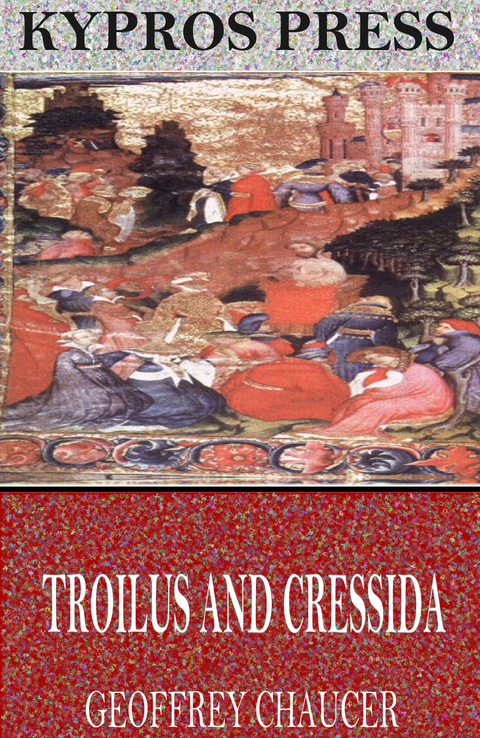
Troilus and Cressida (eBook)
105 Seiten
Charles River Editors (Verlag)
978-1-5312-8343-8 (ISBN)
Geoffrey Chaucer is widely considered to be the greatest poet of the Middle Ages and is often called The Father of English Literature. Chaucer's most famous work is the Canterbury Tales which helped popularize the dialect of the English language. This edition of Troilus and Cressida includes a table of contents.
THE FIRST BOOK.
THE double sorrow <1> of Troilus to tell,
That was the King Priamus’ son of Troy,
In loving how his adventures* fell *fortunes
From woe to weal, and after* out of joy, *afterwards
My purpose is, ere I you parte froy.* *from
Tisiphone,<2> thou help me to indite
These woeful words, that weep as I do write.
To thee I call, thou goddess of torment!
Thou cruel wight, that sorrowest ever in pain;
Help me, that am the sorry instrument
That helpeth lovers, as I can, to plain.* *complain
For well it sits,* the soothe for to sayn, *befits
Unto a woeful wight a dreary fere,* *companion
And to a sorry tale a sorry cheer.* *countenance
For I, that God of Love’s servants serve,
Nor dare to love for mine unlikeliness,* <3> *unsuitableness
Praye for speed,* although I shoulde sterve,** *success **die
So far I am from his help in darkness;
But natheless, might I do yet gladness
To any lover, or any love avail,* *advance
Have thou the thank, and mine be the travail.
But ye lovers that bathen in gladness,
If any drop of pity in you be,
Remember you for old past heaviness,
For Godde’s love, and on adversity
That others suffer; think how sometime ye
Founde how Love durste you displease;
Or elles ye have won it with great ease.
And pray for them that been in the case
Of Troilus, as ye may after hear,
That Love them bring in heaven to solace;* *delight, comfort
And for me pray also, that God so dear
May give me might to show, in some mannere,
Such pain or woe as Love’s folk endure,
In Troilus’ *unseely adventure* *unhappy fortune*
And pray for them that eke be despair’d
In love, that never will recover’d be;
And eke for them that falsely be appair’d* *slandered
Through wicked tongues, be it he or she:
Or thus bid* God, for his benignity, *pray
To grant them soon out of this world to pace,* *pass, go
That be despaired of their love’s grace.
And bid also for them that be at ease
In love, that God them grant perseverance,
And send them might their loves so to please,
That it to them be *worship and pleasance;* *honour and pleasure*
For so hope I my soul best to advance,
To pray for them that Love’s servants be,
And write their woe, and live in charity;
And for to have of them compassion,
As though I were their owen brother dear.
Now listen all with good entention,* *attention
For I will now go straight to my mattere,
In which ye shall the double sorrow hear
Of Troilus, in loving of Cresside,
And how that she forsook him ere she died.
In Troy, during the siege, dwelt “a lord of great authority, a great divine,” named Calchas; who, through the oracle of Apollo, knew that Troy should be destroyed. He stole away secretly to the Greek camp, where he was gladly received, and honoured for his skill in divining, of which the besiegers hoped to make use. Within the city there was great anger at the treason of Calchas; and the people declared that he and all his kin were worthy to be burnt. His daughter, whom he had left in the city, a widow and alone, was in great fear for her life.
Cressida was this lady’s name aright;
*As to my doom,* in alle Troy city *in my judgment*
So fair was none, for over ev’ry wight
So angelic was her native beauty,
That like a thing immortal seemed she,
As sooth a perfect heav’nly creature,
That down seem’d sent in scorning of Nature.
In her distress, “well nigh out of her wit for pure fear,” she appealed for protection to Hector; who, “piteous of nature,” and touched by her sorrow and her beauty, assured her of safety, so long as she pleased to dwell in Troy. The siege went on; but they of Troy did not neglect the honour and worship of their deities; most of all of “the relic hight Palladion, <4> that was their trust aboven ev’ry one.” In April, “when clothed is the mead with newe green, of jolly Ver [Spring] the prime,” the Trojans went to hold the festival of Palladion — crowding to the temple, “in all their beste guise,” lusty knights, fresh ladies, and maidens bright.
Among the which was this Cresseida,
In widow’s habit black; but natheless,
Right as our firste letter is now A,
In beauty first so stood she makeless;* *matchless
Her goodly looking gladded all the press;* *crowd
Was never seen thing to be praised derre,* *dearer, more worthy
Nor under blacke cloud so bright a sterre,* *star
As she was, as they saiden, ev’ry one
That her behelden in her blacke weed;* *garment
And yet she stood, full low and still, alone,
Behind all other folk, *in little brede,* *inconspicuously*
And nigh the door, ay *under shame’s drede;* *for dread of shame*
Simple of bearing, debonair* of cheer, *gracious
With a full sure* looking and mannere. *assured
Dan Troilus, as he was wont to guide
His younge knightes, led them up and down
In that large temple upon ev’ry side,
Beholding ay the ladies of the town;
Now here, now there, for no devotioun
Had he to none, to *reave him* his rest, *deprive him of*
But gan to *praise and lacke whom him lest;* *praise and disparage
whom he pleased*
And in his walk full fast he gan to wait* *watch, observe
If knight or squier of his company
Gan for to sigh, or let his eyen bait* *feed
On any woman that he could espy;
Then he would smile, and hold it a folly,
And say him thus: “Ah, Lord, she sleepeth soft
For love of thee, when as thou turnest oft.
“I have heard told, pardie, of your living,
Ye lovers, and your lewed* observance, *ignorant, foolish
And what a labour folk have in winning
Of love, and in it keeping with doubtance;* *doubt
And when your prey is lost, woe and penance;* *suffering
Oh, very fooles! may ye no thing see?
Can none of you aware by other be?”
But the God of Love vowed vengeance on Troilus for that despite, and, showing that his bow was not broken, “hit him at the full.”
Within the temple went he forth playing,
This Troilus, with ev’ry wight about,
On this lady and now on that looking,
Whether she were of town, or *of without;* *from beyond the walls*
And *upon cas* befell, that through the rout* *by chance* *crowd
His eye pierced, and so deep it went,
Till on Cresside it smote, and there it stent;* *stayed
And suddenly wax’d wonder sore astoned,* *amazed
And gan her bet* behold in busy wise: *better
“Oh, very god!” <5> thought he; “where hast thou woned* *dwelt
That art so fair and goodly to devise?* *describe
Therewith his heart began to spread and rise;
And soft he sighed, lest men might him hear,
And caught again his former *playing cheer.* *jesting demeanour*
*She was not with the least of her stature,* *she was tall*
But all her limbes so well answering
Were to womanhood, that creature
Was never lesse mannish in seeming.
And eke *the pure wise of her moving* *by very the way
She showed well, that men might in her guess she moved*
Honour, estate,* and womanly nobless. *dignity
Then Troilus right wonder well withal
Began to like her moving and her cheer,* *countenance
Which somedeal dainous* was, for she let fall *disdainful
Her look a little aside, in such mannere
Ascaunce* “What! may I not stande here?” *as if to say <6>
And after that *her looking gan she light,* *her expression became
That never thought him see so good a sight. more pleasant*
And of her look in him there gan to quicken
So great desire, and strong affection,
That in his hearte’s bottom gan to sticken
Of her the fix’d and deep impression;
And though he erst* had pored** up and down, *previously **looked
Then was he glad his hornes in to shrink;
Unnethes* wist he how to look or wink. *scarcely
Lo! he that held himselfe so cunning,
And scorned them that Love’s paines drien,* *suffer
Was full unware that love had his dwelling
Within the subtile streames* of her eyen; *rays, glances
That suddenly he thought he felte dien,
Right with her look, the spirit in his heart;
Blessed be Love, that thus can folk convert!
She thus, in black, looking to Troilus,
Over all things he stoode to behold;
But his desire, nor wherefore he stood...
| Erscheint lt. Verlag | 22.3.2018 |
|---|---|
| Sprache | englisch |
| Themenwelt | Literatur ► Anthologien |
| Literatur ► Klassiker / Moderne Klassiker | |
| Literatur ► Romane / Erzählungen | |
| Schlagworte | Canterbury Tales • Classic • EPIC • Middle Ages • Old English • Poetry • Short Stories |
| ISBN-10 | 1-5312-8343-8 / 1531283438 |
| ISBN-13 | 978-1-5312-8343-8 / 9781531283438 |
| Informationen gemäß Produktsicherheitsverordnung (GPSR) | |
| Haben Sie eine Frage zum Produkt? |
 EPUB (Adobe DRM)
Größe: 1,2 MB
Kopierschutz: Adobe-DRM
Adobe-DRM ist ein Kopierschutz, der das eBook vor Mißbrauch schützen soll. Dabei wird das eBook bereits beim Download auf Ihre persönliche Adobe-ID autorisiert. Lesen können Sie das eBook dann nur auf den Geräten, welche ebenfalls auf Ihre Adobe-ID registriert sind.
Details zum Adobe-DRM
Dateiformat: EPUB (Electronic Publication)
EPUB ist ein offener Standard für eBooks und eignet sich besonders zur Darstellung von Belletristik und Sachbüchern. Der Fließtext wird dynamisch an die Display- und Schriftgröße angepasst. Auch für mobile Lesegeräte ist EPUB daher gut geeignet.
Systemvoraussetzungen:
PC/Mac: Mit einem PC oder Mac können Sie dieses eBook lesen. Sie benötigen eine
eReader: Dieses eBook kann mit (fast) allen eBook-Readern gelesen werden. Mit dem amazon-Kindle ist es aber nicht kompatibel.
Smartphone/Tablet: Egal ob Apple oder Android, dieses eBook können Sie lesen. Sie benötigen eine
Geräteliste und zusätzliche Hinweise
Buying eBooks from abroad
For tax law reasons we can sell eBooks just within Germany and Switzerland. Regrettably we cannot fulfill eBook-orders from other countries.
EPUB (Ohne DRM)Digital Rights Management: ohne DRM
Dieses eBook enthält kein DRM oder Kopierschutz. Eine Weitergabe an Dritte ist jedoch rechtlich nicht zulässig, weil Sie beim Kauf nur die Rechte an der persönlichen Nutzung erwerben.
Dateiformat: EPUB (Electronic Publication)
EPUB ist ein offener Standard für eBooks und eignet sich besonders zur Darstellung von Belletristik und Sachbüchern. Der Fließtext wird dynamisch an die Display- und Schriftgröße angepasst. Auch für mobile Lesegeräte ist EPUB daher gut geeignet.
Systemvoraussetzungen:
PC/Mac: Mit einem PC oder Mac können Sie dieses eBook lesen. Sie benötigen dafür die kostenlose Software Adobe Digital Editions.
eReader: Dieses eBook kann mit (fast) allen eBook-Readern gelesen werden. Mit dem amazon-Kindle ist es aber nicht kompatibel.
Smartphone/Tablet: Egal ob Apple oder Android, dieses eBook können Sie lesen. Sie benötigen dafür eine kostenlose App.
Geräteliste und zusätzliche Hinweise
Buying eBooks from abroad
For tax law reasons we can sell eBooks just within Germany and Switzerland. Regrettably we cannot fulfill eBook-orders from other countries.
aus dem Bereich