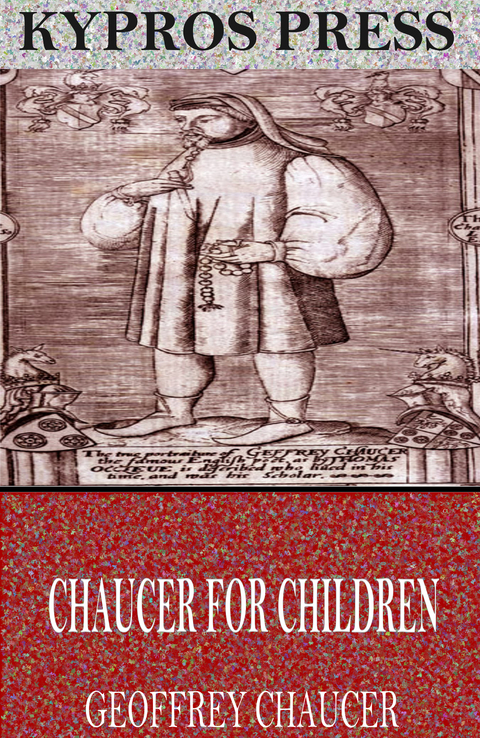
Chaucer for Children (eBook)
175 Seiten
Charles River Editors (Verlag)
978-1-5312-8337-7 (ISBN)
Geoffrey Chaucer is widely considered to be the greatest poet of the Middle Ages and is often called The Father of English Literature. Chaucer's most famous work is the Canterbury Tales which helped popularize the dialect of the English language. This edition of Chaucer for Children includes a table of contents.
CHAUCER’S PROLOGUE.
Whan that Aprille with his schowres swooteWhen, sweet
The drought of Marche hath perced to the roote,root
And bathud every veyne in swich licour,such liquor
Of which vertue engendred is the flour;flower
Whan Zephirus eek with his swete breethalso, breath
Enspirud hath in every holte and heethgrove
The tendre croppes, and the yonge sonneyoung
Hath in the Ram his halfe cours i-ronne,run
And smale fowles maken melodie,small birds make
That slepen al the night with open yhe,sleep, eye
So priketh hem nature in here corages:—pricketh them, their impulses
Thanne longen folk to gon on pilgrimages,long, go
And palmers for to seeken straunge strondes,seek, shores
To ferne halwes, kouthe in sondry londes;distant saints
And specially from every schires ende
Of Engelond, to Canturbury they wende,go
The holy blisful martir for to seeke,blessed, seek
That hem hath holpen whan that they were seeke.them, sick
When April hath his sweetest showers brought
To pierce the heart of March and banish drought,
Then every vein is bathéd by his power,
With fruitful juice engendering the flower;
When the light zephyr, with its scented breath,
Stirs to new life in every holt and heath
The tender crops, what time the youthful sun
Hath in the Ram his course but half-way run;
And when the little birds make melody,
That sleep the whole night long with open eye,
So Nature rouses instinct into song,—
Then folk to go as pilgrims greatly long,
And palmers hasten forth to foreign strands
To worship far-off saints in sundry lands;
And specially from every shire’s end
Of England, unto Canterbury they wend,
Before the blessed martyr there to kneel,
Who oft hath help’d them by his power to heal.
It happened that one day in the spring, as I was resting at the Tabard Inn, in Southwark, ready to go on my devout pilgrimage to Canterbury, there arrived towards night at the inn a large company of all sorts of people—nine-and-twenty of them: they had met by chance, all being pilgrims to Canterbury. The chambers and the stables were roomy, and so every one found a place. And shortly, after sunset, I had made friends with them all, and soon became one of their party. We all agreed to rise up early, to pursue our journey together.
But still, while I have time and space, I think I had better tell you who these people were, their condition and rank, which was which, and what they looked like. I will begin, then, with
The Knight.
A Knight ther was and that a worthy man,there, valuable
That from the tyme that he ferst bigan
To ryden out, he lovede chyvalrye,ride
Trouthe and honour, fredom and curtesie.frankness
Ful worthi was he in his lordes werre,war
And therto hadde he riden, noman ferre,further
As wel in Cristendom as in hethenesse,
And evere honoured for his worthinesse.
A knight there was, and that a worthy man,
Who from the time in which he first began
To ride afield, loved well all chivalry,
Honour and frankness, truth and courtesy.
Most worthy was he in his master’s war,
And thereto had he ridden, none more far,
As well in Christian as in heathen lands,
And borne with honour many high commands.
He had been at Alexandria when it was won: in Prussia he had gained great honours, and in many other lands. He had been in fifteen mortal battles, and had fought in the lists for our faith three times, and always slain his foe. He had served in Turkey and in the Great Sea. And he was always very well paid too. Yet, though so great a soldier, he was wise in council; and in manner he was gentle as a woman. Never did he use bad words in all his life, to any class of men: in fact
He was a verray perfight, gentil knight.
He was a very perfect, noble knight.
As for his appearance, his horse was good, but not gay. He wore a gipon of fustian, all stained by his habergeon; for he had only just arrived home from a long voyage.
With him ther was his sone, a yong Squyer,there, son
A lovyer, and a lusty bacheler, merry
With lokkes crulle as they were layde in presse.locks curled
Of twenty yeer he was of age I gesse.guess
Of his stature he was of evene lengthe,
And wondurly delyver, and gret of strengthe.wonderfully nimble, great
And he hadde ben somtyme in chivachie, had been
In Flaundres, in Artoys, and in Picardie,
And born him wel, as in so litel space,little
In hope to stonden in his lady grace. stand
Embrowdid was he, as it were a mede
Al ful of fresshe floures, white and reede.
Syngynge he was, or flowtynge al the day;playing on the flute
He was as fressh as is the moneth of May.
Schort was his goune, with sleeves long and wyde.
Wel cowde he sitte on hors, and faire ryde.could, horse
He cowde songes wel make and endite,relate
Justne and eek daunce, and wel purtray and write.also, draw pictures
With him there was his son, a gay young squire,
A bachelor and full of boyish fire,
With locks all curl’d as though laid in a press,
And about twenty years of age, I guess.
In stature he was of an even length,
And wonderfully nimble, and great of strength.
And he had followed knightly deeds of war
In Picardy, in Flanders, and Artois,
And nobly borne himself in that brief space,
In ardent hope to win his lady’s grace.
Embroidered was he, as a meadow bright,
All full of freshest flowers, red and white;
Singing he was, or flute-playing all day,
He was as fresh as is the month of May.
Short was his gown, his sleeves were long and wide,
Well he became his horse, and well could ride;
He could make songs, and ballads, and recite,
Joust and make pretty pictures, dance, and write.
As for the young squire’s manners—
Curteys he was, lowly, and servysable,
And carf byforn his fadur at the table.carved
Courteous he was, lowly, and serviceable,
And carved before his father at the table.
The Yeoman.
A Yeman had he, and servantes nomoono more
At that tyme, for him luste ryde soo;it pleased him
And he was clad in coote and hood of grene.
A shef of pocok arwes bright and kene,arrows
Under his belte he bar ful thriftily,bore
Wel cowde he dresse his takel yomanly;arrow
His arwes drowpud nought with fetheres lowe,arrows
And in his hond he bar a mighty bowe.bore
A not-heed hadde he, with a broun visage.v. notes, p. 111.
Of woode-craft cowde he wel al the usage;knew
Upon his arme he bar a gay bracer, bore
And by his side a swerd, and a bokeler, buckler
And on that other side a gay daggere,
Harneysed wel, and scharp at poynt of spere;dressed well
A Cristofre on his brest of silver schene.ornament representing St. Christopher
An horn he bar, the bawdrik was of grene:
A forster was he sothely, as I gesse.forester, truly
A yeoman had he (but no suite beside:
Without attendants thus he chose to ride,)
And he was clad in coat and hood of green.
A sheaf of peacock-arrows bright and keen,
Under his belt he carried thriftily;
Well could he dress an arrow yeomanly!
None of his arrows drooped with feathers low
And in his hand he held a mighty bow.
A knot-head had he, and a sunburnt hue,
In woodcraft all the usages he knew;
Upon his arm a bracer gay he wore,
And by his side buckler and sword he bore,
While opposite a dagger dangled free;
Polished and smart, no spear could sharpe be.
A silver ‘Christopher’ on his breast was seen,
A horn he carried by a baldrick green:
He was a thorough forester, I guess.
The Prioress.
Ther was also a Nonne, a Prioresse,
That of hire smylyng was ful symple and coy;her
Hire grettest ooth ne was but by seynt Loy,oath
And sche was cleped madame Eglentyne.called
Ful wel sche sang the servíse devyne,
Entuned in hire nose ful semyly,seemly
And Frensch sche spak ful faire and fetysly,elegantly
Aftur the scole of Stratford atte Bowe,school
For Frensch of Parys was to hire unknowe.her unknown
At mete wel i-taught was sche withalle;meat, taught
Sche leet no morsel from hire lippes falle,let
Ne wette hire fyngres in hire sauce deepe.wetted
Wel cowde sche carie a morsel, and wel keepe,carry
That no drope ne fil uppon hire breste.fell
In curtesie was sett al hire leste.courtesy, pleasure
Hire overlippe wypude sche so clene,
That in hire cuppe ther was no ferthing...
| Erscheint lt. Verlag | 22.3.2018 |
|---|---|
| Sprache | englisch |
| Themenwelt | Literatur ► Anthologien |
| Literatur ► Klassiker / Moderne Klassiker | |
| Literatur ► Romane / Erzählungen | |
| Schlagworte | Canterbury Tales • Classic • EPIC • Middle Ages • Old English • Poetry • Short Stories |
| ISBN-10 | 1-5312-8337-3 / 1531283373 |
| ISBN-13 | 978-1-5312-8337-7 / 9781531283377 |
| Informationen gemäß Produktsicherheitsverordnung (GPSR) | |
| Haben Sie eine Frage zum Produkt? |
 EPUB (Adobe DRM)
Größe: 1,2 MB
Kopierschutz: Adobe-DRM
Adobe-DRM ist ein Kopierschutz, der das eBook vor Mißbrauch schützen soll. Dabei wird das eBook bereits beim Download auf Ihre persönliche Adobe-ID autorisiert. Lesen können Sie das eBook dann nur auf den Geräten, welche ebenfalls auf Ihre Adobe-ID registriert sind.
Details zum Adobe-DRM
Dateiformat: EPUB (Electronic Publication)
EPUB ist ein offener Standard für eBooks und eignet sich besonders zur Darstellung von Belletristik und Sachbüchern. Der Fließtext wird dynamisch an die Display- und Schriftgröße angepasst. Auch für mobile Lesegeräte ist EPUB daher gut geeignet.
Systemvoraussetzungen:
PC/Mac: Mit einem PC oder Mac können Sie dieses eBook lesen. Sie benötigen eine
eReader: Dieses eBook kann mit (fast) allen eBook-Readern gelesen werden. Mit dem amazon-Kindle ist es aber nicht kompatibel.
Smartphone/Tablet: Egal ob Apple oder Android, dieses eBook können Sie lesen. Sie benötigen eine
Geräteliste und zusätzliche Hinweise
Buying eBooks from abroad
For tax law reasons we can sell eBooks just within Germany and Switzerland. Regrettably we cannot fulfill eBook-orders from other countries.
EPUB (Ohne DRM)Digital Rights Management: ohne DRM
Dieses eBook enthält kein DRM oder Kopierschutz. Eine Weitergabe an Dritte ist jedoch rechtlich nicht zulässig, weil Sie beim Kauf nur die Rechte an der persönlichen Nutzung erwerben.
Dateiformat: EPUB (Electronic Publication)
EPUB ist ein offener Standard für eBooks und eignet sich besonders zur Darstellung von Belletristik und Sachbüchern. Der Fließtext wird dynamisch an die Display- und Schriftgröße angepasst. Auch für mobile Lesegeräte ist EPUB daher gut geeignet.
Systemvoraussetzungen:
PC/Mac: Mit einem PC oder Mac können Sie dieses eBook lesen. Sie benötigen dafür die kostenlose Software Adobe Digital Editions.
eReader: Dieses eBook kann mit (fast) allen eBook-Readern gelesen werden. Mit dem amazon-Kindle ist es aber nicht kompatibel.
Smartphone/Tablet: Egal ob Apple oder Android, dieses eBook können Sie lesen. Sie benötigen dafür eine kostenlose App.
Geräteliste und zusätzliche Hinweise
Buying eBooks from abroad
For tax law reasons we can sell eBooks just within Germany and Switzerland. Regrettably we cannot fulfill eBook-orders from other countries.
aus dem Bereich