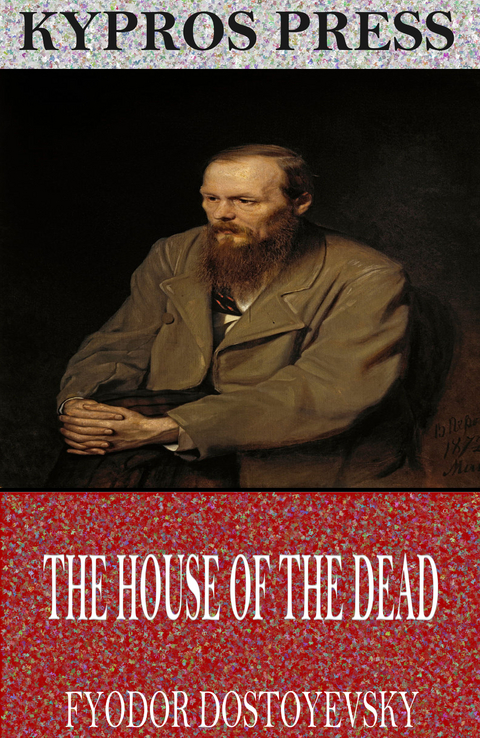
House of the Dead (eBook)
491 Seiten
Charles River Editors (Verlag)
978-1-5312-8104-5 (ISBN)
Fyodor Dostoyevsky was a great Russian author in the 19th century. Dostoyevsky's work is noted for its description of human psychology in the difficult environment of Russia during his time. Dostoyevsky's classics such as Crime and Punishment and The Brothers Karamazov are considered to be among the greatest novels ever written. This edition of The House of the Dead includes a table of contents.
CHAPTER 1. TEN YEARS A CONVICT
In the midst of the steppes, of the mountains, of the impenetrable forests of the desert regions of Siberia, one meets from time to time with little towns of a thousand or two inhabitants, built entirely of wood, very ugly, with two churches—one in the centre of the town, the other in the cemetery—in a word, towns which bear much more resemblance to a good-sized village in the suburbs of Moscow than to a town properly so called. In most cases they are abundantly provided with police-master, assessors, and other inferior officials. If it is cold in Siberia, the great advantages of the Government service compensate for it. The inhabitants are simple people, without liberal ideas. Their manners are antique, solid, and unchanged by time. The officials who form, and with reason, the nobility in Siberia, either belong to the country, deeply-rooted Siberians, or they have arrived there from Russia. The latter come straight from the capitals, tempted by the high pay, the extra allowance for travelling expenses, and by hopes not less seductive for the future. Those who know how to resolve the problem of life remain almost always in Siberia; the abundant and richly-flavoured fruit which they gather there recompenses them amply for what they lose.
As for the others, light-minded persons who are unable to deal with the problem, they are soon bored in Siberia, and ask themselves with regret why they committed the folly of coming. They impatiently kill the three years which they are obliged by rule to remain, and as soon as their time is up, they beg to be sent back, and return to their original quarters, running down Siberia, and ridiculing it. They are wrong, for it is a happy country, not only as regards the Government service, but also from many other points of view.
The climate is excellent, the merchants are rich and hospitable, the Europeans in easy circumstances are numerous; as for the young girls, they are like roses and their morality is irreproachable. Game is to be found in the streets, and throws itself upon the sportsman’s gun. People drink champagne in prodigious quantities. The caviare is astonishingly good and most abundant. In a word, it is a blessed land, out of which it is only necessary to be able to make profit; and much profit is really made.
It is in one of these little towns—gay and perfectly satisfied with themselves, the population of which has left upon me the most agreeable impression—that I met an exile, Alexander Petrovitch Goriantchikoff, formerly a landed proprietor in Russia. He had been condemned to hard labour of the second class for assassinating his wife. After undergoing his punishment—ten years of hard labour—he lived quietly and unnoticed as a colonist in the little town of K——. To tell the truth, he was inscribed in one of the surrounding districts; but he resided at K——, where he managed to get a living by giving lessons to children. In the towns of Siberia one often meets with exiles who are occupied with instruction. They are not looked down upon, for they teach the French language, so necessary in life, and of which without them one would not, in the distant parts of Siberia, have the least idea.
I saw Alexander Petrovitch the first time at the house of an official, Ivan Ivanitch Gvosdikof, a venerable old man, very hospitable, and the father of five daughters, of whom the greatest hopes were entertained. Four times a week Alexander Petrovitch gave them lessons, at the rate of thirty kopecks silver a lesson. His external appearance interested me. He was excessively pale and thin, still young—about thirty-five years of age—short and weak, always very neatly dressed in the European style. When you spoke to him he looked at you in a very attentive manner, listening to your words with strict politeness, and with a reflective air, as though you had placed before him a problem or wished to extract from him a secret. He replied clearly and shortly; but in doing so, weighed each word, so that one felt ill at ease without knowing why, and was glad when the conversation came to an end. I put some questions to Ivan Gvosdikof in regard to him. He told me that Goriantchikoff was of irreproachable morals, otherwise Gvosdikof would not have entrusted him with the education of his children; but that he was a terrible misanthrope, who kept apart from all society; that he was very learned, a great reader, and that he spoke but little, and never entered freely into a conversation. Certain persons told him that he was mad; but that was not looked upon as a very serious defect. Accordingly, the most important persons in the town were ready to treat Alexander Petrovitch with respect, for he could be useful to them in writing petitions. It was believed that he was well connected in Russia. Perhaps, among his relations, there were some who were highly placed; but it was known that since his exile he had broken off all relations with them. In a word—he injured himself. Every one knew his story, and was aware that he had killed his wife, through jealousy, less than a year after his marriage; and that he had given himself up to justice; which had made his punishment much less severe. Such crimes are always looked upon as misfortunes, which must be treated with pity. Nevertheless, this original kept himself obstinately apart, and never showed himself except to give lessons. In the first instance I paid no attention to him; then, without knowing why, I found myself interested by him. He was rather enigmatic; to talk with him was quite impossible. Certainly he replied to all my questions; he seemed to make it a duty to do so; but when once he had answered, I was afraid to interrogate him any longer.
After such conversations one could observe on his countenance signs of suffering and exhaustion. I remember that, one fine summer evening, I went out with him from the house of Ivan Gvosdikof. It suddenly occurred to me to invite him to come in with me and smoke a cigarette. I can scarcely describe the fright which showed itself in his countenance. He became confused, muttered incoherent words, and suddenly, after looking at me with an angry air, took to flight in an opposite direction. I was very much astonished afterwards, when he met me. He seemed to experience, on seeing me, a sort of terror; but I did not lose courage. There was something in him which attracted me.
A month afterwards I went to see Petrovitch without any pretext. It is evident that, in doing so, I behaved foolishly, and without the least delicacy. He lived at one of the extreme points of the town with an old woman whose daughter was in a consumption. The latter had a little child about ten years old, very pretty and very lively.
When I went in Alexander Petrovitch was seated by her side, and was teaching her to read. When he saw me he became confused, as if I had detected him in a crime. Losing all self-command, he suddenly stood up and looked at me with awe and astonishment. Then we both of us sat down. He followed attentively all my looks, as if I had suspected him of some mysterious intention. I understood he was horribly mistrustful. He looked at me as a sort of spy, and he seemed to be on the point of saying, “Are you not soon going away?”
I spoke to him of our little town, of the news of the day, but he was silent, or smiled with an air of displeasure. I could see that he was absolutely ignorant of all that was taking place in the town, and that he was in no way curious to know. I spoke to him afterwards of the country generally, and of its men. He listened to me still in silence, fixing his eyes upon me in such a strange way that I became ashamed of what I was doing. I was very nearly offending him by offering him some books and newspapers which I had just received by post. He cast a greedy look upon them; he then seemed to alter his mind, and declined my offer, giving his want of leisure as a pretext.
At last I wished him good-bye, and I felt a weight fall from my shoulders as I left the house. I regretted to have harassed a man whose tastes kept him apart from the rest of the world. But the fault had been committed. I had remarked that he possessed very few books. It was not true, then, that he read so much. Nevertheless, on two occasions when I drove past, I saw a light in his lodging. What could make him sit up so late? Was he writing, and if that were so, what was he writing?
I was absent from our town for about three months. When I returned home in the winter, I learned that Petrovitch was dead, and that he had not even sent for a doctor. He was even now already forgotten, and his lodging was unoccupied. I at once made the acquaintance of his landlady, in the hope of learning from her what her lodger had been writing. For twenty kopecks she brought me a basket full of papers left by the defunct, and confessed to me that she had already employed four sheets in lighting her fire. She was a morose and taciturn old woman. I could not get from her anything that was interesting. She could tell me nothing about her lodger. She gave me to understand all the same that he scarcely ever worked, and that he remained for months together without opening a book or touching a pen. On the other hand, he walked all night up and down his room, given up to his reflections. Sometimes, indeed, he spoke aloud. He was very fond of her little grandchild, Katia, above all when he knew her name; on her name’s-day—the day of St. Catherine—he always had a requiem said in the church for some one’s soul. He detested receiving visits, and never went out except to give lessons. Even his landlady he looked upon with an unfriendly eye when, once a week, she...
| Erscheint lt. Verlag | 22.3.2018 |
|---|---|
| Sprache | englisch |
| Themenwelt | Literatur ► Anthologien |
| Literatur ► Klassiker / Moderne Klassiker | |
| Literatur ► Romane / Erzählungen | |
| Schlagworte | brothers karamazov • Classic • Crime and Punishment • History • Notes From Underground • Russian • Tolstoy |
| ISBN-10 | 1-5312-8104-4 / 1531281044 |
| ISBN-13 | 978-1-5312-8104-5 / 9781531281045 |
| Informationen gemäß Produktsicherheitsverordnung (GPSR) | |
| Haben Sie eine Frage zum Produkt? |
 EPUB (Adobe DRM)
Größe: 1,2 MB
Kopierschutz: Adobe-DRM
Adobe-DRM ist ein Kopierschutz, der das eBook vor Mißbrauch schützen soll. Dabei wird das eBook bereits beim Download auf Ihre persönliche Adobe-ID autorisiert. Lesen können Sie das eBook dann nur auf den Geräten, welche ebenfalls auf Ihre Adobe-ID registriert sind.
Details zum Adobe-DRM
Dateiformat: EPUB (Electronic Publication)
EPUB ist ein offener Standard für eBooks und eignet sich besonders zur Darstellung von Belletristik und Sachbüchern. Der Fließtext wird dynamisch an die Display- und Schriftgröße angepasst. Auch für mobile Lesegeräte ist EPUB daher gut geeignet.
Systemvoraussetzungen:
PC/Mac: Mit einem PC oder Mac können Sie dieses eBook lesen. Sie benötigen eine
eReader: Dieses eBook kann mit (fast) allen eBook-Readern gelesen werden. Mit dem amazon-Kindle ist es aber nicht kompatibel.
Smartphone/Tablet: Egal ob Apple oder Android, dieses eBook können Sie lesen. Sie benötigen eine
Geräteliste und zusätzliche Hinweise
Buying eBooks from abroad
For tax law reasons we can sell eBooks just within Germany and Switzerland. Regrettably we cannot fulfill eBook-orders from other countries.
EPUB (Ohne DRM)Digital Rights Management: ohne DRM
Dieses eBook enthält kein DRM oder Kopierschutz. Eine Weitergabe an Dritte ist jedoch rechtlich nicht zulässig, weil Sie beim Kauf nur die Rechte an der persönlichen Nutzung erwerben.
Dateiformat: EPUB (Electronic Publication)
EPUB ist ein offener Standard für eBooks und eignet sich besonders zur Darstellung von Belletristik und Sachbüchern. Der Fließtext wird dynamisch an die Display- und Schriftgröße angepasst. Auch für mobile Lesegeräte ist EPUB daher gut geeignet.
Systemvoraussetzungen:
PC/Mac: Mit einem PC oder Mac können Sie dieses eBook lesen. Sie benötigen dafür die kostenlose Software Adobe Digital Editions.
eReader: Dieses eBook kann mit (fast) allen eBook-Readern gelesen werden. Mit dem amazon-Kindle ist es aber nicht kompatibel.
Smartphone/Tablet: Egal ob Apple oder Android, dieses eBook können Sie lesen. Sie benötigen dafür eine kostenlose App.
Geräteliste und zusätzliche Hinweise
Buying eBooks from abroad
For tax law reasons we can sell eBooks just within Germany and Switzerland. Regrettably we cannot fulfill eBook-orders from other countries.
aus dem Bereich