Rulers of the Lakes (eBook)
517 Seiten
Seltzer Books (Verlag)
978-1-4553-6746-7 (ISBN)
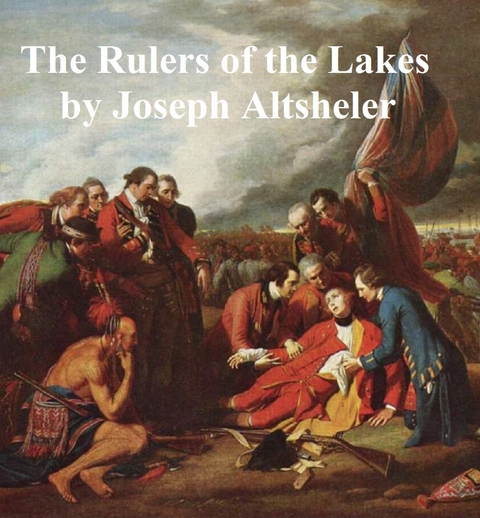
Historical novel from the French and Indian War series. The French and Indian War just after Braddock's defeat is again the background. Young Robert Lennox and his friend Tayoga, an Onondaga Indian, undertake to make a dangerous journey through the northern wilderness to warn the garrison and settlers gathered at Fort Refuge of the hostile forces. Afterwards they join the army as scouts, preceding it on an expedition to Lake George and Lake Champlain, where they engage in many fierce encounters. The story concludes with the battle of Lake George, in which the Colonists win their first great success of the war. According to Wikipedia: 'Joseph Alexander Altsheler (1862 - 1919), was an American author of popular juvenile historical fiction. Altsheler was born in Three Springs, Kentucky to Joseph and Louise Altsheler. In 1885, he took a job at the Louisville Courier-Journal as a reporter and later, an editor. He started working for the New York World in 1892, first as the paper's Hawaiian correspondent and then as the editor of the World's tri-weekly magazine. Due to a lack of suitable stories, he began writing children's stories for the magazine.'
Historical novel from the French and Indian War series. The French and Indian War just after Braddock's defeat is again the background. Young Robert Lennox and his friend Tayoga, an Onondaga Indian, undertake to make a dangerous journey through the northern wilderness to warn the garrison and settlers gathered at Fort Refuge of the hostile forces. Afterwards they join the army as scouts, preceding it on an expedition to Lake George and Lake Champlain, where they engage in many fierce encounters. The story concludes with the battle of Lake George, in which the Colonists win their first great success of the war. According to Wikipedia: "e;Joseph Alexander Altsheler (1862 - 1919), was an American author of popular juvenile historical fiction. Altsheler was born in Three Springs, Kentucky to Joseph and Louise Altsheler. In 1885, he took a job at the Louisville Courier-Journal as a reporter and later, an editor. He started working for the New York World in 1892, first as the paper's Hawaiian correspondent and then as the editor of the World's tri-weekly magazine. Due to a lack of suitable stories, he began writing children's stories for the magazine."e;
CHAPTER VII ON THE GREAT TRAIL
Robert appreciated fully all the dangers they were sure to encounter upon their perilous expedition to the lakes. Having the gift of imagination, he saw them in their most alarming colors, but having a brave heart also, he was more than willing, he was eager to encounter them with his chosen comrades by his side. The necessity of striking some quick and sharp blow became more apparent every hour, or the lakes, so vital in the fortunes of the war, would soon pass into the complete possession of the French and Indians.
The band was chosen and equipped with the utmost care. It included, of course, all of Rogers' rangers, Robert, Tayoga, Willet and Black Rifle, making a total of fifty white men, all of tried courage and inured to the forest. Besides there were fifty Mohawks under Daganoweda, the very pick of the tribe, stalwart warriors, as tough as hickory, experienced in every art of wilderness trail and war, and eager to be at the foe. Every white man was armed with a rifle, a pistol, a hatchet and a knife, carrying also a pouch containing many bullets, a large horn of powder, a blanket folded tightly and a knapsack full of food. The Mohawks were armed to the teeth in a somewhat similar fashion, and, it being midsummer and the weather warm, they were bare to the waist. Rogers, the ranger, was in nominal command of the whole hundred, white and red, but Willet and Daganoweda in reality were on an equality, and since the three knew one another well and esteemed one another highly they were sure to act in perfect coordination. Black Rifle, it was understood, would go and come as he pleased. He was under the orders of no man.
"I give you no instructions," said Colonel William Johnson to the three leaders, "because I know of none to be given under such circumstances. No man can tell what awaits you in the forest and by the lakes. I merely ask you in God's name to be careful! Do not walk into any trap! And yet 'tis foolish of me to warn Robert Rogers, David Willet, Black Rifle and Daganoweda, four foresters who probably haven't their equal in all North America. But we can ill afford to lose you. If you do not see your way to strike a good blow perhaps it would be better to come back and march with the army."
"You don't mean that, William, old friend," said Willet, smiling and addressing him familiarly by his first name. "In your heart you would be ashamed of us if we returned without achieving at least one good deed for our people. And turning from William, my old friend, to Colonel William Johnson, our commander, I think I can promise that a high deed will be achieved. Where could you find a hundred finer men than these, fifty white and fifty red?"
Daganoweda, who understood him perfectly, smiled proudly and glanced at the ranks of Mohawks who stood impassive, save for their eager, burning eyes.
"But be sure to bring back the good lads, Robert and Tayoga," said Mynheer Jacobus Huysman, who stood with Colonel William Johnson. "I would keep them from going, if I could, but I know I cannot and perhaps I am proud of them, because I know they will not listen to me."
King Hendrik of the Mohawks, in his gorgeous colored clothes, was also present, his bronzed and aged face lighted up with the warlike gleam from his eyes. Evidently his mind was running back over the countless forays and expeditions he had led in the course of fifty years. He longed once more for the forests, the beautiful lakes and the great war trail. His seventy years had not quenched his fiery spirit, but they had taken much of his strength, and so he would abide with the army, going with it on its slow march.
"My son," he said, with the gravity and dignity of an old Indian sachem, to Daganoweda, "upon this perilous chance you carry the honor and fortune of the Ganeagaono, the great warlike nation of the Hodenosaunee. It is not necessary for me to bid you do your duty and show to the Great Bear, the Mountain Wolf, Black Rifle and the other white men that a young Mohawk chief will go where any other will go, and if need be will die with all his men before yielding a foot of ground. I do not bid you do these things because I know that you will do them without any words from me, else you would not be a Mohawk chief, else you would not be Daganoweda, son of fire and battle."
Daganoweda smiled proudly. The wise old sachem had struck upon the most responsive chords in his nature.
"I will try to bear myself as a Mohawk should," he said simply.
Colden and Grosvenor were also there.
"I'm sorry our troop can't go with you," said the young Philadelphian, "but I'm not one to question the wisdom and decision of our commander-in-chief. Doubtless we'd be a drag upon such a band as yours, but I wish we could have gone. At least, we'll be with the army which is going to march soon, and perhaps we'll overtake you at Lake George before many days."
"And I," said Grosvenor to Robert and Tayoga, "am serving on the staff of the commander. I'm perhaps the only Englishman here and I'm an observer more than anything else. So I could be spared most readily, but the colonel will not let me go. He says there is no reason why we should offer a scalp without price to Tandakora, the Ojibway."
"And I abide by what I said," laughed Colonel Johnson, who heard. "You're in conditions new to you, Grosvenor, though you've had one tragic and dreadful proof of what the Indians can do, but there's great stuff in you and I'm not willing to see it thrown away before it's developed. Don't be afraid the French and Indians won't give you all the fighting you want, though I haven't the slightest doubt you'll stand up to it like a man."
"Thank you, sir," said Grosvenor, modestly.
The lad, Peter, was also eager to go, and he was soothed only by the promise of Mynheer Jacobus Huysman that he might join the army on the march to Lake George.
Then the leaders gave the word and the hundred foresters, fifty white and fifty red, plunged into the great northern wilderness which stretched through New York into Canada, one of the most beautiful regions on earth, and at that particular time the most dangerous, swarming with ruthless Indians and daring French partisans.
It was remarkable how soon they reached the wilds after leaving Albany. The Dutch had been along the Hudson for more than a century, and the English had come too, but all of them had clung mostly to the river. Powerful and warlike tribes roamed the great northern forests, and the French colonies in the north and the English colonies in the south had a healthy respect for the fighting powers of one another. The doubtful ground between was wide and difficult, and anyone who ventured into it now had peril always beside him.
The forest received the hundred, the white and the red, and hid them at once in its depths. It was mid-summer, but there was yet no brown on the leaves. A vast green canopy overhung the whole earth, and in every valley flowed brooks and rivers of clean water coming down from the firm hills. The few traces made by the white man had disappeared since the war. The ax was gone, and the scalp-hunters had taken its place.
Robert, vivid of mind, quickly responsive to the externals of nature, felt all the charm and majesty that the wilderness in its mightiest manifestations had for him. He did not think of danger yet, because he was surrounded by men of so much bravery and skill. He did not believe that in all the world there was such another hundred, and he was full of pride to be the comrade of such champions.
Daganoweda and the Mohawks reverted at once to the primitive, from which they had never departed much. The young Mohawk chieftain was in advance with Willet. He had a blanket but it was folded and carried in a small pack on his back. He was bare to the waist and his mighty chest was painted in warlike fashion. All his warriors were in similar attire or lack of it.
Daganoweda was happy. Robert saw his black eyes sparkling, and he continually raised his nose to scent the wind like some hunting animal. Robert knew that in his fierce heart he was eager for the sight of a hostile band. The enemy could not come too soon for Daganoweda and the Mohawks. Tayoga's face showed the same stern resolve, but the Onondaga, more spiritual than the Mohawk, lacked the fierceness of Daganoweda.
When they were well into the wilderness they stopped and held a consultation, in which Rogers, Willet, Black Rifle, Daganoweda, Robert and Tayoga shared. They were to decide a question of vital importance--their line of march. They believed that Dieskau and the main French army had not yet reached Crown Point, the great French fortress on Lake Champlain, but there was terrible evidence that the swarms of his savage allies were not only along Champlain but all around Lake George, and even farther south. Unquestionably the French partisan leaders were with them, and where and when would it be best for the American-Iroquois force to strike?
"I think," said Willet, "that St. Luc himself will be here. The Marquis de Vaudreuil, the new Governor General of Canada, knows his merit and will be sure to send him ahead of Dieskau."
Robert felt the thrill that always stirred him at the mention of St. Luc's name. Would they...
| Erscheint lt. Verlag | 1.3.2018 |
|---|---|
| Sprache | englisch |
| Themenwelt | Literatur ► Anthologien |
| Literatur ► Klassiker / Moderne Klassiker | |
| Literatur ► Romane / Erzählungen | |
| ISBN-10 | 1-4553-6746-X / 145536746X |
| ISBN-13 | 978-1-4553-6746-7 / 9781455367467 |
| Informationen gemäß Produktsicherheitsverordnung (GPSR) | |
| Haben Sie eine Frage zum Produkt? |
 EPUB (Adobe DRM)
Größe: 516 KB
Kopierschutz: Adobe-DRM
Adobe-DRM ist ein Kopierschutz, der das eBook vor Mißbrauch schützen soll. Dabei wird das eBook bereits beim Download auf Ihre persönliche Adobe-ID autorisiert. Lesen können Sie das eBook dann nur auf den Geräten, welche ebenfalls auf Ihre Adobe-ID registriert sind.
Details zum Adobe-DRM
Dateiformat: EPUB (Electronic Publication)
EPUB ist ein offener Standard für eBooks und eignet sich besonders zur Darstellung von Belletristik und Sachbüchern. Der Fließtext wird dynamisch an die Display- und Schriftgröße angepasst. Auch für mobile Lesegeräte ist EPUB daher gut geeignet.
Systemvoraussetzungen:
PC/Mac: Mit einem PC oder Mac können Sie dieses eBook lesen. Sie benötigen eine
eReader: Dieses eBook kann mit (fast) allen eBook-Readern gelesen werden. Mit dem amazon-Kindle ist es aber nicht kompatibel.
Smartphone/Tablet: Egal ob Apple oder Android, dieses eBook können Sie lesen. Sie benötigen eine
Geräteliste und zusätzliche Hinweise
Buying eBooks from abroad
For tax law reasons we can sell eBooks just within Germany and Switzerland. Regrettably we cannot fulfill eBook-orders from other countries.
EPUB (Ohne DRM)Digital Rights Management: ohne DRM
Dieses eBook enthält kein DRM oder Kopierschutz. Eine Weitergabe an Dritte ist jedoch rechtlich nicht zulässig, weil Sie beim Kauf nur die Rechte an der persönlichen Nutzung erwerben.
Dateiformat: EPUB (Electronic Publication)
EPUB ist ein offener Standard für eBooks und eignet sich besonders zur Darstellung von Belletristik und Sachbüchern. Der Fließtext wird dynamisch an die Display- und Schriftgröße angepasst. Auch für mobile Lesegeräte ist EPUB daher gut geeignet.
Systemvoraussetzungen:
PC/Mac: Mit einem PC oder Mac können Sie dieses eBook lesen. Sie benötigen dafür die kostenlose Software Adobe Digital Editions.
eReader: Dieses eBook kann mit (fast) allen eBook-Readern gelesen werden. Mit dem amazon-Kindle ist es aber nicht kompatibel.
Smartphone/Tablet: Egal ob Apple oder Android, dieses eBook können Sie lesen. Sie benötigen dafür eine kostenlose App.
Geräteliste und zusätzliche Hinweise
Buying eBooks from abroad
For tax law reasons we can sell eBooks just within Germany and Switzerland. Regrettably we cannot fulfill eBook-orders from other countries.
aus dem Bereich