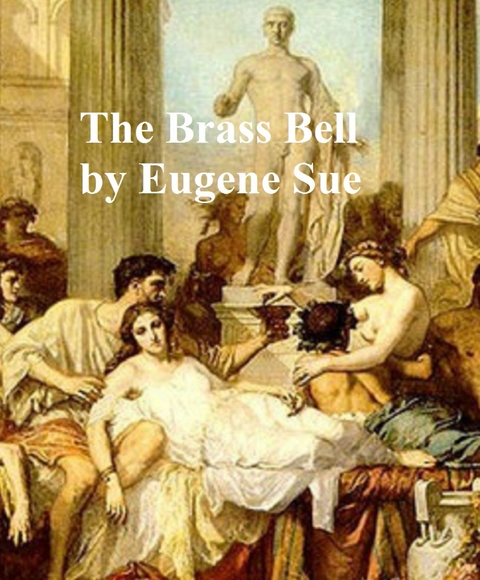
Brass Bell (eBook)
377 Seiten
Seltzer Books (Verlag)
978-1-4553-2806-2 (ISBN)
According to Wikipedia: 'Joseph Marie Eugène Sue (20 January 1804 - 3 August 1857) was a French novelist... His naval experiences supplied much of the materials of his first novels, Kernock le pirate (1830), Atar-Gull (1831), La Salamandre (2 vols., 1832), La Coucaratcha (4 vols., 1832-1834), and others, which were composed at the height of the Romantic movement of 1830. In the quasi-historical style he wrote Jean Cavalier, ou Les Fanatiques des Cevennes (4 vols., 1840) and Lautréaumont (2 vols., 1837). He was strongly affected by the Socialist ideas of the day, and these prompted his most famous works: Les Mystères de Paris (10 vols., 1842-1843) and Le Juif errant (tr. 'The Wandering Jew') (10 vols., 1844-1845), which were among the most popular specimens of the roman-feuilleton. He followed these up with some singular and not very edifying books: Les Sept pêchés capitaux (16 vols., 1847-1849), which contained stories to illustrate each of the Seven Deadly Sins, Les Mystères du peuple (1849-1856), which was suppressed by the censor in 1857, and several others, all on a very large scale, though the number of volumes gives an exaggerated idea of their length. Some of his books, among them Le Juif Errant and the Mystères de Paris, were dramatized by himself, usually in collaboration with others. His period of greatest success and popularity coincided with that of Alexandre Dumas, père, with whom he has been compared. Sue has neither Dumas's wide range of subject, nor, above all, his faculty of conducting the story by means of lively dialogue; he has, however, a command of terror which Dumas seldom or never attained... Seven years after the publication of Sue's Les Mystères du peuple, a French revolutionary named Maurice Joly plagiarized aspects of the work for his anti-Napoleon III pamphlet, Dialogues in Hell between Machiavelli and Montesquieu, which in turn was later adapted by the Prussian Hermann Goedsche into an 1868 work entitled Biarritz, in which Goedsche substituted Jews for Sue's infernal Jesuit conspirators. Ultimately, this material became incorporated directly into the notorious anti-Semitic hoax, The Protocols of the Elders of Zion.'
According to Wikipedia: "e;Joseph Marie Eugene Sue (20 January 1804 - 3 August 1857) was a French novelist... His naval experiences supplied much of the materials of his first novels, Kernock le pirate (1830), Atar-Gull (1831), La Salamandre (2 vols., 1832), La Coucaratcha (4 vols., 1832-1834), and others, which were composed at the height of the Romantic movement of 1830. In the quasi-historical style he wrote Jean Cavalier, ou Les Fanatiques des Cevennes (4 vols., 1840) and Lautreaumont (2 vols., 1837). He was strongly affected by the Socialist ideas of the day, and these prompted his most famous works: Les Mysteres de Paris (10 vols., 1842-1843) and Le Juif errant (tr. "e;The Wandering Jew"e;) (10 vols., 1844-1845), which were among the most popular specimens of the roman-feuilleton. He followed these up with some singular and not very edifying books: Les Sept peches capitaux (16 vols., 1847-1849), which contained stories to illustrate each of the Seven Deadly Sins, Les Mysteres du peuple (1849-1856), which was suppressed by the censor in 1857, and several others, all on a very large scale, though the number of volumes gives an exaggerated idea of their length. Some of his books, among them Le Juif Errant and the Mysteres de Paris, were dramatized by himself, usually in collaboration with others. His period of greatest success and popularity coincided with that of Alexandre Dumas, pere, with whom he has been compared. Sue has neither Dumas's wide range of subject, nor, above all, his faculty of conducting the story by means of lively dialogue; he has, however, a command of terror which Dumas seldom or never attained... Seven years after the publication of Sue's Les Mysteres du peuple, a French revolutionary named Maurice Joly plagiarized aspects of the work for his anti-Napoleon III pamphlet, Dialogues in Hell between Machiavelli and Montesquieu, which in turn was later adapted by the Prussian Hermann Goedsche into an 1868 work entitled Biarritz, in which Goedsche substituted Jews for Sue's infernal Jesuit conspirators. Ultimately, this material became incorporated directly into the notorious anti-Semitic hoax, The Protocols of the Elders of Zion."e;
| Erscheint lt. Verlag | 1.3.2018 |
|---|---|
| Sprache | englisch |
| Themenwelt | Literatur ► Anthologien |
| Literatur ► Klassiker / Moderne Klassiker | |
| Literatur ► Romane / Erzählungen | |
| ISBN-10 | 1-4553-2806-5 / 1455328065 |
| ISBN-13 | 978-1-4553-2806-2 / 9781455328062 |
| Informationen gemäß Produktsicherheitsverordnung (GPSR) | |
| Haben Sie eine Frage zum Produkt? |
 EPUB (Adobe DRM)
Größe: 376 KB
Kopierschutz: Adobe-DRM
Adobe-DRM ist ein Kopierschutz, der das eBook vor Mißbrauch schützen soll. Dabei wird das eBook bereits beim Download auf Ihre persönliche Adobe-ID autorisiert. Lesen können Sie das eBook dann nur auf den Geräten, welche ebenfalls auf Ihre Adobe-ID registriert sind.
Details zum Adobe-DRM
Dateiformat: EPUB (Electronic Publication)
EPUB ist ein offener Standard für eBooks und eignet sich besonders zur Darstellung von Belletristik und Sachbüchern. Der Fließtext wird dynamisch an die Display- und Schriftgröße angepasst. Auch für mobile Lesegeräte ist EPUB daher gut geeignet.
Systemvoraussetzungen:
PC/Mac: Mit einem PC oder Mac können Sie dieses eBook lesen. Sie benötigen eine
eReader: Dieses eBook kann mit (fast) allen eBook-Readern gelesen werden. Mit dem amazon-Kindle ist es aber nicht kompatibel.
Smartphone/Tablet: Egal ob Apple oder Android, dieses eBook können Sie lesen. Sie benötigen eine
Geräteliste und zusätzliche Hinweise
Buying eBooks from abroad
For tax law reasons we can sell eBooks just within Germany and Switzerland. Regrettably we cannot fulfill eBook-orders from other countries.
EPUB (Ohne DRM)Digital Rights Management: ohne DRM
Dieses eBook enthält kein DRM oder Kopierschutz. Eine Weitergabe an Dritte ist jedoch rechtlich nicht zulässig, weil Sie beim Kauf nur die Rechte an der persönlichen Nutzung erwerben.
Dateiformat: EPUB (Electronic Publication)
EPUB ist ein offener Standard für eBooks und eignet sich besonders zur Darstellung von Belletristik und Sachbüchern. Der Fließtext wird dynamisch an die Display- und Schriftgröße angepasst. Auch für mobile Lesegeräte ist EPUB daher gut geeignet.
Systemvoraussetzungen:
PC/Mac: Mit einem PC oder Mac können Sie dieses eBook lesen. Sie benötigen dafür die kostenlose Software Adobe Digital Editions.
eReader: Dieses eBook kann mit (fast) allen eBook-Readern gelesen werden. Mit dem amazon-Kindle ist es aber nicht kompatibel.
Smartphone/Tablet: Egal ob Apple oder Android, dieses eBook können Sie lesen. Sie benötigen dafür eine kostenlose App.
Geräteliste und zusätzliche Hinweise
Buying eBooks from abroad
For tax law reasons we can sell eBooks just within Germany and Switzerland. Regrettably we cannot fulfill eBook-orders from other countries.
aus dem Bereich