


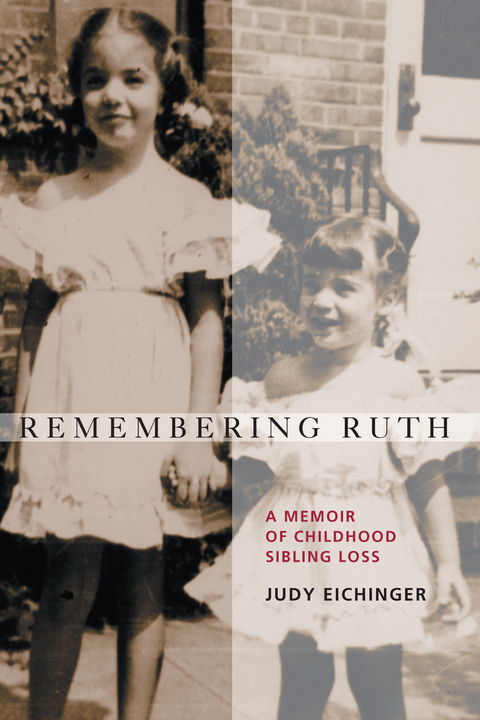
Remembering Ruth (eBook)
200 Seiten
Full Court Press (Verlag)
978-1-946989-15-4 (ISBN)
CHAPTER 12
In the beginning of my senior year, I was accepted into Penn State’s first study abroad program at Strasbourg University in France. I spent April through June in the lovely Alsace-Lorraine region of eastern France on the German border.
It should have been an exciting, carefree time—the culmination of my academic career. Instead, it was a period of acute anxiety accompanied by intense feelings of isolation.
I was extremely anxious on the plane. The flight from New York to Stuttgart was a nightmare. I didn’t sleep a wink, since I was convinced I needed to stay alert for any emergency.
Instead, I wrote a “Dear John” letter to my boyfriend, Bill. In my letter, I gave all the reasons—real and manufactured—why I had to end our relationship. While almost everyone else on the plane slept, I filled sheets of thin white stationery with my ramblings:
…Even though I care for you very much, I think we need some space. With me in Europe and you still at school, it’s a good time to take a break. Maybe we can reconnect after I get back… .
I was exhausted when the plane landed. After going through customs, we boarded a bus for the three-hour ride through the Black Forest to Strasbourg. We traveled on scenic mountain pathways through thick stands of pine that blocked the sun. I tried to enjoy the ride, but I worried that the bus was traveling too fast on the winding two-lane road.
Despite fatigue and lack of sleep, my first view of Strasbourg was magical. The university lay near the center of the city. We rode through narrow streets lined with residences and commercial buildings in varying shades of stucco and timber. Although French, there was a definite German influence—understandable since it’s close to the German border and had been annexed by Germany during the war. Along the way, we also passed the imposing Gothic Notre Dame Cathedral, a dominating presence in the center of town.
We rode on to the university, one of the largest in France. The campus contained a variety of old and new buildings, one an imposingly long, low, gray stone edifice. Several were connected by paths that criss-crossed an expansive green quad.
It was late morning. The air was chilly, but the sun shone brightly. We got off and waited with our Penn State advisor for the driver to open the storage bin and unload our luggage. As he hefted the bags onto the ground, we grabbed ours and lifted or dragged them along to our dorm.
The first few days, I cried myself to sleep. In addition to being lonely, I was very constipated. It was a family problem that I’d had to deal with occasionally, but this time it seemed to last forever. I kept drinking apple juice, but nothing happened for well over a week. It never occurred to me to get a laxative at the local pharmacy.
Initially, I shared a large room with three other Penn State students. Shades of my freshman year, I thought. After several days, we moved to single rooms. Mine was very stark, and cockroaches were my constant companions. When I saw them scurrying around, I froze in fear. I gradually came to accept them as part of the living quarters—as did my fellow students. “Just part of the territory,” one of them said.
The bed was similar to an army cot, with warm but drab-colored blankets. There was a simple table and chair, a free-standing clothes closet, and a window that opened onto a dingy courtyard.
I wrote to my parents every day—long, cheery letters on thin blue aerogram stationery. I couldn’t believe they’d let me go to France, and I felt an obligation to keep them in the loop.
“If anything happens to you, I couldn’t go on living,” Mom had told me after Ruth died. The unwritten message had been to stay safe because Mom’s life was in my hands. I know now that it was a tremendous burden to carry. At the time, I felt compelled to give them a detailed account of each day (with editorial license, of course).
I didn’t know any of the girls in the program well, so I had no real buddies to hang out with. As usual, I got along with the other students but didn’t bond with anyone.
Except for French language and literature, our courses were taught in English and were just for those in the Penn State program. Because of this, we felt separate from the regular French students. We’d stick together, going into town in groups of two or three and strolling down the narrow stone streets and along the canal. We usually stopped at a local patisserie for a café au lait and croissants or tarte aux fruits.
In addition to classes, there were organized day and weekend trips to local sites. One of the French teachers was a dashing, charming professor in his forties who invited two or three students at a time to take weekend excursions with him in his sports car. After the first couple of trips, word got around that he was a very fast, reckless driver. I was a scaredy-cat, so I vowed never to go with him. That summer, he was killed in a car accident. Thank goodness no one had been in the car with him, I thought.
One weekend I visited Baden-Baden with a classmate. The historic town lies just over the French border in southeast Germany—a half-hour train ride from Strasbourg. Pretty white stone houses with red roofs dotted the hills around it, on the edge of the Black Forest.
Baden means “baths,” and there were more than twenty natural hot springs in the area. It had been named Baden-Baden to distinguish it from other towns whose names began with Baden.
We stayed at a lovely old bed-and-breakfast close to the middle of town. The streets were lined with stone buildings, boutiques, and open-air restaurants. What I remember most about the B&B was the feather bed on which I slept. Goldilocks would have considered it “soft but not too soft, and deep but not too deep—just right.” The bedding enveloped me, and I sank down into it and fell into a sweet, dreamless sleep.
But something I witnessed the following morning made me panic and want to get out of Germany as quickly as possible. Down the street from our B&B, a group of uniformed men lined up in formation. I immediately thought they were German soldiers, and that I, a Jew, was in danger. My mouth went dry, and I started to panic. I asked a local townsperson who they were and what was going on.
“They’re the fire brigade,” he said in French with a marked Alsatian accent. “They’re lining up to march in a local parade.”
My relief was palpable, but I continued to feel an underlying unease about being in Germany.
No members of my immediate family had died in the Holocaust. My paternal Jewish ancestors had lived there but emigrated to the United States long before the lead-up to World War II. My maternal grandmother left Russia as a teenager shortly after the turn of the twentieth century to escape anti-Jewish pogroms.
I think my heightened vulnerability after Ruth died, as much as being Jewish, had exacerbated my fear.
That feeling of trepidation in Baden-Baden was nothing, though, to how I felt on a visit to Natzweiler-Struthof—the smallest of the German concentration camps and the only one currently on French soil. It sat on a hill in the Vosges Mountains, thirty-one miles southwest of Strasbourg, on what had been German-occupied territory during World War II.
One day, our Penn State faculty advisor had come into our classroom to announce the trip. “We’ve hired a mini-bus to take students to see a concentration camp that’s been preserved as it was during the war,” he’d said. “If you’d like to go, let me know.” I had eagerly signed up. I’d felt it was important to see what one was like.
A dozen of us traveled to the camp a week later. It was a dreary, overcast day. Fear gripped me the minute we walked through the main gate. The high doors, wooden and wired, closed behind us, and I felt trapped. I was sure there’d be no escape. I started to sweat despite the cool weather. My heart began racing, and I struggled to keep my composure.
We went on a tour with other visitors—some with young children. While the youngsters ran around playfully, the guide led us past several stark wooden structures and told us matter-of-factly what they had been used for during the war. ...
| Erscheint lt. Verlag | 9.3.2018 |
|---|---|
| Sprache | englisch |
| Themenwelt | Literatur ► Biografien / Erfahrungsberichte |
| ISBN-10 | 1-946989-15-0 / 1946989150 |
| ISBN-13 | 978-1-946989-15-4 / 9781946989154 |
| Informationen gemäß Produktsicherheitsverordnung (GPSR) | |
| Haben Sie eine Frage zum Produkt? |
 EPUB (Ohne DRM)
Größe: 556 KB
Digital Rights Management: ohne DRM
Dieses eBook enthält kein DRM oder Kopierschutz. Eine Weitergabe an Dritte ist jedoch rechtlich nicht zulässig, weil Sie beim Kauf nur die Rechte an der persönlichen Nutzung erwerben.
Dateiformat: EPUB (Electronic Publication)
EPUB ist ein offener Standard für eBooks und eignet sich besonders zur Darstellung von Belletristik und Sachbüchern. Der Fließtext wird dynamisch an die Display- und Schriftgröße angepasst. Auch für mobile Lesegeräte ist EPUB daher gut geeignet.
Systemvoraussetzungen:
PC/Mac: Mit einem PC oder Mac können Sie dieses eBook lesen. Sie benötigen dafür die kostenlose Software Adobe Digital Editions.
eReader: Dieses eBook kann mit (fast) allen eBook-Readern gelesen werden. Mit dem amazon-Kindle ist es aber nicht kompatibel.
Smartphone/Tablet: Egal ob Apple oder Android, dieses eBook können Sie lesen. Sie benötigen dafür eine kostenlose App.
Geräteliste und zusätzliche Hinweise
Buying eBooks from abroad
For tax law reasons we can sell eBooks just within Germany and Switzerland. Regrettably we cannot fulfill eBook-orders from other countries.
aus dem Bereich


