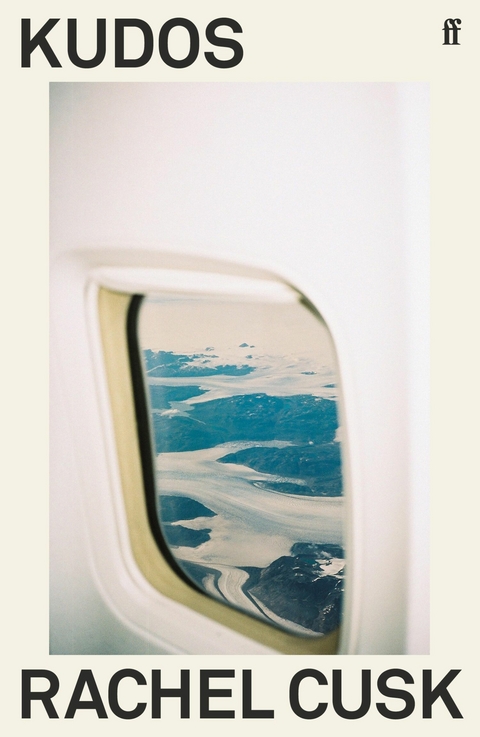
Kudos (eBook)
256 Seiten
Faber & Faber (Verlag)
978-0-571-34673-8 (ISBN)
Rachel Cusk is the author of Second Place (Prix Femina étranger), the Outline trilogy, the memoirs A Life's Work and Aftermath, and several other works of fiction and nonfiction, including her most recent novel Parade (Goldsmiths Prize, 2024). She is a Guggenheim Fellow, the recipient of the 2024 Malaparte Prize, and has been awarded the title of Chevalier de l'ordre des arts et des lettres. She lives in Paris.
'One of the most astoundingly original and necessary books I've ever read.'Guardian'A landmark in twenty-first-century English literature.'Observer'A perfect synthesis of form and content.'Deborah LevyA woman on a plane listens to the stranger in the seat next to hers telling her the story of his life: his work, his marriage, and the harrowing night he has just spent burying the family dog. That woman is Faye, who is on her way to Europe to promote the book she has just published. Once she reaches her destination, the conversations she has with the people she meets - about art, about family, about politics, about love, about sorrow and joy, about justice and injustice - include the most far-reaching questions human beings ask. These conversations, the last of them on the phone with her son, rise dramatically and majestically to a beautiful conclusion. Following the novels Outline and Transit, Kudos completes Rachel Cusk's trilogy with overwhelming power.
Rachel Cusk is the author of the trilogy Outline, Transit, Kudos; the memoirs A Life's Work, The Last Supper and Aftermath; and several other novels: Saving Agnes (winner of the Whitbread Award), The Temporary, The Country Life(winner of the Somerset Maugham Award), The Lucky Ones, In the Fold, Arlington Park and The Bradshaw Variations. She was chosen as one of Granta's 2003 Best Young British Novelists. She has been shortlisted for the Goldsmiths Prize three times, most recently for Kudos.
The conference was being held in a suburb by the sea, whose dockyards were so extensive that the brightblue water remained hidden behind mile after mile of warehouses and silos and giant stacks of shipping containers. Enormous cranes loaded or unloaded the colourful rectangles one by one from the deserted decks of vast tankers that waited amid the concrete expanses of the dockside.
The hotel was a grey block surrounded by other, taller blocks of apartments, all of whose windows remained covered day and night by metal shutters. Directly in front of the hotel was a car park. Several flagpoles stood erect in a line in the tarmac and their wires made a singing sound in the wind like that of a ship’s rigging. On the right-hand side a bank of dry grass rose up to meet a wall with some overgrown trees – cedars and eucalyptus – behind it. They formed a neglected avenue along what appeared to be an old driveway made of dusty white earth that curved around to meet a pair of rusty gates ornately fashioned out of iron, and then continued beyond them, disappearing into the trees around the hillside where a wedge of glittering sea could just be seen below. The gates were locked and the earth around them was so undisturbed it suggested they had not been opened in a long time.
The conference was held at this hotel year after year, one of the delegates told me, despite the fact that it was ugly and also inconvenient, being a long way from the centre and with little in the way of transport links. He supposed the organisers had a deal with the manager. At mealtimes all the delegates had to be loaded into a bus and driven for twenty minutes through the featureless, broken-down suburbs to a restaurant, where he supposed they had another deal. The restaurant, he added, was actually very good, since eating in this country was a national sport, but the problem was that the deal – whatever it was – involved a set menu, so you were surrounded by people feasting on a whole variety of delicacies while being given no choice in what to eat yourself. More than once he had seen the organisers proudly lead a group of delegates outside – where chefs were cooking fresh fish and great skewers of squid and prawns on enormous braziers – in order to take photographs of the scene, before being returned inside to face the same meagre panoply of soup and cold cuts they’d been offered the day before. The hotel itself provided only tea and coffee, but somewhere hidden in that concrete shoebox or its environs, he said, was a pastry chef of rare talent, and he urged me to try one of the small tarts that were usually circulated with the hot drinks in the breaks between sessions. These tarts were a common element of the national fare, he said, and could be bought in mass-produced form from supermarkets, but not since childhood had he tasted an example to match those on offer here. He had almost forgotten, so ubiquitous were the copies, that the original had ever existed, and it almost gave him pain to re-enter the colour and texture and savour of that lost authenticity, which was not, he felt almost certain, the work of a professional team but of someone working, as it were, alone. He had never, however, in his years of coming here, glimpsed that person, nor even made an effort to enquire about him or her; he merely knew, when he bit into one of the fresh, delicious tarts, that they were unmistakably the work of the same individual. There had been an English delegate here once who had claimed to have had the same epiphany with a national sweet – it was called, he believed, the Eccles cake – and this man’s remarks had caused him to wonder whether something of the lost mother wasn’t being sought in that case, because for himself it was merely a question of art. The original recipe for the tart, it was said, had been devised by nuns who used such quantities of egg whites to starch their habits that they had to think of something to do with all the yolks. A convent would not be one’s first port of call in search of the maternal, that much was true; and he had even wondered whether this tart of the nuns, to which the citizens of their nation – especially the men – were virtually addicted, symbolised something about the country’s attitude to women. When he thought of those habits, so stiff and white and pure, it occurred to him that they were the vestments of sexlessness and of a life without men. The sweet little tart, by which the man’s hungry mouth was fobbed off and occupied, was perhaps nothing less than these women’s divested femininity, separated and handed over, as it were, on a plate; a method of keeping the world at bay as well as a sign, he liked to think, of the happiness of that state, for he didn’t believe that anything created in suffering and self-abnegation could taste quite so delicious.
The hotel had a long central corridor on each floor with a row of rooms to either side. The floors were all identical, with brown carpets and beige walls and rooms standing in a row along the corridors in exactly the same sequence. There were two big stainless steel lifts that rose and fell slowly, the doors continuously opening and closing in the reception lobby, where people sat on plain red sofas apparently mesmerised by the endlessly repeating spectacle of one set of doors closing on a human group while the other set of doors released a new group. Sometimes, in the corridors on the upper floors, the doors to the rooms stood open while they were being cleaned and it could be seen that they were all the same, with the same brown carpet and shiny laminated-wood furniture and the same view of the surrounding apartment blocks with their shuttered windows. Yet on those occasions when a guest was to be seen letting themselves into their room with the hotel’s plastic key card, something in their demeanour suggested they unconsciously believed their own room to be recognisable and distinct. The cleaners wore white aprons and worked all hours of the day, moving steadily along the corridors and up and down the floors and back again. They had big plastic-wrapped bundles of starched white bed linen that they left piled outside in the corridors while they worked inside the rooms, so that the corridor sometimes looked like a deserted landscape where snow has just fallen.
Downstairs in the reception area there was a large television screen surrounded by sofas where groups of men often sat or stood to watch a few minutes of football or Formula One racing. When the news came on the men usually wandered away, so that the newsreader would be left earnestly addressing an empty space. Directly on the other side of the big plate-glass windows was the smoking area, where more groups of men and the occasional woman stood, mirroring the group around the television inside. These two spaces were also where the delegates tended to gather before an event or to take the bus to the restaurant, and on those occasions the presence of the large panes of glass between one group of delegates and another – each able to see but not hear the other – seemed to signify something about the artificiality of our situation. A little further along there was a bench which faced away from the hotel, looking out over the parked cars, and which seemed to have been elected as a place for solitude, despite the fact that it stood just on the other side of the windows and could be clearly seen from inside. The people on the sofas were no more than a foot or two away from the person on the bench, the back of whose head they could see in great detail. Nevertheless, when someone sat on that bench it was understood they wished to be alone or to be approached singly and with caution, whereupon a much quieter and lengthier conversation than those in which the group was generally engaged could ensue. It was here also that people often made telephone calls, speaking in other languages than the English that was generally the currency of conversation.
The organisers of the conference wore t-shirts printed with the conference logo and were mostly very young. They gave an appearance of constant watchfulness and anxiety, since it was their responsibility to make sure that everyone attended their events or caught the bus, and were often to be seen locked in sombre consultation, their eyes glancing frequently around the hotel lobby as they talked. If a delegate was absent there were frantic searches and lengthy narratives concerning when he or she had last been seen. Often one of the organisers would go up in the lift to search upstairs, whereupon the doors of the other lift would not infrequently open to reveal the missing delegate. One of the other writers present, a Welsh novelist, was the cause of constant anxiety for his habit of setting off on foot into the undistinguished labyrinth of the surrounding suburbs and returning with stories of churches or other distant landmarks he had visited. He wore walking boots and always carried a small knapsack, as though to remind the organisers of the tenuousness of their hold on him, and indeed he had several times failed to present himself at mealtimes for the bus, only to appear at the restaurant slightly flushed and breathless but nonetheless punctual, having walked there from somewhere else. This same man went to great lengths to befriend other participants – organisers and delegates alike – writing down the particulars of things they said or places they talked about in a small creased leather notebook and frequently returning to them to check that...
| Erscheint lt. Verlag | 1.5.2018 |
|---|---|
| Verlagsort | London |
| Sprache | englisch |
| Themenwelt | Literatur ► Romane / Erzählungen |
| Schlagworte | Deborah Levy • fate • J.M. Coetzee • kudos • masterpiece • my year of rest and relaxation • Ottessa Moshfegh • Philip Roth • Rachel Cusk • Sheila Heti • Trilogy |
| ISBN-10 | 0-571-34673-1 / 0571346731 |
| ISBN-13 | 978-0-571-34673-8 / 9780571346738 |
| Informationen gemäß Produktsicherheitsverordnung (GPSR) | |
| Haben Sie eine Frage zum Produkt? |
 EPUB (Adobe DRM)
Kopierschutz: Adobe-DRM
Adobe-DRM ist ein Kopierschutz, der das eBook vor Mißbrauch schützen soll. Dabei wird das eBook bereits beim Download auf Ihre persönliche Adobe-ID autorisiert. Lesen können Sie das eBook dann nur auf den Geräten, welche ebenfalls auf Ihre Adobe-ID registriert sind.
Details zum Adobe-DRM
Dateiformat: EPUB (Electronic Publication)
EPUB ist ein offener Standard für eBooks und eignet sich besonders zur Darstellung von Belletristik und Sachbüchern. Der Fließtext wird dynamisch an die Display- und Schriftgröße angepasst. Auch für mobile Lesegeräte ist EPUB daher gut geeignet.
Systemvoraussetzungen:
PC/Mac: Mit einem PC oder Mac können Sie dieses eBook lesen. Sie benötigen eine
eReader: Dieses eBook kann mit (fast) allen eBook-Readern gelesen werden. Mit dem amazon-Kindle ist es aber nicht kompatibel.
Smartphone/Tablet: Egal ob Apple oder Android, dieses eBook können Sie lesen. Sie benötigen eine
Geräteliste und zusätzliche Hinweise
Buying eBooks from abroad
For tax law reasons we can sell eBooks just within Germany and Switzerland. Regrettably we cannot fulfill eBook-orders from other countries.
aus dem Bereich