Zum Hauptinhalt springen
Nicht aus der Schweiz? Besuchen Sie lehmanns.de

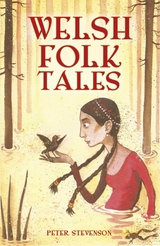
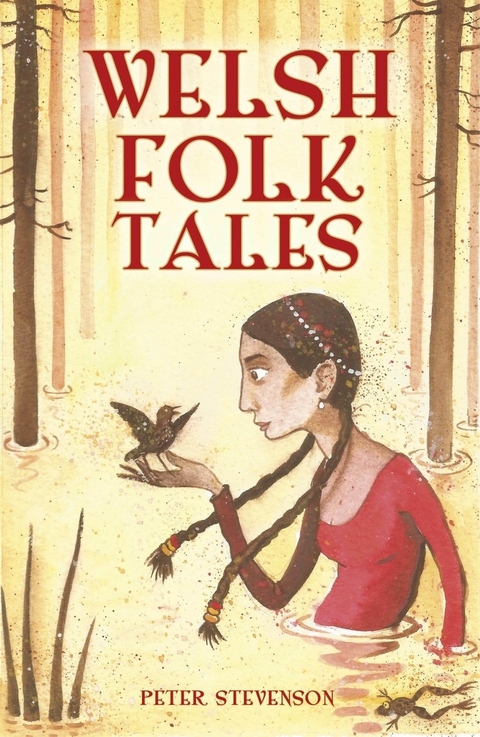
Welsh Folk Tales (eBook)

eBook Download: EPUB
2017 | 1. Auflage
272 Seiten
The History Press (Verlag)
9780750981903 (ISBN)

Lese- und Medienproben

Welsh Folk Tales -  Peter Stevenson
Systemvoraussetzungen
9,99 inkl. MwSt
(CHF 9,75)
Der eBook-Verkauf erfolgt durch die Lehmanns Media GmbH (Berlin) zum Preis in Euro inkl. MwSt.
  • Download sofort lieferbar
  • Zahlungsarten anzeigen
This book, a selection of folk tales, true tales, tall tales, myths, gossip, legends and memories, celebrates and honours unique Welsh stories. Some are well known, others from forgotten manuscripts or out-of-print volumes, and some are contemporary oral tales. They reflect the diverse tradition of storytelling, and the many meanings of 'chwedlau'. If someone says, 'Chwedl Cymraeg?' they are asking, 'Do you speak Welsh?' and 'Do you tell a tale in Welsh?' Here is the root of storytelling, or 'chwedleua', in Wales. It is part of conversation. This book, one to linger over and to treasure, keeps these ancient tales alive by retelling them for a new audience.

PETER STEVENSON is a professional storyteller and illustrator, and is the organiser of Aberystwyth Storytelling Festival. He performs widely at festivals and events and has curated many exhibitions based on the tales he tells. He has produced books internationally for publishers such as Ladybird and Hodder & Stoughton.
This book, a selection of folk tales, true tales, tall tales, myths, gossip, legends and memories, celebrates and honours unique Welsh stories. Some are well known, others from forgotten manuscripts or out-of-print volumes, and some are contemporary oral tales. They reflect the diverse tradition of storytelling, and the many meanings of 'chwedlau'. If someone says, 'Chwedl Cymraeg?' they are asking, 'Do you speak Welsh?' and 'Do you tell a tale in Welsh?' Here is the root of storytelling, or 'chwedleua', in Wales. It is part of conversation. This book, one to linger over and to treasure, keeps these ancient tales alive by retelling them for a new audience.

1


BRANWEN, RED AND WHITE BOOKS


Charlotte and The Mabinogion


Around 1350, the ‘White Book of Rhydderch’ was thought to have been copied out by five monks at Ystrad Fflur in Ceredigion for the library of Rhydderch ab Ieuan Llwyd, a literary patron from Llangeitho. A few years later, Hywel Fychan fab Hywel Goch of Buellt wrote out the ‘Red Book of Hergest’ for Hopcyn ap Tomas ab Einion of Ystradforgan. These two books contain the earliest versions of ‘Y Pedair Cainc Y Mabinogi [the Four Branches of the Mabinogi]’, the ancient myths and legends of Wales. They are written in an old form of Welsh, and lay largely unknown to the wider world until William Owen Pughe translated the story of Pwyll into English in 1795 under the title, The Mabinogion, or Juvenile Amusements, being Ancient Welsh Romances, while leaving out the sexual shenanigans. In 1828, the Irish antiquarian Thomas Crofton Croker published Pughe’s translation of Branwen, which caught the attention of the sixteen-year-old daughter of the Ninth Earl of Lindsey.

Charlotte Bertie was a free-thinker, a rebel and a Chartist, who disapproved of her aristocratic parents’ politics. Aged twenty-one, she married John Guest, manager of Dowlais Ironworks, and moved from Lincolnshire to Wales. On her husband’s death she took over as manager, created a cradle-to-grave education system, built progressive schools, supported Turkish refugees, learned Persian and Welsh, brought up ten children and read them fairy tales. When Pughe died in 1835, she completed his translations of the Red and White Books into English, and published them three years later as The Mabinogion.

Within Guest’s book are the Four Branches of the Mabinogi. They have a narrative structure very different to literature, a sense of tales for telling. They sketch only the bare bones of characters, moving through time and space as if they were mist, and make little attempt to be moralising or didactic. They are tales of the tribe, snapshots of moments of upheaval in the history of the land.

The first branch tells of friendships and relationships, the meeting of Pwyll and Rhiannon, and the birth of Pryderi, the only character to feature in all four branches. The second concerns the avoidance and aftermath of war between Bendigeidfran of Wales and Matholwch of Ireland, and Branwen’s doomed arranged marriage. The third tells of the human cost of immigration, settlers and craftsmen forced to move on, and Manawydan’s frustrated attempts to hang a mouse who has stolen his corn. The fourth describes the pain of desire, the rape of Goewin, Arianrhod’s virgin births, her sibling rivalry with Gwydion, and the objectification of Blodeuwedd.

Guest’s politics influenced her passion for the female characters, and through her translation the myth of Branwen became known far beyond Wales.

Branwen Ferch Llŷr


Bendigeidfran fab Llŷr, the giant King of the Island of the Mighty, sat by the sea at Harlech in Ardudwy, with his brother Manawydan and his two half-brothers, Nysien, who could make peace between two armies, and Efnysien, who could cause war between two brothers.

Bendigeidfran saw thirteen ships approaching from the south of Ireland, sailing swiftly with the wind behind them, flying pennants of silk brocade. One ship drew ahead, a shield raised with its tip pointing upwards as a sign of peace. A voice cried out, ‘Lord, this is Matholwch, King of Ireland, seeking to unite his land with yours by taking your sister Branwen ferch Llŷr, one of the Three Chief Maidens of the Island of the Mighty, as his wife.’

A council was held at Aberffraw. Great tents were erected, for Bendigeidfran was far too big to fit in a house, and a feast was prepared. Bendigeidfran sat in the middle, Matholwch next to him and Branwen by his side. They ate and drank, and when everyone thought it would be better to sleep than feast, they slept. That night Branwen slept with Matholwch.

Efnysien had not been told of his sister Branwen’s marriage, and he was furious. He went to the stables and took hold of Matholwch’s horses, cut off their lips to the teeth, their ears flush to their heads, their tails down to their crops, and where he could get hold of their eyelids he cut them to the bone. He maimed those horses till they were worthless. When news reached Matholwch, he was insulted and humiliated, and prepared his ships to sail. Bendigeidfran sent a messenger to explain that he had known nothing of this and he offered gifts as compensation, a new horse for every one maimed, a gold plate as wide as his face, and a silver staff as thick as his little finger and as tall as himself.

Matholwch returned to Bendigeidfran’s court. A council was held, tents were erected, and they feasted, though Matholwch’s conversation seemed touched with sadness. Bendigeidfran offered him another gift, a Pair Dadeni, a Cauldron of Rebirth, saying, ‘If one of your men is killed in battle, throw him in the cauldron and the following day he will be alive, though unable to speak’.

Matholwch asked where the cauldron came from. Bendigeidfran explained it had been given to him by an Irishman, Llasar Llais Gyfnewid. Matholwch knew Llasar. ‘I was hunting in Ireland, when this huge red-haired man walked out of a lake with a cauldron strapped to his back. A woman and children followed him, and if he was big, well, she was enormous, as if she was about to give birth to a baby the size of an armed warrior. They stayed at my court, grumbled about everything, and upset everyone. After four months, my people told me to get rid of them, or else they would get rid of me. So I employed every blacksmith in Ireland to build a hall of iron and fill it with charcoal and beer. Llasar and his family followed the smell of the beer. Once they were inside, I locked the door, set fire to the charcoal, and the blacksmiths blew on the bellows till the house was white hot. Llasar drank all the beer, punched a hole through the molten wall and they escaped, taking the cauldron with them.’

After a night of singing and feasting, Matholwch set sail in thirteen ships for home, taking Branwen and the cauldron with him. In Ireland, Branwen was embraced and offered brooches, rings and jewels. In nine months she gave birth to a son, Gwern, who was taken from his mother and given to foster parents, the finest in Ireland for rearing warriors.

When Matholwch’s people learned of the cruelty inflicted on his horses, they mocked him, and he knew he would get no peace until he took revenge on the Welsh. So he threw Branwen from his bed, sent her to work in the kitchens, and ordered the butcher to slap her face each day with his bloodied hands. For three years, her only conversation was with a starling who sang to her from the kitchen windowsill. She poured out her heart and wrote a letter to her brother Bendigeidfran telling him of her woes, tied it to the bird’s wing and sent it flying towards Wales.

The starling found Bendigeidfran at Caer Saint in Arfon. It sat on his shoulders, ruffled its feathers, and sang. When Bendigeidfran heard of his sister’s punishment, he called a council of the warriors of the Island of the Mighty. They came from all one hundred and fifty-four regions, and after feasting, they set sail in ships bound for Ireland. Bendigeidfran, with his harpers at his shoulders, waded through the water, for the sea was not deep and only the width of two rivers, the Lli and Archan.

The Kings of Ireland’s pig-keepers watched this strange sight approaching over the horizon. They told Matholwch they had seen a mountain covered in trees, with a high ridge and a lake on either side, and the mountain was moving.

‘Lady, what is this?’ asked Matholwch.

‘I am no Lady,’ said Branwen, ‘but these are the men of the Island of the Mighty. They have heard of my punishment.’

‘What are the trees?’

‘Masts of ships.’

‘What is the mountain?’

‘My brother Bendigeidfran, wading through the shallows, for no ship is big enough to hold him.’

‘And the ridge and the lake?’

‘The ridge is his nose and the lakes are his eyes.’

Matholwch and the warriors of Ireland retreated over the Shannon, and burned the bridge behind them. When Bendigeidfran and his army reached this strange river, he made a bridge with his own body and his warriors crossed over.

Matholwch sent a messenger to Bendigeidfran offering compensation for Branwen’s punishment. He offered to make her son, Gwern, King of Ireland. Branwen advised Bendigeidfran to accept, for she had no wish to see her two countries ravaged by war. A council was held, Matholwch built a house bigger than a tent, big enough to hold Bendigeidfran and the men of the Island of the Mighty, and peace broke out.

But the Irish played a trick. They hammered long nails into every one of the hundred pillars that held up the house, hung a skin bag, a belly, on every nail, and in every belly they hid an armed warrior, two hundred in all. Efnysien entered the house, smelled the air and looked around with eyes blazing. He asked what was in the bellies, and was told, ‘Flour, friend’. He prodded the ‘flour’ until he felt a warrior’s head, and he squeezed it until his fingers cracked the skull into the man’s brains. He placed his hand on another belly, asked what was inside, and the answer came, ‘Flour, friend’. Efnysien squeezed every bag until there was not a man alive. Then he sang in praise of himself.

Matholwch entered the house, seated himself opposite the men of the Island of the Mighty, and crowned Gwern King of Ireland. Bendigeidfran called the boy to him and mussed his hair, then passed him to Manawydan, until everyone had fussed...

Erscheint lt. Verlag 2.2.2017
Verlagsort London
Sprache englisch
Themenwelt Literatur Historische Romane
Literatur Märchen / Sagen
Sachbuch/Ratgeber Geschichte / Politik Regional- / Landesgeschichte
Geisteswissenschaften Geschichte Regional- / Ländergeschichte
Sozialwissenschaften Soziologie
Schlagworte ancient tales • chwedlau • chwedleua • Fairy tale • Fairytales • Folklore • Folk Tale • Folk Tales • folk tales, fairytales, storytelling, storytellers, storyteller, folklore, folk tale, myth, legend, myths, legends, fairy tale, wales, welsh, chwedlau, chwedleua, ancient tales • Legend • Legends • Myth • Myths • Storyteller • storytellers • Storytelling • Wales • Welsh
ISBN-13 9780750981903 / 9780750981903
Informationen gemäß Produktsicherheitsverordnung (GPSR)
Haben Sie eine Frage zum Produkt?
EPUBEPUB (Wasserzeichen)

DRM: Digitales Wasserzeichen
Dieses eBook enthält ein digitales Wasser­zeichen und ist damit für Sie persona­lisiert. Bei einer missbräuch­lichen Weiter­gabe des eBooks an Dritte ist eine Rück­ver­folgung an die Quelle möglich.

Dateiformat: EPUB (Electronic Publication)
EPUB ist ein offener Standard für eBooks und eignet sich besonders zur Darstellung von Belle­tristik und Sach­büchern. Der Fließ­text wird dynamisch an die Display- und Schrift­größe ange­passt. Auch für mobile Lese­geräte ist EPUB daher gut geeignet.

Systemvoraussetzungen:
PC/Mac: Mit einem PC oder Mac können Sie dieses eBook lesen. Sie benötigen dafür die kostenlose Software Adobe Digital Editions.
eReader: Dieses eBook kann mit (fast) allen eBook-Readern gelesen werden. Mit dem amazon-Kindle ist es aber nicht kompatibel.
Smartphone/Tablet: Egal ob Apple oder Android, dieses eBook können Sie lesen. Sie benötigen dafür eine kostenlose App.
Geräteliste und zusätzliche Hinweise

Buying eBooks from abroad
For tax law reasons we can sell eBooks just within Germany and Switzerland. Regrettably we cannot fulfill eBook-orders from other countries.

Mehr entdecken
aus dem Bereich
Von der osmanischen Eroberung bis zur Gründung des Staates Israel

von Gudrun Krämer

eBook Download (2015)
C.H.Beck (Verlag)
CHF 13,65