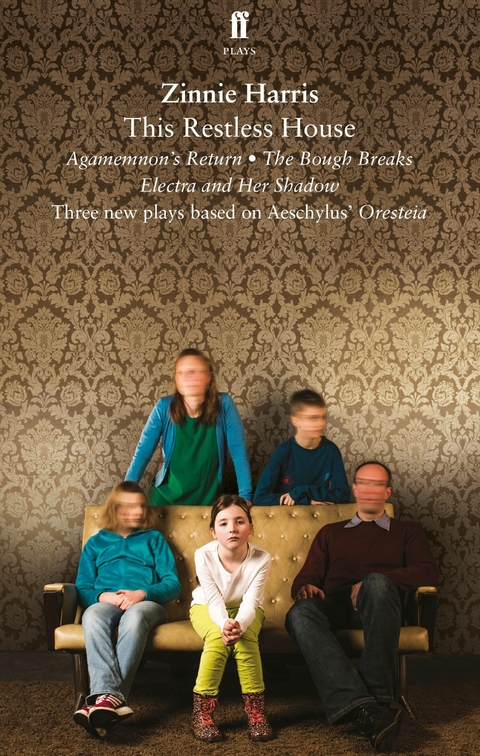
This Restless House (eBook)
192 Seiten
Faber & Faber (Verlag)
978-0-571-33263-2 (ISBN)
Zinnie Harris's plays include the multi-award-winning Further than the Furthest Thing (National Theatre/Tron Theatre; winner of the 1999 Peggy Ramsay Award, 2001 John Whiting Award, Edinburgh Fringe First Award), How to Hold Your Breath (Royal Court Theatre; joint winner of the Berwin Lee Award), The Wheel (National Theatre of Scotland; joint winner of the 2011 Amnesty International Freedom of Expression Award), Nightingale and Chase (Royal Court Theatre), Midwinter, Solstice (both RSC), Fall (Traverse Theatre/RSC), By Many Wounds (Hampstead Theatre), the trilogy This Restless House (Citizens Theatre/National Theatre of Scotland), based on Aeschylus' Oresteia and Meet Me at Dawn (Traverse Theatre). Also, Ibsen's A Doll's House for the Donmar Warehouse, Strindberg's Miss Julie for the National Theatre of Scotland and Webster's The Duchess (of Malfi) (Royal Lyceum Theatre). Zinnie received an Arts Foundation Fellowship for playwriting, and was Writer in Residence at the RSC, 2000-2001. She is Professor of Playwriting and Screenwriting at St Andrews University, and is the Associate Director at the Royal Lyceum Theatre in Edinburgh.
'Electrifying . . . This four-hour epic of ambition and power is a sinewy reworking of Aeschylus that explodes into a cacophonous climax.' GUARDIAN *****Aeschylus' Oresteia opens with Agamemnon sacrificing his daughter to the gods; an act which sets in motion a bloody cycle of revenge and counter-revenge. When he in turn is killed at the hands of his wife Clytemnestra, their son Orestes takes up the mantle of avenging his father, continuing the bloodshed until peace is ultimately found in the rule of law. Zinnie Harris reimagines this ancient drama, using a contemporary sensibility to rework the stories, placing the women in the centre. Orestes' leading role is replaced by his sister Electra, who as a young child witnesses her father's murder and is compelled to take justice into her own hands until she too must flee the Furies. Winner: Best New Play, Critics' Awards for Theatre in ScotlandThis Restless House premiered at the Citizens Theatre, Glasgow, in April 2016 in a co-production with the National Theatre of Scotland.
Most fearless of reinventions.
Electrifying... This four-hour epic of ambition and power is a sinewy reworking of Aeschylus that explodes into a cacophonous climax.
Although Harris is largely faithful to Aeschylus' narrative line, she innovates brilliantly.
Breathtaking. Powerful. Trailblazing.
A Chorus of old and dishevelled men come on to the stage. They stagger, they limp. Some may even crawl. If they had names they would be things like ‘the ancient one’, ‘the one who can’t see’, ‘hollow face’, or ‘lost in his own thoughts’.
Once on, they look straight at the audience. They stare at the audience without flinching, brazen. One of them has a slight tic, another occasionally moans.
Chorus
go on then avert your gaze
look away
don’t stare at us for too long
turn your heads gentlewomen
men hide behind your hands
you walk past us on the street after all
you close your curtains
shut your door
we’ve seen you do it
you bolt the gate and bolt it again
who can blame you?
we are the abandoned
left out in the rain
yes the given-up on by the gods
and who wants that to cross their land?
They look around.
don’t worry we are impotent
we can hardly stand
we won’t chase you
the most we will do is kind of half a wave
don’t get too near though you might catch something
the shake my hand and my arm falls off
the don’t mind my leg, it’s just a stump
why have the gods left us to this? you ask
did we deserve our witless state?
our pain?
did we offend them?
good question
curse them perhaps?
we aged that’s all.
some are blessed, others not it seems
we sit here as a reminder
say your prayers
do what they tell you
for the gods have no mercy
and life can be long
They look out at the audience.
oh, no one’s leaving?
there’s the door
let me tell you this tale is not for everyone
and it’s not going to be funny either
comedy this is not
if you want to laugh try elsewhere we suggest
Pause.
alright, we’ll start then
the story starts ten years ago
right here in Greece
a woman called Helen
a married woman
a queen
smiled too sweetly at another man
it’s not the smile that mattered
would the gods have minded a smile?
it’s a euphemism
screw the euphemism
you don’t run off to Troy to ‘smile’ at someone
she was snatched, Paris took her
no, she was a harlot
a slut, she opened her legs
she defied the rules of marriage, let us say that
offended the gods
and her husband King Menelaus
fucked-off and fearful of the payback from above
he had to act
so he and his brother, our King Agamemnon got together
they raised an army to bring her back
well – there followed a war
a holy war –
you might have heard of it
a war so terrible
you remember the horse?
I actually think, it starts years before that
it starts with a meal that was served to Thyestes, that’s where it starts
yes the meal of his roasted children, he’s right
before then though the house of Atreus was cursed
you have to go right back to the beginning to understand the blight on this place
the gods have never been happy
I think it started with a girl
Iphigenia
bless her holy name
you can’t start with Iphigenia
why not?
it starts with the eagle
the eagle yes, the day of the sailing
even you agree now?
two armies line up, ready to set sail to get Helen
the two kings at their helm
Menelaus and Agamemnon,
temples visited, prayers said
anxious to set off and bring the beauty home
when overhead, two eagles
soaring
one black one white
fly across, make a great arc in the sky
and everyone remarking
look at that they said
at first they thought it was a blessing from above
oh what luck, two eagles flying over two armies
a sign of the gods’ delight
one black one white
and on the right-hand side too
the side of fortune
what a great day, everyone said
victory is written, given from the heavens
this is a holy war indeed blessed from the start
the army were delighted
the wives saying goodbye to their husbands, reassured
traders knowing their workforce would return
smiles all around
but then those birds,
on closer look, those eagles
turned – a bit ugly
not so nice after all
savage in fact
they swooped down and seeing a hare
large with babies
right there with the army and crowd watching
they ripped it without a second’s thought
ate it
tossing its body
it makes me scratch to remember
it was a bit revolting truth be told
graphic, you know how these things can be
the babies still quivering
what does it mean, King Agamemnon? the soldiers cried
what does it signify, King Menelaus? asked the army wives
if this came from the gods then what is the message?
King Agamemnon couldn’t answer
he was as stumped as they were
and, not liking to be silent in front of his people,
he called for the holiest in the city
the high priest and his entourage
the holy man came to the port, looked at the shredded hare
chewed his beard
stroked his face
it means victory of some sort, that is certain
a blessing he said
the crowd go crazy
but that’s not all, he adds
the gods have given you a coda
a little postscript
you aren’t making sense your holiest
King Agamemnon then irritated
the holy man raised his voice
yes, you will take Troy
restore honour to marriage
yes, you will slaughter the men
yes, you will walk over the corpses of those you have killed
but –
after
afterwards perhaps –
here is the uncomfortable coda –
the gods see all the death ahead and are not happy
what do you mean holy man?
Agamemnon again
restless
irritated
the gods can’t be against us?
no, but there’s a cost for this war,
and they want you to feel it
what? they cried, you aren’t being clear
the gods aren’t being clear came the reply
but I think they need appeasing
Beat.
and that is how he left a worried King
a father
the army ready to depart
let’s just go
his first thought
stupid holy man, what does he know of gods and wars?
let’s just –
be off
let’s just –
get out of here, do the damn thing
we are assured that the gods are on our side
but the weather was not with them
a storm, a hurricane
every time they left the port, they were blown back
it’s too dangerous the King was told to leave in this weather
the ships were being wrecked on their own rocks
it’s the gods cried the naval officers
I told you said the holy man
they need appeasing
and so the lonely King –
this is the part you might not like –
the faint-hearted still have a chance to leave
it’s a bit, you know, the next bit
you have to understand how it is for men like Agamemnon
himself a holy leader
anointed by the heavens themselves
the men already sick from being on the boat, and not having even left the shore
his brother, miserable and worried for his city
the crowd, bloodthirsty for victory
he took to prayer
he went down on his knees and offered himself
listened
harder
and harder
until
he knew he had to offer something so dear that the tears fell as he heard the answer
something so precious –
NO, not that, he shouted out
then be damned, howled the gods right back
I am damned if I do, and damned if I don’t he answered in a sweat
do what? said his wife
his Queen
Clytemnestra – his only true love
busy with their new-born
do what, precisely?
but he couldn’t tell her
how could he even utter the words?
do what? she repeated
but he shook his head and left her alone
do what? she shouted after him. Do what? Do what?
this is where the daughter comes in
this is where, well
well what is there more precious to a father than a daughter?
any daughter, but Iphigenia?
bless her holy name
what is there more precious to lose?
Iphigenia was their first born
others came later – Orestes, Electra – but Iphigenia,
even the people who weren’t her father had to agree
she was pretty special
a much-loved child, adored by her parents
not spoiled but –
tell them about the suitcase
the suitcase kind of breaks my heart, do we have to talk about the case?
tell them about the yellow dress then
do we have to fill in the details?
they have imaginations, they can colour it in for themselves
but without the stain, without the detail?
what is a story without the pigmentation?
Iphigenia
bless her holy name
just eleven
her body just starting to show the first signs of womanhood
Iphigenia
dressed in yellow
cadmium yellow
with a red ribbon
and...
| Erscheint lt. Verlag | 12.5.2016 |
|---|---|
| Verlagsort | London |
| Sprache | englisch |
| Themenwelt | Literatur ► Lyrik / Dramatik ► Dramatik / Theater |
| ISBN-10 | 0-571-33263-3 / 0571332633 |
| ISBN-13 | 978-0-571-33263-2 / 9780571332632 |
| Informationen gemäß Produktsicherheitsverordnung (GPSR) | |
| Haben Sie eine Frage zum Produkt? |
 EPUB (Adobe DRM)
Kopierschutz: Adobe-DRM
Adobe-DRM ist ein Kopierschutz, der das eBook vor Mißbrauch schützen soll. Dabei wird das eBook bereits beim Download auf Ihre persönliche Adobe-ID autorisiert. Lesen können Sie das eBook dann nur auf den Geräten, welche ebenfalls auf Ihre Adobe-ID registriert sind.
Details zum Adobe-DRM
Dateiformat: EPUB (Electronic Publication)
EPUB ist ein offener Standard für eBooks und eignet sich besonders zur Darstellung von Belletristik und Sachbüchern. Der Fließtext wird dynamisch an die Display- und Schriftgröße angepasst. Auch für mobile Lesegeräte ist EPUB daher gut geeignet.
Systemvoraussetzungen:
PC/Mac: Mit einem PC oder Mac können Sie dieses eBook lesen. Sie benötigen eine
eReader: Dieses eBook kann mit (fast) allen eBook-Readern gelesen werden. Mit dem amazon-Kindle ist es aber nicht kompatibel.
Smartphone/Tablet: Egal ob Apple oder Android, dieses eBook können Sie lesen. Sie benötigen eine
Geräteliste und zusätzliche Hinweise
Buying eBooks from abroad
For tax law reasons we can sell eBooks just within Germany and Switzerland. Regrettably we cannot fulfill eBook-orders from other countries.
aus dem Bereich