


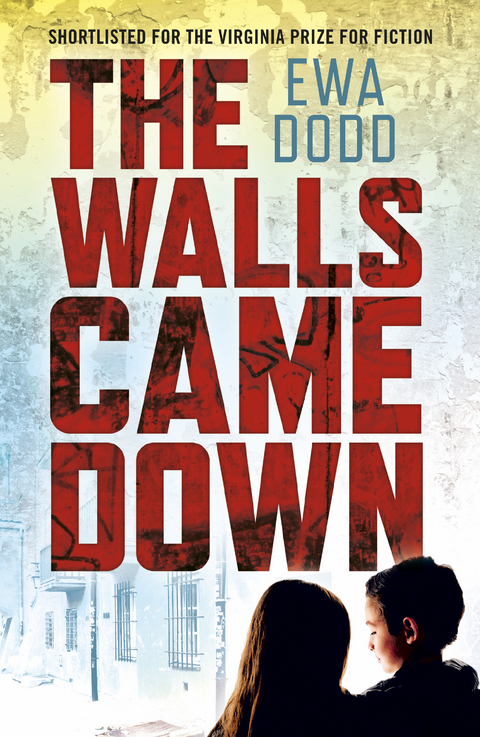
Walls Came Down (eBook)
296 Seiten
Publishdrive (Verlag)
978-1-911501-16-9 (ISBN)
SHORTLISTED FOR THE VIRGINIA PRIZE FOR FICTION
A young boy goes missing during a workers' strike in 1980s Poland, unravelling a chain of events which will touch people across decades and continents.
Joanna, a young journalist in Warsaw, is still looking for her brother, who's now been missing for over twenty years. Matt, a high-flying London city financier is struggling with relationship problems and unexplained panic attacks. And in Chicago, Tom, an old man, is slowly dying in a nursing home.
What connects them? As the mystery begins to unravel, the worlds of the three protagonists are turned upside down. But can they find each other before time runs out?
Reviews
'Wow what a book! A powerful and moving story of childhood loss and identity. This stunning debut by Ewa Dodd grips you straight away with its fully formed characters who you grow to really care for as the story progresses. The author also handles very effectively the narrative moving back and forth from Communist Poland to the present day... It is difficult to put down and moves along at just the right pace to keep the tension, whilst also satisfying the reader with sufficient detail. I highly recommend this for any reader who is looking for a moving story of family and belonging as well as a sense of recent Polish history. The best book I've read this year so far!' - Manchester Military History Society
'A provocative tale that links the fall of Communism to a story about a search for family and identity, delivering impressive insights into the psyches of the characters.' - Kirkus Reviews
'A captivating, moving and engaging story, I loved the writing style, the fluidity of the chapters. I recommend it.' - Anthony Cherrier
'Fusing history with the contemporary, this missing child tale is immensely moving, heart wrenching even. It's a gripping story of love and determination, with subtle political undertones that form the catalyst for the events that follow... It's one thing to have an engrossing premise but quite another to execute it as competently as Ewa Dodd has done.' - The Nudge
'The Walls Came Down is a book that I found almost impossible to put down once I started reading, the characters and the plot became so very real to me and I found that I desperately didn't want to part with them, not even to refresh the cuppa that had been forgotten about and gone cold.' - The Quiet Knitter
'Thoughtfully written and profoundly affecting, the story captured my imagination from the very beginning. With delicate sensitivity, the author brings a wealth of cultural understanding... Everything feels completely authentic... Moving seamlessly between three distinct locations, Poland, London and Chicago, the three main characters allow us a glimpse into each of their lives and reveal, ever so slowly, the secrets which they have carried within them for such a long time.' - Jaffa Reads Too
'The Walls Came Down is the stunning debut novel from Ewa Dodd... Expertly written, the characters are well rounded... The poignancy of the story is extremely powerful, and left me with a warm feeling in my heart. Definitely a page turner.' - White Shadow in a Basement
'The Walls Came Down is a page-turner; an engaging and fast-paced story of a child disappearance that spans countries, systems and human frailties... Well written, The Walls Came Down is a gripping debut novel that brings another author to the excellent company of Polish-English writers such as Anya Lipska and Anna Taborska dark horror storytelling.'
Katarzyna Zechenter, a poet, the author of In the Shadow of the Tree and a lecturer at UCL School of Slavonic and East European Studies.
'The Walls Came Down is a tense and moving tale of love and loss that grips the reader from start to finish. Shifting between contemporary London and Chicago and the Solidarity strikes of 1988, this compelling story shows us how a momentary act of selfishness can ruin several lives. It is also a reminder that the collapse of communism started not in Germany or in the Soviet Union but in the shipyards and mines of Poland, where the workers faced down a dictatorship that claimed to rule in their name, just as the people of Leipzig later would in 1989.'
Fiona Rintoul, journalist and author of the prize-winning The Leipzig Affair
About the Author
Ewa Dodd has been writing since she was young - starting small with short self-illustrated books for children. More recently, she has delved into novel-writing, and is particularly interested in literature based in Poland, where her family are from. The Walls Came Down is her first published novel, for which she was shortlisted for the Virginia Prize for Fiction.
SHORTLISTED FOR THE VIRGINIA PRIZE FOR FICTIONA young boy goes missing during a workers strike in 1980s Poland, unravelling a chain of events which will touch people across decades and continents.Joanna, a young journalist in Warsaw, is still looking for her brother, who s now been missing for over twenty years. Matt, a high-?ying London city ?nancier is struggling with relationship problems and unexplained panic attacks. And in Chicago, Tom, an old man, is slowly dying in a nursing home.What connects them? As the mystery begins to unravel, the worlds of the three protagonists are turned upside down. But can they ?nd each other before time runs out?Reviews Wow what a book! A powerful and moving story of childhood loss and identity. This stunning debut by Ewa Dodd grips you straight away with its fully formed characters who you grow to really care for as the story progresses. The author also handles very effectively the narrative moving back and forth from Communist Poland to the present day It is difficult to put down and moves along at just the right pace to keep the tension, whilst also satisfying the reader with sufficient detail. I highly recommend this for any reader who is looking for a moving story of family and belonging as well as a sense of recent Polish history. The best book I ve read this year so far! - Manchester Military History Society"e;A provocative tale that links the fall of Communism to a story about a search for family and identity, delivering impressive insights into the psyches of the characters."e; - Kirkus Reviews"e;A captivating, moving and engaging story, I loved the writing style, the fluidity of the chapters. I recommend it."e; - Anthony Cherrier"e;Fusing history with the contemporary, this missing child tale is immensely moving, heart wrenching even. It s a gripping story of love and determination, with subtle political undertones that form the catalyst for the events that follow... It s one thing to have an engrossing premise but quite another to execute it as competently as Ewa Dodd has done."e; - The Nudge"e;The Walls Came Down is a book that I found almost impossible to put down once I started reading, the characters and the plot became so very real to me and I found that I desperately didn t want to part with them, not even to refresh the cuppa that had been forgotten about and gone cold."e; - The Quiet Knitter"e;Thoughtfully written and profoundly affecting, the story captured my imagination from the very beginning. With delicate sensitivity, the author brings a wealth of cultural understanding... Everything feels completely authentic... Moving seamlessly between three distinct locations, Poland, London and Chicago, the three main characters allow us a glimpse into each of their lives and reveal, ever so slowly, the secrets which they have carried within them for such a long time."e; - Jaffa Reads Too"e;The Walls Came Down is the stunning debut novel from Ewa Dodd... Expertly written, the characters are well rounded... The poignancy of the story is extremely powerful, and left me with a warm feeling in my heart. Definitely a page turner."e; - White Shadow in a Basement"e;The Walls Came Down is a page-turner; an engaging and fast-paced story of a child disappearance that spans countries, systems and human frailties Well written, The Walls Came Down is a gripping debut novel that brings another author to the excellent company of Polish-English writers such as Anya Lipska and Anna Taborska dark horror storytelling. Katarzyna Zechenter, a poet, the author of In the Shadow of the Tree and a lecturer at UCL School of Slavonic and East European Studies. The Walls Came Down is a tense and moving tale of love and loss that grips the reader from start to finish. Shifting between contemporary London and Chicago and the Solidarity strikes of 1988, this compelling story shows us how a momentary act of selfishness can ruin several lives. It is also a reminder that the collapse of communism started not in Germany or in the Soviet Union but in the shipyards and mines of Poland, where the workers faced down a dictatorship that claimed to rule in their name, just as the people of Leipzig later would in 1989. Fiona Rintoul, journalist and author of the prize-winning The Leipzig Affair About the Author Ewa Dodd has been writing since she was young - starting small with short self-illustrated books for children. More recently, she has delved into novel-writing, and is particularly interested in literature based in Poland, where her family are from. The Walls Came Down is her first published novel, for which she was shortlisted for the Virginia Prize for Fiction.
1988
CHAPTER 1 – THE BEGINNING
WARSAW
The crowd slowly swelled out of the building, breaking up into angry fragments and then coming back together, rippling down the road in an undulating sea of red and white banners.
The young men in front of her were screaming something incomprehensible. Some of them were jumping on one another’s shoulders, slapping each other’s backs as if to offer encouragement. To the left of her, in the shadows of a greying block of flats, a teenage boy was urinating freely, his flag still hanging out of his pocket.
Monika wasn’t sure why she’d come out into the streets that day. She must have been sucked in by the excitement of her neighbours, by her sister’s shouts about this day being ‘history in the making.’ The Communist government would be put in its place and finally everything would change. There would be no more pitiful wages, no more working one third of a job (just so they could say that everybody was employed), no more waiting for hours in a queue for meat, only to be turned away at the last moment because it had run out and all that was left were onions.
She wasn’t sure whether she shared the swarm’s belief that the Solidarity party had it in them to make the change happen, but even a glimmer of hope was good enough for her.
Monika rushed out of work early, after Mr. Rakowski had told everyone that the factory would be shutting at midday to prepare for the strikes. She gave up waiting for a bus and ran the three kilometres to the twins’ playgroup to collect them, flustered, just as the doors of the building were shutting. She felt the uncomfortable perspiration beneath the armpits of her tight linen jacket.
She was planning to take the children home – to give them their lunch and then leave them with their aunt – and only then to go out in the streets herself to find out exactly what was what. But they were so excited to be part of the crowd that they wouldn’t allow her to leave without them.
“I want to see the flags,” Adam had insisted, pulling down on her arm, and she gave in, of course she gave in. She couldn’t say no to him after everything that had happened.
They didn’t have Solidarity flags, so they had to settle for the large rectangular national flag which Monika had sewn herself when she was sixteen. She rushed upstairs to get it as the children waited outside the block. She noticed that it had a large wine stain on its lower left hand side. Never mind – it would have to do.
“Mama, look!” Joanna yelled. She was pointing to a group of teenage girls, rolling out of the local school in their navy pinafores. They all had armbands on – red smudges against the white sleeves of their shirts. “Mama, can we have one?”
“No Joanna darling, look you have the flag. I brought it for you.” But before she could place it in her daughter’s outstretched arm, her son snatched it from her and began to run down the street making car noises. One of the girls must have noticed that Joanna was about to burst into tears, as she came over with a big smile, pulled her armband off and gave it to her.
“Thank you,” said Monika gratefully.
They were now in the middle of Grójecka Street making their way slowly towards the centre of the city. She had to keep calling Adam back as he disappeared amongst the throng of people emerging from the side streets. Finally, tired out from the excitement of the day, he came back and she wound her fingers around his thumb, as this was the way that he always wanted to hold hands.
“Mrs. Malicka!”
She turned around to see Mrs. Barska, one of her neighbours, calling her over from the other side of the street.
“I can’t believe they managed to organise this! Do you know; I heard that there are similar strikes going on in Gdańsk, Dąbrowa Górnicza and Bielsko-Biała…” She reeled off the cities on her fingers, “Thousands of people involved.”
“Really?” asked Monika, “Do you think that it will actually lead to anything this time?”
“Definitely! Mark my words. This is the beginning of the end; they’re all saying it.”
Beside her, a tall bearded man with a large camera was conducting an interview with a particularly incensed youth, who seemed to be shouting revolutionary phrases into the microphone.
“What sort of message do you think the strike is sending out to the government?”
“That the workers have spoken! That we won’t stand for this anymore! There is no dignity left when prices continue to rise and wages fall!”
“But there have been years of this. Years of economic hardship. Years of broken promises. Why do you think that the change will happen now?”
“It’s got to breaking point. It’s too much. We’ve realised that this is not a country that we want our children to live in if these things continue and so we have mobilised ourselves…”
“You look well,” said Mrs. Barska, momentarily drawing Monika away from the ranting. “You’ve caught the sun and you have some colour in your face. It’s so good to see. And that suit is a great cut.”
Monika gazed into the woman’s face searching for a hint of mockery, because surely, nobody could think that she looked anything but tired, worn out and ragged. She knew full well that she was too thin and lately she didn’t even bother with doing her make-up in the mornings, because what was the point really? There was nobody who she wanted to impress.
But Mrs. Barska gazed at her with a calm and genuine simplicity which made her realise that the compliment was sincere and well-meant.
“Thank you,” she muttered awkwardly.
“I’m so bloody glad that this has happened. It should have happened years ago, you know. Then things could have been different for me and you. As it is, we need to make sure that it’s better for the young ones,” she said, seriously, “Now my son is a hooligan, but you have two great specimens of the next generation to fight for. Fight for them Monika – fight for them to live in a democracy, to have proper jobs with proper pay!”
She yearned to be truly infected with the revolutionary passion, but the fire inside her refused to spark up. It was as if her kindling was just a tiny bit too damp, the lighter fluid not quite strong enough. And no matter how hard she tried, she couldn’t shift the leaden weight that pressed down on her mind with such force that it sometimes took her breath away. It was heavy and dark, like a tank, leaving nothing but a dull emptiness in its wake. But the very least that she could do was to keep up appearances, to show the world that she was coping – no, not coping, but participating.
“Yes, I will. I am determined to…” She suddenly trailed off as she realised that her right hand was now hanging loose by her side.
On her left, Joanna was sucking her thumb, half nestling her cheek into her mother’s skirt. Monika felt herself suddenly go cold.
“Where’s your brother?” she asked frantically. “Adam! Adam!” she yelled into the street. Her voice was caught on the wind, drowned out by the excited screams of the throng.
***
Monika sat in the dark. Her body felt frozen despite the warm afternoon. There was a low rhythmic hum around her, a swoosh of movement. The shrieking sting of panic had left her body. The aftershocks were still pulsing in her temples, but they were weaker now. When she looked down into her lap, she noted with some surprise that her hands were still. She had imagined she would see them moving, dancing to the tiny tremors of her heart.
Somebody was speaking to her, but the voice came through a blurred haze, as if they were underwater. She didn’t make an effort to hear them. Whatever they had to say was not important.
And then her right arm moved, her fingers circling the air, as if seeking out her son’s thumb.
“Have you eaten anything?” her sister repeated. The threads of words eventually wove themselves together into some form of coherent whole.
“Yeah; I had something earlier…”
“It’s almost seven in the morning. You should try and get some sleep. He will be found you know…”
“How can you be sure?” she asked. She stared at Irena’s face – the blue eyes, just marginally too big for the face, were red-rimmed and swampy.
“Because the ground can’t have swallowed him up…” her sister began, and slapped her hand over her mouth.
“What I mean is that they’ll definitely find him,” she recovered, “The police are doing a thorough search. He’s probably just hiding somewhere, thinking that this is all a great game. Maybe he followed a group of protestors to another part of the city and he couldn’t make his way back. But he knows his address, so he’ll be able to tell whoever finds him.”
“Maybe he’s gone to Mysłowice?” Monika mumbled into her lap.
“What? How would he get there? He doesn’t even know how to get to the train station. Monika, he’s barely four years old.”
Monika’s shoulders began to heave, but no tears came out. And then it returned – the rhythmic, unhealthy speeding thump of her heart against her rib cage, the clouding of vision. The walls were closing in on her and she needed to run – more than anything she needed to run, but she couldn’t… she wouldn’t be able to escape before the complete darkness descended and then it would be too late. She would be left an empty core, a fish left out on deck losing its battle against the elements.
Something warm and feathery nestled into the nook of her elbow. She looked down to see the crown of a small blond head.
“Has Adam come back yet?” the sleepy voice...
| Erscheint lt. Verlag | 27.9.2017 |
|---|---|
| Sprache | englisch |
| Themenwelt | Literatur ► Historische Romane |
| Literatur ► Klassiker / Moderne Klassiker | |
| Literatur ► Romane / Erzählungen | |
| Schlagworte | historica novels • kate kindle book • kidnap book • missing kindle books • missing persons • tana french kindle books • the missing in books |
| ISBN-10 | 1-911501-16-X / 191150116X |
| ISBN-13 | 978-1-911501-16-9 / 9781911501169 |
| Informationen gemäß Produktsicherheitsverordnung (GPSR) | |
| Haben Sie eine Frage zum Produkt? |
 EPUB (Ohne DRM)
Digital Rights Management: ohne DRM
Dieses eBook enthält kein DRM oder Kopierschutz. Eine Weitergabe an Dritte ist jedoch rechtlich nicht zulässig, weil Sie beim Kauf nur die Rechte an der persönlichen Nutzung erwerben.
Dateiformat: EPUB (Electronic Publication)
EPUB ist ein offener Standard für eBooks und eignet sich besonders zur Darstellung von Belletristik und Sachbüchern. Der Fließtext wird dynamisch an die Display- und Schriftgröße angepasst. Auch für mobile Lesegeräte ist EPUB daher gut geeignet.
Systemvoraussetzungen:
PC/Mac: Mit einem PC oder Mac können Sie dieses eBook lesen. Sie benötigen dafür die kostenlose Software Adobe Digital Editions.
eReader: Dieses eBook kann mit (fast) allen eBook-Readern gelesen werden. Mit dem amazon-Kindle ist es aber nicht kompatibel.
Smartphone/Tablet: Egal ob Apple oder Android, dieses eBook können Sie lesen. Sie benötigen dafür eine kostenlose App.
Geräteliste und zusätzliche Hinweise
Buying eBooks from abroad
For tax law reasons we can sell eBooks just within Germany and Switzerland. Regrettably we cannot fulfill eBook-orders from other countries.
aus dem Bereich


